Contents
Who was Salt Walther?
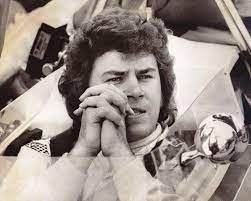
David “Salt” Walther was a former auto and hydroplane racer who was severely burned in a spectacular crash in the 1973 Indianapolis 500. He was the son of George Walther Jr., owner of Dayton Steel Foundry, who fielded Indy 500 cars for Juan Manuel Fangio in 1958 and Mike Magill in 1959. His German-born grandfather George Walther Sr. established the foundry and was a prominent inventor and industrialist. His brother, George “Skipp” Walther III, was fatally injured while trying to qualify as an Unlimited driver at Miami Marine Stadium, in 1974.
Walther raced in Indy cars from 1970 to 1981, with 64 career starts. He finished in the top ten 16 times, with a best finish of 7th (four times). He competed in the Indianapolis 500 from 1972 to 1976, and 1978 to 1979. He also drove NASCAR stock cars and unlimited hydroplane boats, and was a car owner in USAC1. He is one of eight unlimited hydroplane drivers to qualify for the Indianapolis 500.
What happened in the 1973 Indianapolis 500?
Walther first raced at Indianapolis in 1972, finishing 33rd and last due to a broken magneto. At the 1973 Indianapolis 500, Walther qualified 17th but again finished last after one of the most spectacular and famous accidents in the history of the race.
As the field received the green flag, Steve Krisiloff, on the inside of the third row, developed engine trouble and slowed down, producing a traffic jam on the main straightaway as the rest of the cars accelerated. Walther, forced to his right by drivers taking evasive action in front of him, touched wheels with Jerry Grant and was catapulted over the wall and into the catch fence above it. Walther maintained that he was hit from behind, forcing him into Grant, but this claim is not supported by films of the crash and is not widely accepted by other drivers.
The impact tore down a segment of the catch fence and ripped off the nose of Walther’s car. His legs were exposed, and the fuel tanks were ruptured, which at that time were located on either side of the cockpit. The fuel sprayed out of the car, some of it reaching the front rows of the grandstand where several spectators suffered burns. The car crashed back onto the track and spun down the main straightaway upside-down, still spraying fuel which ignited into a huge fireball that enveloped the rest of the field. Blinded by the burning methanol, several other drivers crashed into Walther’s car, and into each other, though none of the other drivers suffered serious injuries.
Walther was trapped in the inferno for several seconds before being pulled out by safety workers. He suffered severe burns over 40% of his body, including his face, hands, and legs. He was rushed to the hospital in critical condition and underwent multiple surgeries and skin grafts. He also suffered from post-traumatic stress disorder and depression as a result of the accident.
How did Salt Walther die?
Walther recovered from his injuries and returned to racing in 1974. He placed 9th in the 1976 Indianapolis 500, his best finish in the race. He also co-drove a car with Bob Harkey to 10th place in 1975. However, his career declined after the crash and he struggled with drug addiction and legal troubles. He was arrested several times for drug possession, theft, and assault. He also filed for bankruptcy and lost his home and possessions.
Walther died on December 27, 2012, at the age of 69. The cause of death was not officially determined, but his sister said he had a heart attack. He was buried at Woodland Cemetery in Dayton, Ohio.
Conclusion
Salt Walther was a talented and versatile racer who had a promising career cut short by a horrific crash. He survived the ordeal but never fully recovered from the physical and psychological scars. He died in obscurity and poverty, leaving behind a legacy of courage and tragedy. He will always be remembered as one of the most memorable figures in the history of the Indianapolis 500.
