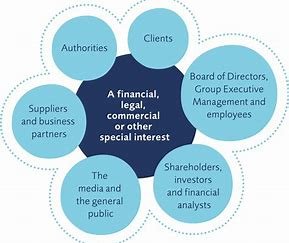
Stakeholders are individuals or groups that have an interest or influence in a firm’s activities, performance, and outcomes. They can be internal or external to the organization, and they can have positive or negative impacts on the firm’s goals and objectives. Stakeholders are essential for the success of any business, as they provide valuable feedback, resources, support, and legitimacy. However, not all statements related to stakeholders are true. In this article, we will examine one common misconception about stakeholders and explain why it is false.
One of the most widespread and erroneous statements related to stakeholders is that they are the same as shareholders. This statement is not true because shareholders are only one type of stakeholder, and not all stakeholders are shareholders. Shareholders are individuals or entities that own shares of a company’s stock. They have a financial interest in the company’s performance and profitability, and they have the right to vote on major corporate decisions and receive dividends. Shareholders are also known as owners or equity holders.
Stakeholders, on the other hand, include a broader and more diverse range of parties that have a stake in the company’s activities and outcomes. Stakeholders can be internal or external to the company, and they can have different types of interests and influences. For example, some of the common types of stakeholders are:
- Employees: They are internal stakeholders who work for the company and contribute to its operations and value creation. They have an interest in the company’s growth, stability, culture, and compensation.
- Customers: They are external stakeholders who buy the company’s products or services and generate revenue for the company. They have an interest in the quality, price, availability, and satisfaction of the company’s offerings.
- Suppliers: They are external stakeholders who provide the company with raw materials, components, equipment, or services that are essential for its production and delivery. They have an interest in the company’s reliability, payment, and partnership.
- Creditors: They are external stakeholders who lend money or extend credit to the company for its financing needs. They have an interest in the company’s solvency, liquidity, and creditworthiness.
- Government: It is an external stakeholder that regulates the company’s activities and imposes taxes, fees, laws, and policies that affect its operations and performance. It has an interest in the company’s compliance, social responsibility, and contribution to the economy.
- Community: It is an external stakeholder that consists of the people and groups that live or work in the area where the company operates or affects. It has an interest in the company’s environmental impact, social impact, and corporate citizenship.
As you can see, stakeholders are not limited to shareholders. In fact, some stakeholders may have conflicting or competing interests with shareholders. For example, employees may want higher wages, customers may want lower prices, suppliers may want higher margins, creditors may want lower risks, government may want higher taxes, and community may want lower emissions. These interests may not align with shareholders’ interests of maximizing profits and returns.
Therefore, it is important for managers to identify, analyze, balance, and communicate with all relevant stakeholders of their company. By doing so, they can enhance their stakeholder relationships, improve their reputation, increase their legitimacy, and achieve their strategic goals.
Conclusion
Stakeholders are vital for any business success. However, not all statements related to stakeholders are true. One of the most common false statements is that stakeholders are the same as shareholders. This statement is not true because shareholders are only one type of stakeholder among many others. Stakeholders can be internal or external to the company, and they can have different types of interests and influences. Managers should recognize and manage their stakeholder expectations and needs in order to create value for all parties involved.
