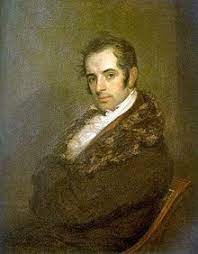
Washington Irving was a renowned American writer, essayist, biographer, historian, and diplomat who lived from 1783 to 1859. He is best known for his short stories “The Legend of Sleepy Hollow” and “Rip Van Winkle”, which are considered classics of American literature. He was also one of the first American writers to gain international fame and recognition, and he influenced many other authors such as Nathaniel Hawthorne, Edgar Allan Poe, and Herman Melville. He wrote several historical works, including a five-volume biography of George Washington, which he completed shortly before his death. But how did Washington Irving die? What were the circumstances and causes of his demise? In this article, we will explore the Washington Irving cause of death and the legacy he left behind.
Contents
The Last Years of Washington Irving
Washington Irving spent most of his life traveling and writing, both in America and Europe. He served as the U.S. ambassador to Spain from 1842 to 1846, where he wrote a history of the Moorish conquest of Spain and a biography of Christopher Columbus. He returned to America in 1846 and settled in his estate, Sunnyside, in Tarrytown, New York. He continued to write and publish, focusing on American history and biography. He also became involved in various social and cultural causes, such as the preservation of Native American rights, the promotion of literature and education, and the support of young writers. He was widely respected and admired by his contemporaries and the public, and he received many honors and awards, such as honorary degrees from Harvard, Oxford, and Columbia universities.
The Final Days of Washington Irving
Washington Irving’s health began to decline in the late 1850s, as he suffered from various ailments, such as asthma, rheumatism, and heart problems. He was also affected by the deaths of some of his close friends and family members, such as his brother Ebenezer, his nephew Pierre, and his longtime friend James Fenimore Cooper. He remained active and productive, however, and he worked on his magnum opus, the biography of George Washington, which he considered his most important work. He finished the fifth and final volume of the biography in July 1859, and he wrote in a letter to his publisher: “I thank God I have been enabled to bring the work to a close, and that I am still in existence to see it published.”
He spent the last months of his life revising and correcting the proofs of his biography, which was published in October 1859. He also received visitors and corresponded with friends and admirers, expressing his gratitude and satisfaction for his life and work. He wrote to his friend Henry Brevoort: “I am very happy in the thought that I have done something to make my country better known and respected abroad, and to make my countrymen better acquainted with their own history and the great men who have made it.”
He celebrated his 76th birthday on April 3, 1859, and he received many congratulations and tributes from his fans and peers. He wrote to his friend William Cullen Bryant: “I have been overwhelmed with letters and tokens of regard from all parts of the country, and indeed from abroad, on my birthday. It is indeed a source of heartfelt gratification to find oneself thus surrounded by the good-will and affection of one’s fellow-beings at the close of a long and chequered life.”
The Death of Washington Irving
Washington Irving died of a heart attack in his bedroom at Sunnyside on November 28, 1859, age 76. He seemed to foretell his death, as he said before going to bed: “Well, I must arrange my pillows for another weary night! If this could only end!” He was found the next morning by his niece Sarah, who lived with him and took care of him. He was lying peacefully on his bed, with a smile on his face. He was buried in Sleepy Hollow Cemetery, near the Old Dutch Church, which he had immortalized in his story “The Legend of Sleepy Hollow”. His funeral was attended by thousands of people, who came to pay their respects and honor his memory. He was eulogized by many prominent figures, such as William Cullen Bryant, Henry Wadsworth Longfellow, and Oliver Wendell Holmes. He was praised as the father of the American short story, the first American man of letters, and the national bard of America.
The Legacy of Washington Irving
Washington Irving’s death marked the end of an era in American literature and culture. He was the last of the generation of writers who had witnessed the birth of the nation and the formation of its identity. He was also the first of the generation of writers who had shaped the nation’s imagination and expression. He was a pioneer and a master of the short story, the essay, the biography, and the historical narrative. He was a creator and a preserver of American folklore, legends, and traditions. He was a traveler and a diplomat, who bridged the gap between America and Europe, and who introduced America to the world and the world to America. He was a mentor and a friend, who inspired and supported many other writers and artists. He was a man of letters and a man of action, who lived a full and adventurous life, and who left a rich and lasting legacy. He was, in the words of his biographer Stanley T. Williams, “the first ambassador whom the New World of letters sent to the Old.”
