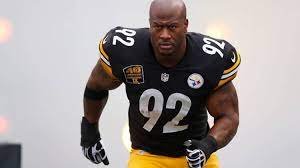
Terry Long was a former NFL player who played as an offensive lineman for the Pittsburgh Steelers from 1984 to 1991. He was a four-time All-American at East Carolina University and a fourth-round draft pick by the Steelers in 1984. He was known for his strength and toughness on the field, but he also struggled with personal and health issues off the field. He died by suicide in 2005 by drinking antifreeze, a revised death certificate showed. What led him to take such a drastic step and what were the consequences of his death? This article will explore the life and career of Terry Long, his cause of death, and the impact of his death on the NFL and the society.
Contents
Early Life and College Career
Terry Long was born on July 21, 1959, in Columbia, South Carolina, to Levane Pickney and Robert Luther Long. He attended Eau Claire High School and graduated in 1977. One of his early jobs at the age of 14 was working as a bricklayer. After high school, Terry enlisted in the U.S. Army and played football while stationed at Fort Bragg. He was recruited from the military to play football for Columbia Junior College. While there, he studied for his degree in Business Administration. He later transferred to East Carolina University, where he played for the Pirates football team from 1980 to 1983. He was recognized as a consensus first-team All-American in 1983. While at college, Long was a four-year starter. He also competed in a powerlifting meet for the first and only time in 1983 and totaled an incredible 2149.3 pounds, including a near-world record 865.3 pound deadlift; this was more than anyone lifted in that year’s Powerlifting World Championships. He earned his degree in Business Administration from East Carolina in 1984.
Professional Career and Retirement
The Pittsburgh Steelers selected Long in the fourth round (111th pick overall) of the 1984 NFL Draft, and he played for the Steelers from 1984 to 1991. During his eight NFL seasons, he played in 105 games and started 89 of them. Long recorded three fumble recoveries and even returned a kick off during a game in 1984. As a rookie in 1984, Long started seven games, as the Steelers finished 9–7, winning the AFC Central, despite an unstable quarterback situation, with former first-round selection Mark Malone and former Dolphins starter David Woodley splitting the starting duties. The next season, the Steelers dipped to 7–9, and the quarterback situation did not improve, as both Malone and Woodley struggled, leading to second-year pro Scott Campbell getting two starts at quarterback. That year, Long played in 15 games and started 14 of them. In 1986, Long started all 16 games, but the Steelers were not winners on the field, falling to a record of 6–10.
Long’s career took a turn for the worse in 1987, when he tested positive for steroids and was suspended for four games by the NFL. He also suffered a knee injury that sidelined him for the rest of the season. He returned in 1988 and started 15 games, helping the Steelers improve to 5–11. In 1989, he started 14 games, as the Steelers rebounded to 9–7 and made the playoffs, where they upset the Houston Oilers and the Denver Broncos, before losing to the eventual Super Bowl champion San Francisco 49ers in the AFC Championship Game. Long started 15 games in 1990, as the Steelers repeated their 9–7 record and playoff appearance, but lost to the Buffalo Bills in the divisional round. Long’s final season was in 1991, when he started 10 games, as the Steelers slipped to 7–9 and missed the playoffs. He retired after the season, having played his entire career with the Steelers.
Personal and Health Problems
Long’s life after football was marred by personal and health problems. He had a history of depression, anxiety, and substance abuse. He also faced financial and legal troubles, as he was involved in several lawsuits and bankruptcies. He tried to start a poultry business, but it failed due to mismanagement and fraud. He was accused of selling contaminated chicken to a school district and was indicted on federal charges of conspiracy, mail fraud, and making false statements. He pleaded guilty and was sentenced to 27 months in prison in 1998. He was released in 2000 and tried to rebuild his life, but he continued to struggle with mental and physical issues. He suffered from chronic headaches, memory loss, mood swings, and suicidal thoughts. He was diagnosed with chronic traumatic encephalopathy (CTE), a degenerative brain disease caused by repeated head trauma, which is common among former NFL players. He also had diabetes, high blood pressure, and kidney problems.
Suicide and Aftermath
On June 7, 2005, Long was found unconscious in his Pittsburgh home by his girlfriend. He was rushed to the hospital, where he died later that day. He was 45 years old. The initial death certificate listed the cause of death as “acute renal failure due to diabetic ketoacidosis”. However, a revised death certificate, issued in 2006, revealed that Long had committed suicide by drinking antifreeze, a toxic substance that causes kidney failure and death. The revised death certificate also listed CTE as a contributing factor to his death. Long’s suicide was one of the first cases that raised awareness about the link between football-related head injuries and mental health problems. His death also sparked a lawsuit by his family against the NFL, alleging that the league failed to protect him from the risks of concussions and CTE. The lawsuit was settled in 2013, as part of a larger settlement between the NFL and thousands of former players who sued the league over brain injuries. Long’s family received an undisclosed amount of money from the settlement.
Long’s death also had an impact on the society, as it highlighted the need for more research and prevention of suicide among former athletes and veterans. Long’s case was featured in several documentaries and books, such as League of Denial: The NFL, Concussions, and the Battle for Truth by Mark Fainaru-Wada and Steve Fainaru, and Concussion by Jeanne Marie Laskas. Long’s story also inspired many people to donate their brains to science, in order to help find a cure for CTE and other neurological disorders. Long’s brain was donated to the Center for the Study of Traumatic Encephalopathy at Boston University, where it was confirmed that he had severe CTE. Long’s legacy lives on through his family, his fans, and his fellow players, who remember him as a talented and hard-working athlete, who faced many challenges in his life, but never gave up.
