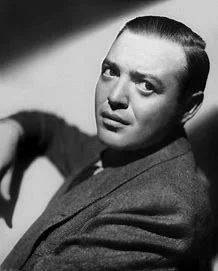
Peter Lorre was one of the most distinctive and memorable actors of the 20th century. He rose to fame with his chilling portrayal of a child murderer in Fritz Lang’s M (1931), and went on to star in many classic films such as The Maltese Falcon (1941), Casablanca (1942), and Arsenic and Old Lace (1944). He also played the first James Bond villain, Le Chiffre, in a TV adaptation of Casino Royale (1954). But how did this versatile and talented actor die? What were the circumstances and causes of his death? In this article, we will explore the life and death of Peter Lorre, and the legacy he left behind.
Contents
Early Life and Career
Peter Lorre was born László Löwenstein on June 26, 1904, in Rózsahegy, Austria-Hungary (now Ružomberok, Slovakia). His parents were German-speaking Jews who had moved there following his father’s appointment as a chief bookkeeper at a local textile mill. His mother died when he was four years old, leaving his father with three young sons. Lorre learned both Hungarian and German languages from birth, and was educated in Vienna, Austria. He ran away from home at 17, and began his stage career in Zurich, Switzerland. He later moved to Berlin, Germany, where he worked with renowned playwright Bertolt Brecht, and became a star of the German Expressionist cinema. His breakthrough role was in M (1931), where he played Hans Beckert, a tormented serial killer who preys on little girls. The film was a sensation, and made Lorre an international star. However, it also typecast him as a sinister and creepy character, a label that would follow him throughout his career.
Escape from Nazi Germany
Lorre was of Jewish descent, and faced persecution from the Nazi regime that came to power in Germany in 1933. He left the country soon after, and moved to Paris, France, where he made one film. He then went to London, England, where he met Alfred Hitchcock, who cast him as a villain in The Man Who Knew Too Much (1934). This was his first English-language film, and he learned his lines phonetically. He impressed Hollywood producers with his performance, and was invited to work in the United States. He arrived in Hollywood in 1935, and starred in two films: Mad Love (1935), where he played a mad scientist who grafts the hands of a murderer onto a pianist; and Crime and Punishment (1935), where he played Raskolnikov, the protagonist of Fyodor Dostoyevsky’s novel. Both films were directed by fellow expatriates from Germany.
Hollywood Stardom
Lorre soon became a popular character actor in Hollywood, appearing in many crime and mystery films. He often played villains, spies, or comic relief characters. He also frequently collaborated with other actors such as Humphrey Bogart and Sydney Greenstreet. His most famous films from this period include The Maltese Falcon (1941), where he played Joel Cairo, a shady associate of the main antagonist; Casablanca (1942), where he played Ugarte, a petty crook who entrusts Rick Blaine (Bogart) with two letters of transit; and Arsenic and Old Lace (1944), where he played Dr. Einstein, a plastic surgeon who assists a serial killer. Lorre also ventured into other genres, such as horror, comedy, and adventure. He played Mr. Moto, a Japanese detective, in eight B-movies between 1937 and 1939. He also appeared in Disney’s 20,000 Leagues Under the Sea (1954), where he played Conseil, the loyal assistant of Captain Nemo.
Personal Problems and Decline
Lorre had a troubled personal life that affected his health and career. He suffered from chronic gallbladder problems that caused him severe pain. He became addicted to morphine as a way to cope with his condition. He also had three marriages that ended in divorce. His first wife was Celia Lovsky, an actress who later played Spock’s mother in Star Trek. His second wife was Kaaren Verne, another actress who co-starred with him in several films. His third wife was Anne Marie Brenning, who gave birth to his only child, Catherine Lorre. Lorre also struggled with depression and low self-esteem. He felt typecast and underappreciated by Hollywood studios. He once said: “I have been waiting for years to play parts like Hamlet or Macbeth or Richard III or even King Lear – but nobody seems to think of me. I am always the little man with the crooked eye who gets knocked off in the third reel.” He also said: “I am not an actor, I am a type.”
Final Years and Death
Lorre’s career declined in the 1950s and 1960s, as he appeared in mostly low-budget and obscure films. He also worked in television and radio, and occasionally returned to the stage. He made his directorial debut with The Lost One (1951), a German film based on his own novel, where he played a Nazi doctor who murders his fiancée. The film was well-received by critics, but was largely unknown to the public. Lorre also played the first James Bond villain, Le Chiffre, in a TV adaptation of Casino Royale (1954), opposite Barry Nelson as Bond. Some of his last roles were in horror films directed by Roger Corman, such as Tales of Terror (1962) and The Raven (1963), where he co-starred with Vincent Price and Boris Karloff. Lorre died on March 23, 1964, at the age of 59, from a stroke. His body was cremated and his ashes were interred at the Hollywood Forever Cemetery. Price read the eulogy at his funeral.
Legacy and Influence
Peter Lorre was one of the most influential actors of his generation. He created a unique and unforgettable screen persona that inspired many other actors and filmmakers. His performance in M (1931) is considered one of the greatest in film history, and influenced the portrayal of serial killers in cinema. His collaboration with Humphrey Bogart and Sydney Greenstreet is regarded as one of the best examples of film noir. His comic timing and delivery made him a favorite of audiences and critics alike. He also influenced many genres, such as horror, spy, and adventure films. He has been honored with a star on the Hollywood Walk of Fame, and has been inducted into the Horror Hall of Fame. He has also been parodied and referenced in many works of popular culture, such as Looney Tunes cartoons, The Simpsons, Pinky and the Brain, The Rocky Horror Picture Show, and The World/Inferno Friendship Society.
Peter Lorre was a remarkable actor who left a lasting impression on cinema and culture. He overcame many hardships and challenges in his life and career, and gave memorable performances in many classic films. He died too young, but his legacy lives on. He was truly a master of horror, and a lord high minister of all that is sinister.
