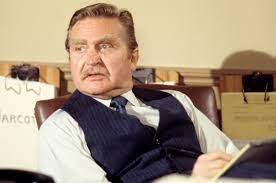
Karl Swenson was a veteran actor who appeared in many stage, radio, film, and television productions. He is best known for his role as Lars Hanson, the founder of Walnut Grove, in the popular series Little House on the Prairie. However, his life and career came to an abrupt end when he suffered a heart attack in 1978. Here is a brief overview of Karl Swenson’s cause of death and his legacy.
Contents
Early Life and Career
Karl Swenson was born in Brooklyn, New York, on July 23, 1908, to Swedish immigrant parents. He initially planned to become a doctor and enrolled at Marietta College for premedical studies, but he changed his mind and pursued acting instead. He made his Broadway debut in 1932 and appeared in several plays, including Arthur Miller’s first production, The Man Who Had All the Luck.
Swenson also had a successful career in radio, appearing in dozens of programs such as Cavalcade of America, The Mercury Theatre on the Air, Inner Sanctum Mysteries, X Minus One, and The Adventures of Father Brown. He played various characters, ranging from detectives to priests to villains.
Film and Television Roles
Swenson entered the film industry in 1943 with two wartime documentary shorts, December 7 and The Sikorsky Helicopter. He then appeared in more than 35 feature films and television movies, mostly in supporting roles. He often played authority figures or rugged characters in westerns, dramas, and thrillers. Some of his notable films include Judgment at Nuremberg, The Birds, The Prize, Major Dundee, The Sons of Katie Elder, The Cincinnati Kid, Seconds, Vanishing Point, and Ulzana’s Raid.
Swenson also guest-starred in many television shows such as Leave it to Beaver (as Eddie Haskell’s father), Hogan’s Heroes, Bonanza, Gunsmoke, Maverick, The Andy Griffith Show (as Mr. McBeeVee), and The Twilight Zone.
Little House on the Prairie
Swenson’s most memorable role was as Lars Hanson in Little House on the Prairie. He appeared in 40 episodes of the show from 1974 to 1978 as the kind-hearted and respected founder of Walnut Grove. He was a friend and mentor to Charles Ingalls (Michael Landon) and his family and often helped them with their problems. He also had a romantic interest in Harriet Oleson (Katherine MacGregor), the town’s gossip and troublemaker.
Swenson enjoyed working on the show and became close with his co-stars. However, he also felt tired and wanted to retire from acting. He told Landon about his plans and asked him to write an episode where his character would die.
Karl Swenson Cause of Death
Landon agreed to Swenson’s request and wrote an episode titled “There’s No Place Like Home”, which aired on October 9, 1978. In this episode, the Ingalls family and other former Walnut Grove residents return to town after an extended absence only to find that it is dying. Lars Hanson is also very ill and bedridden. He tells Charles that he is happy to see him again and that he is proud of what he has done for Walnut Grove. He then passes away peacefully.
However, what the cast and crew did not know was that Swenson had actually died the day before the episode aired. He had suffered a heart attack at Charlotte Hungerford Hospital in Torrington, Connecticut on October 8, 1978. He was 70 years old.
The coincidence was so eerie that it haunted the cast of Little House for months after it occurred. They felt that Swenson had somehow predicted his own death or that it was a sign from above.
Legacy
Karl Swenson was buried at Center Cemetery in New Milford, Connecticut. He was survived by his second wife Joan Tompkins (who also appeared on Little House as Mrs. Foster) and his four sons from his first marriage to Virginia Hanscom Swenson.
Swenson left behind a rich legacy of work that spanned four decades and various media. He was a versatile and talented actor who could play any role with ease and conviction. He was also a warm and generous person who touched the lives of many people.
He is especially remembered by fans of Little House on the Prairie as Lars Hanson, the man who built Walnut Grove and made it a home for many families. His character embodied the values of honesty, integrity, compassion, and courage that the show promoted.
According to Wikipedia, Swenson once said: “I’ve been very lucky all my life; I’ve never been out of work.” Indeed, he was lucky to have lived a fulfilling life and career that ended with a poignant farewell on screen.
