If you are a fan of Japanese role-playing games (JRPGs), you might have heard of the Xeno series, which includes titles such as Xenogears, Xenosaga and Xenoblade Chronicles. These games are known for their complex stories, rich worlds and philosophical themes. But are they related to each other? Do they share a common universe or continuity? Or are they completely separate entities? This article will explore the history and connections of the Xeno series and answer the question: **is Xenogears related to Xenoblade**?
Contents
The Origins of Xeno: Xenogears
The Xeno series began with Xenogears, a game released for the PlayStation in 1998 by Squaresoft, the company behind Final Fantasy and Chrono Trigger. The game was created by Tetsuya Takahashi and Kaori Tanaka (also known as Soraya Saga), who originally pitched it as a possible scenario for Final Fantasy VII. However, their idea was rejected for being too dark and complex for the flagship franchise.
Xenogears is a sci-fi fantasy game that follows Fei Fong Wong, a young man who lives in a world where giant robots called Gears are used for war and exploration. Fei suffers from amnesia and has a mysterious connection to a legendary Gear called Weltall. As he joins a rebel group against a powerful empire, he uncovers his past and his role in a millennia-long conflict involving ancient civilizations, alien gods and the fate of humanity.
Xenogears is widely regarded as a cult classic, praised for its deep characters, mature themes and innovative gameplay that combines turn-based combat with martial arts and Gear battles. The game also incorporates concepts from various religious and philosophical sources, such as Gnosticism, Judaism, Christianity, Buddhism, Hinduism, Nietzsche, Freud and Jung.
However, Xenogears also faced some difficulties during its development. Squaresoft diverted resources from the project to focus on Final Fantasy VIII, resulting in a rushed second disc that mostly consisted of narration and cutscenes instead of gameplay. Takahashi and Tanaka also left Squaresoft after the game’s release, dissatisfied with the company’s creative restrictions.
The Spiritual Successor: Xenosaga
In 1999, Takahashi founded his own studio called Monolith Soft, along with other former Squaresoft employees. Their first major project was Xenosaga Episode I: Der Wille zur Macht, a game published by Namco for the PlayStation 2 in 2002. The game was intended to be a spiritual successor to Xenogears, set in the same universe but thousands of years in the future.
Xenosaga is a sci-fi epic that follows Shion Uzuki, a scientist who works for Vector Industries, a corporation that develops androids and spaceships. Shion is involved in the creation of KOS-MOS, an anti-Gnosis weapon system that can fight against mysterious alien entities that threaten mankind. Along with KOS-MOS and other allies, Shion embarks on a journey across the galaxy to discover the secrets of the Zohar, an ancient artifact that is linked to the origin of life and the Gnosis.
Xenosaga was planned to be a six-part saga that would re-explore the themes and concepts of Xenogears in a different context. The game also featured many references and homages to Xenogears, such as character names, designs and motifs. However, Xenosaga also faced its own challenges during its production. Namco reduced the budget and changed the direction of the series after Episode I received mixed reviews and sales. The series was eventually cut short to three episodes, with Episode III: Also sprach Zarathustra being released in 2006.
The New Beginning: Xenoblade Chronicles
After completing Xenosaga, Monolith Soft started working on a new project called Monado: Beginning of the World, which was later renamed as Xenoblade Chronicles. The game was published by Nintendo for the Wii in 2010, after Monolith Soft became a subsidiary of Nintendo in 2007.
Xenoblade Chronicles is a fantasy adventure that follows Shulk, a young man who lives on Bionis, a giant titan that is locked in an eternal battle with another titan called Mechonis. Shulk wields the Monado, a sword that can grant him visions of the future and harm the Mechon, mechanical invaders from Mechonis. Along with his friends, Shulk sets out to stop the Mechon threat and uncover the truth behind the Monado and the titans.
Xenoblade Chronicles is a departure from the previous Xeno games, as it features a more open and colorful world, a real-time combat system and a lighter tone. The game also has fewer direct connections to Xenogears and Xenosaga, as it is set in a different universe and does not use the same religious and philosophical references. However, the game still has some subtle nods and easter eggs to the previous games, such as character names, designs and themes.
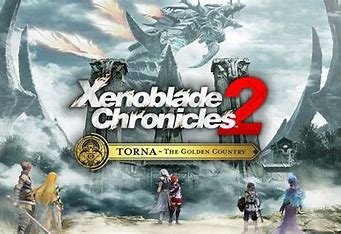
Xenoblade Chronicles was a critical and commercial success, earning praise for its expansive world, engaging gameplay and memorable soundtrack. The game also spawned two sequels, Xenoblade Chronicles X for the Wii U in 2015 and Xenoblade Chronicles 2 for the Nintendo Switch in 2017. Both games are set in different worlds and feature new characters and stories, but they also have some connections to the original Xenoblade Chronicles and the Xeno series as a whole.
Is Xenogears Related to Xenoblade? The Final Answer
So, after examining the history and connections of the Xeno series, what is the final answer to the question: **is Xenogears related to Xenoblade**? The answer is: **not really**.
Xenogears and Xenoblade Chronicles are not directly related to each other, as they are set in different universes and do not share a common continuity or storyline. They are also very different in terms of gameplay, style and tone. Any similarities or references between them are mostly for fan service or homage, rather than implying a direct link.
However, Xenogears and Xenoblade Chronicles are still related in a broader sense, as they are both part of the Xeno legacy that Takahashi and Tanaka created. They both share some common elements, such as giant robots, mysterious swords, ancient secrets and complex themes. They both reflect the vision and passion of their creators, who wanted to make unique and ambitious JRPGs that challenge and inspire players.
Therefore, while Xenogears and Xenoblade Chronicles are not related in a strict sense, they are still related in a spiritual sense. They are both part of a series that has evolved and transformed over time, but has always maintained its core identity and values. They are both part of a series that deserves recognition and appreciation from JRPG fans around the world.
Disclaimer: This article is based on information from various sources on the internet. It is not intended to be an authoritative or definitive source of information on the Xeno series. It is also not affiliated with or endorsed by Monolith Soft, Nintendo or any other parties involved in the creation of the Xeno games. It is simply a fan-made article that aims to provide some insight and entertainment for other fans of the Xeno series.
