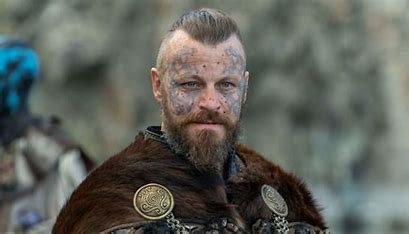
If you are a fan of historical drama series, you might have watched or heard of Vikings, Vikings: Valhalla and The Last Kingdom. These three shows are set in the same time period and feature some of the same historical figures and events. But are they related to each other in terms of production, story and accuracy? In this article, we will compare and contrast these shows and answer the question: is Vikings: Valhalla related to The Last Kingdom?
Production and Story
Vikings: Valhalla is a spin-off series of Vikings, which ran from 2013 to 2020 on History Channel and Netflix. Vikings: Valhalla is produced by MGM Television and Netflix, and created by Jeb Stuart, who also serves as the showrunner. Vikings creator Michael Hirst is an executive producer on the spin-off, but he is not involved in the writing or directing of the episodes.
Vikings: Valhalla is set about 100 years after the events of Vikings, and follows the adventures of Leif Erikson, Freydis Eriksdottir, Harald Hardrada and William the Conqueror, among others. The show depicts the rise and fall of the Viking Age, from the discovery of America to the Norman conquest of England.
The Last Kingdom is based on the historical novel series The Saxon Stories by Bernard Cornwell. The show is produced by Carnival Films and BBC America, and distributed by Netflix. The show was created by Stephen Butchard, who also wrote most of the episodes. The show ran for five seasons from 2015 to 2022.
The Last Kingdom follows the life of Uhtred of Bebbanburg, a fictional character who was born a Saxon but raised by Danes. The show chronicles his struggles to reclaim his ancestral lands and his loyalty to Alfred the Great, who united the kingdoms of England against the Viking invaders.
Vikings: Valhalla and The Last Kingdom are not related to one another in terms of production or story. They are made by different companies, have different creators and writers, and tell different stories. There may be some loose connections between them, but that is only due to the fact that their settings are similar and that they use similar historical figures when it comes to the important characters of their stories.
Historical Accuracy
Both Vikings: Valhalla and The Last Kingdom are historical fiction series, which means that they are based on real events and people, but they also take creative liberties and add fictional elements to make the story more engaging and dramatic. Neither show claims to be a documentary or a faithful representation of history.
However, both shows do try to incorporate some historical facts and details into their narratives. For example, both shows depict the Viking raids on England, the battles between the Saxons and the Danes, the conversion of some Vikings to Christianity, and the cultural and political differences between the Norsemen and the Anglo-Saxons.
Both shows also feature some real historical figures, such as Alfred the Great, Harald Hardrada, William the Conqueror, Leif Erikson, Freydis Eriksdottir, Sweyn Forkbeard, Cnut the Great, Edward the Elder, Aethelflaed, Aethelred II, Harold Godwinson and many others. However, both shows also change or embellish some aspects of their lives and personalities to fit their stories.
For example, in Vikings: Valhalla, Leif Erikson is portrayed as a charismatic explorer who leads a group of Vikings to discover America. In reality, Leif Erikson was not the first Viking to reach America, nor did he stay there for long. He was also not related to Freydis Eriksdottir, who was his half-sister in the show.
In The Last Kingdom, Uhtred of Bebbanburg is a fictional character who is based on Uhtred the Bold, a real Saxon lord who ruled Northumbria in the 10th century. However, Uhtred’s life story is very different from his historical counterpart. He was not kidnapped by Danes as a child, nor did he serve Alfred the Great or fight against Cnut the Great.
Both shows also mix up some historical events or timelines to suit their narratives. For example, in Vikings: Valhalla, Harald Hardrada is shown as a young warrior who fights alongside Leif Erikson in America. In reality, Harald Hardrada was born decades after Leif Erikson’s voyage, and he never went to America.
In The Last Kingdom, Alfred the Great is shown as ruling Wessex for most of his life until his death in 899 AD. In reality, Alfred the Great became king of Wessex in 871 AD, and he also became the king of the Anglo-Saxons in 886 AD, after he defeated the Danes and secured the Treaty of Wedmore.
Both shows also add some fictional characters or events to spice up their stories. For example, in Vikings: Valhalla, there is a character named Othere, who is a mysterious wanderer who claims to have been to many exotic places, such as China, India and Africa. He also has a pet monkey named Abu. There is no historical evidence for such a person or his travels.
In The Last Kingdom, there is a character named Brida, who is Uhtred’s childhood friend and lover. She is a fierce warrior who hates the Saxons and remains loyal to the Danes. She also becomes pregnant with Uhtred’s child, but loses it after a miscarriage. There is no historical evidence for such a person or her relationship with Uhtred.
Both shows have received praise and criticism for their historical accuracy. Some viewers and critics appreciate the shows for bringing attention to the Viking Age and the Anglo-Saxon period, and for portraying some aspects of their culture, religion, politics and warfare in a realistic and respectful way.
Others, however, point out the many inaccuracies and anachronisms in the shows, and argue that they distort or oversimplify the history of these periods. They also criticize the shows for being biased or inaccurate in their depiction of certain characters or events.
Conclusion
Vikings: Valhalla and The Last Kingdom are two popular historical drama series that are set in the same time period and feature some of the same historical figures and events. However, they are not related to each other in terms of production or story. They are made by different companies, have different creators and writers, and tell different stories.
Both shows are historical fiction series, which means that they are based on real events and people, but they also take creative liberties and add fictional elements to make the story more engaging and dramatic. Neither show claims to be a documentary or a faithful representation of history.
Both shows do try to incorporate some historical facts and details into their narratives, but they also change or embellish some aspects of their lives and personalities to fit their stories. They also mix up some historical events or timelines to suit their narratives, and add some fictional characters or events to spice up their stories.
Both shows have received praise and criticism for their historical accuracy. Some viewers and critics appreciate the shows for bringing attention to the Viking Age and the Anglo-Saxon period, and for portraying some aspects of their culture, religion, politics and warfare in a realistic and respectful way. Others, however, point out the many inaccuracies and anachronisms in the shows, and argue that they distort or oversimplify the history of these periods.
