Contents
Introduction
If you are a fan of comic books, you have probably heard of Jim Lee and Stan Lee, two of the most influential and prolific creators in the industry. Jim Lee is known for his dynamic and detailed art style, as well as his co-founding of Image Comics and his work on popular titles such as X-Men, Batman, and Justice League. Stan Lee, who passed away in 2018, was the co-creator of iconic characters such as Spider-Man, the X-Men, the Avengers, and the Fantastic Four, and the former editor-in-chief and publisher of Marvel Comics.
But are Jim Lee and Stan Lee related? Do they share a father-son relationship, or are they distant cousins, or perhaps not related at all? This article will explore the facts and myths behind their family ties, as well as their professional collaborations and personal interactions.
Family Background
The first thing to note is that Jim Lee and Stan Lee have different ethnic origins. Jim Lee was born in Seoul, South Korea, in 1964, to Korean parents who immigrated to the United States when he was four years old. He grew up in St. Louis, Missouri, where he developed an interest in comics and art. He graduated from Princeton University with a degree in psychology, but decided to pursue a career in comics instead of medicine.
Stan Lee was born in New York City, New York, in 1922, to Romanian Jewish immigrants who changed their surname from Lieber to Lee. He grew up in the Bronx, where he also became fascinated by comics and writing. He started working for Timely Comics (later Marvel Comics) as an assistant in 1939, and soon became a writer and editor. He served in the US Army during World War II as a member of the Signal Corps.
Therefore, Jim Lee and Stan Lee have no blood relation, despite sharing the same last name. They are not father and son, nor are they cousins or any other kind of kin. Their last name is just a coincidence, or perhaps a sign of their common passion for comics.
Professional Collaboration
Although Jim Lee and Stan Lee are not related by blood, they are related by work. They have collaborated on several projects over the years, both at Marvel Comics and DC Comics.
One of their most notable collaborations was in 2001, when Stan Lee teamed up with various artists to reimagine some of DC’s most famous heroes in a series of one-shot comics called Just Imagine… . Jim Lee was the artist for the Wonder Woman issue, which featured a new origin story and design for the Amazon princess. The comic was well-received by fans and critics alike, who praised the creative vision and artistry of both Lees.
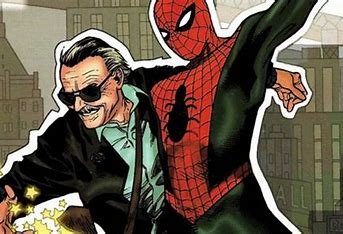
Another example of their collaboration was in 2012, when Jim Lee drew a variant cover for The Amazing Spider-Man #700, which marked the end of Peter Parker’s run as Spider-Man. The cover featured a homage to the classic cover of The Amazing Spider-Man #33 by Steve Ditko, with Spider-Man lifting a heavy machinery while Stan Lee’s face appeared in the background. The cover was a tribute to Stan Lee’s contribution to Spider-Man’s legacy, as well as a celebration of his 90th birthday.
Personal Interaction
Jim Lee and Stan Lee not only worked together professionally, but also knew each other personally. They had a friendly and respectful relationship, often expressing admiration and gratitude for each other’s work.
Jim Lee has shared several anecdotes about his encounters with Stan Lee on social media and interviews. For instance, he recalled how Stan Lee gave him advice on how to draw better hands when he was starting out as an artist. He also remembered how Stan Lee surprised him with a phone call on his birthday, singing “Happy Birthday” to him. He described Stan Lee as “a mentor, an inspiration” and “a friend”.
Stan Lee also had high praise for Jim Lee’s talent and achievements. He once said that Jim Lee was “one of the greatest comic book artists of all time”. He also congratulated him on becoming the co-publisher of DC Comics in 2010, saying that he was “very proud” of him. He called Jim Lee “a great guy” and “a great friend”.
Conclusion
Jim Lee and Stan Lee are two legends of comic books who have left an indelible mark on the medium and the culture. They are not related by blood, but they are connected by their love for comics and their mutual respect. They have collaborated on several occasions, creating memorable stories and characters for both Marvel Comics and DC Comics. They have also maintained a warm and friendly relationship over the years, supporting each other’s careers and celebrating each other’s achievements. They are not father and son, but they are certainly family in spirit.
