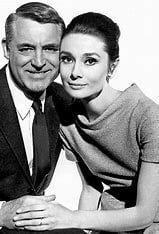
Audrey Hepburn and Katharine Hepburn are two of the most iconic actresses in the history of cinema. They both starred in numerous classic films, won multiple awards, and influenced generations of fans with their style, grace, and talent. But are they related to each other? This is a question that has puzzled many people for decades, as the two stars share the same last name and similar success in the film industry. However, the answer is no. Audrey Hepburn and Katharine Hepburn are not related to each other, and their respective family backgrounds, birthplaces, and personal histories are distinct from one another. Here is the truth behind the Hollywood myth.
Contents
Audrey Hepburn: The Belgian Beauty
Audrey Hepburn, whose birth name was Audrey Kathleen Ruston, was born on May 4, 1929, in Brussels, Belgium. She was the daughter of Joseph Victor Anthony Ruston, a British businessman, and Baroness Ella van Heemstra, a Dutch aristocrat. Her father claimed to be a descendant of James Hepburn, the third husband of Mary, Queen of Scots, and changed his surname to Hepburn-Ruston. Audrey later adopted Hepburn as her professional name when she began her acting career.
Audrey’s childhood was marked by the challenges of living through World War II. She experienced the hardships of the war, including the German occupation of Belgium, the separation from her father, and the famine during the Hunger Winter of 1944. She also witnessed the horrors of violence and oppression, as her uncle was executed by the Nazis and her half-brother was sent to a labor camp. These experiences had a lasting impact on her, shaping her compassionate nature and commitment to humanitarian work in later years.
Audrey began her career as a ballet dancer and later transitioned to acting. She moved to London in 1948, where she performed on stage and in minor film roles. She gained international recognition for her breakthrough role as Princess Ann in Roman Holiday (1953), for which she won an Academy Award for Best Actress. She went on to star in other memorable films such as Sabrina (1954), Funny Face (1957), Breakfast at Tiffany’s (1961), My Fair Lady (1964), and Wait Until Dark (1967). She also received four more Oscar nominations, three BAFTA Awards, two Golden Globe Awards, a Tony Award, and a Grammy Award.
Audrey was also known for her elegant style and fashion influence. She collaborated with French designer Hubert de Givenchy for many of her film costumes and personal wardrobe. She popularized the little black dress, the pixie cut, and the ballet flats. She was also a muse for photographers such as Richard Avedon and Cecil Beaton.
Audrey married twice in her life: first to actor Mel Ferrer in 1954, with whom she had a son named Sean; and second to Italian psychiatrist Andrea Dotti in 1969, with whom she had another son named Luca. She retired from acting in 1988 to focus on her family and humanitarian work. She became a UNICEF Goodwill Ambassador in 1989 and traveled around the world to help children in need. She died of appendiceal cancer on January 20, 1993, at the age of 63.
Katharine Hepburn: The Connecticut Rebel
Katharine Hepburn, born Katharine Houghton Hepburn on May 12, 1907, in Hartford, Connecticut, United States, was a renowned actress and trailblazer. She is widely regarded as one of the greatest actresses in American cinema and one of the most influential women of the 20th century.
Katharine was born into a wealthy and progressive family. Her father was Thomas Norval Hepburn, a prominent urologist who advocated for social reform and public health; her mother was Katharine Martha Houghton, a feminist leader who campaigned for women’s rights and birth control. Katharine had five siblings who were all encouraged to pursue their interests and express their opinions.
Katharine’s childhood was also marked by tragedy and trauma. She witnessed the drowning death of her older brother Tom when she was 13 years old, which left her emotionally scarred and withdrawn. She also suffered from various illnesses and injuries throughout her life, such as measles, mumps, whooping cough, appendicitis, tonsillitis, sprains, fractures, and deafness.
Katharine developed a passion for acting while studying at Bryn Mawr College in Pennsylvania. She graduated with a degree in history and philosophy in 1928 and moved to New York City to pursue a career on Broadway. She made her film debut in A Bill of Divorcement (1932) opposite John Barrymore and quickly rose to fame with her performance in Morning Glory (1933), for which she won her first Academy Award for Best Actress.
However, Katharine also faced criticism and rejection for her unconventional choices and behavior. She wore trousers and suits instead of dresses and skirts, she spoke her mind and challenged authority, and she refused to conform to the Hollywood standards of glamour and publicity. She was labeled as “box office poison” in 1938 after a series of commercial failures and was dropped by her studio.
Katharine revived her career by buying out her contract and acquiring the film rights to The Philadelphia Story (1940), a play in which she starred on Broadway. She sold the rights to MGM on the condition that she would star in the film adaptation alongside Cary Grant and James Stewart. The film was a huge success and earned her another Oscar nomination.
Katharine went on to make more than 40 films in her career, spanning six decades. She collaborated with some of the most acclaimed directors and actors of her time, such as George Cukor, John Huston, David Lean, Spencer Tracy, Humphrey Bogart, Henry Fonda, and Peter O’Toole. She won three more Academy Awards for Best Actress for Guess Who’s Coming to Dinner (1967), The Lion in Winter (1968), and On Golden Pond (1981), setting a record that still stands today. She also received eight more Oscar nominations, four BAFTA Awards, two Emmy Awards, two Golden Globe Awards, and a Lifetime Achievement Award from the American Film Institute.
Katharine never married, but she had several romantic relationships in her life. The most notable one was with Spencer Tracy, her co-star in nine films. They had a secret affair for 26 years until his death in 1967, as he was married to another woman and a devout Catholic. Katharine also had affairs with Howard Hughes, John Ford, and Leland Hayward.
Katharine retired from acting in 1994 and lived a private life in her Connecticut home. She died of natural causes on June 29, 2003, at the age of 96.
Conclusion: No Relation Between Audrey Hepburn and Katharine Hepburn
Audrey Hepburn and Katharine Hepburn were both part of the “Old Hollywood” era in film and television. They both had classics under their belts and left an indelible mark on the culture and society of their time. However, they were not related to each other by blood or marriage. They only shared a last name that originated from different sources: Audrey’s from her father’s claim of Scottish ancestry; Katharine’s from her father’s New England heritage. They also had different family backgrounds, birthplaces, personal histories, and personalities.
The two actresses did meet once in their lives, at the 1974 Academy Awards ceremony, where they both presented awards. They greeted each other warmly and exchanged compliments on their work. They also expressed admiration for each other in interviews and memoirs. Audrey called Katharine “a wonderful woman” who “always did what she wanted”; Katharine called Audrey “a lovely person” who “had such style”.
Audrey Hepburn and Katharine Hepburn may not have been related by blood, but they were certainly related by spirit. They were both pioneers in their field, breaking barriers and defying stereotypes. They were both icons of beauty, elegance, and talent, inspiring generations of fans with their charm and charisma. They were both legends of cinema, leaving behind a legacy of unforgettable films and unforgettable performances.
