Aramaic and Arabic are two of the oldest and most influential languages in the history of the Middle East. They both belong to the Semitic language family, which also includes Hebrew, Phoenician, and Amharic. But are they related to each other? How did they evolve and spread throughout the region? And what are their similarities and differences? In this article, we will explore these questions and more.
Contents
The Origins and Development of Aramaic
Have you ever wondered about the roots of the mysterious and enchanting Arabic language? Learning Arabic has become increasingly popular in recent years, as more people recognize its importance in our interconnected world. From its ancient beginnings to its modern-day significance, delving into the fascinating origins and development of Arabic will not only enhance your understanding of this rich language but also open doors to a culture that spans centuries.
Aramaic is the name given to a group of dialects that originated from the ancient Arameans, a people who lived in what is now northern Syria and southern Turkey. The earliest evidence of Aramaic dates back to the 9th century BC, when it was used as a written language by some of the Aramean kingdoms
Aramaic soon became a lingua franca of the Near East, thanks to its adoption by the Assyrian Empire, which ruled over most of Mesopotamia, Syria, and Palestine from the 8th to the 7th century BC. Aramaic was also used by the Babylonian and Persian empires, which succeeded the Assyrians and expanded their domains to include Egypt, Anatolia, and parts of Central Asia
Aramaic was not only a language of administration and diplomacy, but also of culture and religion. It was the language of many Jewish and Christian texts, such as parts of the Hebrew Bible, the Dead Sea Scrolls, the Talmud, and the New Testament. It was also the language of some pagan and mystical traditions, such as Zoroastrianism and Gnosticism
Aramaic survived the rise of Islam in the 7th century AD, which brought Arabic as the dominant language of the region. However, Aramaic gradually lost its prestige and influence, and became confined to isolated communities in Syria, Iraq, Iran, Turkey, and Lebanon. Today, there are only a few thousand speakers of Aramaic left in the world, mostly belonging to ethnic and religious minorities such as Assyrians, Mandaeans, and some Jews
The Origins and Development of Arabic
Learning Arabic is also a Semitic language that originated from the Arabian Peninsula. The earliest evidence of Arabic dates back to the 6th century AD, when it was used as a written language by some of the Arab tribes
Arabic became a global language in the 7th century AD, when it was spread by the Islamic conquests that established a vast empire from Spain to India. Arabic was not only the language of religion and law, but also of science and literature. It was the language of many influential scholars and poets, such as Ibn Khaldun, Al-Khwarizmi, Avicenna, Al-Jahiz, Rumi, and Al-Mutanabbi
Arabic also influenced many other languages in its sphere of contact, such as Persian, Turkish, Urdu, Swahili, Malay, and Spanish. Arabic also borrowed many words from other languages, such as Greek, Latin, Sanskrit, Hebrew, and Aramaic.
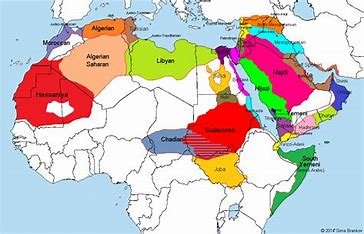
Today, Arabic is spoken by more than 400 million people in 22 countries across North Africa and West Asia. It is also one of the official languages of the United Nations. However, Arabic is not a uniform language; there are many dialects that vary in pronunciation, grammar, and vocabulary. Some of these dialects are mutually intelligible; others are not. There is also a standard form of Arabic called Modern Standard Arabic (MSA), which is used for formal purposes such as education and media.
The Similarities and Differences between Aramaic and Arabic
As members of the same language family, Aramaic and Arabic share many common features. For example:
- They both have consonantal roots that form words by adding vowels and affixes.
- They both have grammatical genders (masculine and feminine) that affect nouns, adjectives, pronouns, and verbs.
- They both have grammatical cases (nominative, accusative, and genitive) that affect nouns and adjectives.
- They both have complex verbal systems that express tense, aspect, mood, voice, and person.
- They both have rich vocabularies that reflect their cultural and historical backgrounds.
However, Aramaic and Arabic also have many differences. For example:
- They have different alphabets. Aramaic uses a script derived from Phoenician, which has 22 letters and is written from right to left. Arabic uses a script derived from Aramaic, which has 28 letters and is also written from right to left. However, Arabic has additional symbols called diacritics that indicate the vowels and other phonetic features.
- They have different phonologies. Aramaic has fewer consonants and vowels than Arabic. For instance, Aramaic does not have the emphatic consonants that Arabic has, such as /ṣ/, /ḍ/, /ṭ/, and /q/. Aramaic also does not have the glottal stop /ʔ/ or the uvular fricative /χ/ that Arabic has. On the other hand, Aramaic has some sounds that Arabic does not have, such as the pharyngeal fricatives /ħ/ and /ʕ/.
- They have different word orders. Aramaic is a verb-initial language, which means that the verb usually comes first in a sentence, followed by the subject and the object. For example, the sentence “He saw her” in Aramaic would be “Ra’ah hi’ah”. Arabic is a verb-medial language, which means that the verb usually comes second in a sentence, after the subject and before the object. For example, the sentence “He saw her” in Arabic would be “Huwa ra’a-ha”.
Conclusion
Aramaic and Arabic are two ancient and fascinating languages that have shaped the history and culture of the Middle East. They are both Semitic languages, but they are not derived from each other. They have many similarities, but also many differences. They are both still spoken today, but with different degrees of vitality and diversity. Learning more about these languages can enrich our understanding of their speakers and their civilizations.
