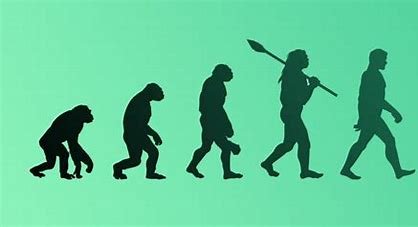
Instinct theory is a psychological theory that explains the origins of motivation. According to this theory, all animals have an innate biological instinct that helps them survive, and these instincts are what drive our motivations and behaviors. The instinct theory of motivation suggests that all organisms are evolutionarily “programmed” in ways that help them survive, and they’re born with traits that cause them to behave in certain ways naturally.
Contents
What is Instinct?
Instincts are goal-directed and innate patterns of behavior that are not the result of learning or experience. For example, infants have an inborn rooting reflex that helps them seek out a nipple and obtain nourishment, while birds have an innate need to migrate before winter. Both of these behaviors occur naturally and automatically. They do not need to be learned in order to be displayed.
How Does Instinct Theory Relate to Evolutionary Psychology?
Evolutionary psychology is a branch of psychology that studies how human behavior and cognition have been shaped by natural selection and adaptation. Evolutionary psychologists assume that human behavior is influenced by both genes and environment, and that some behaviors are more adaptive than others in terms of survival and reproduction.
Instinct theory is related to evolutionary psychology because it assumes that instincts are the result of evolutionary processes that have favored certain behaviors over others. Instincts are seen as adaptive responses to environmental challenges that have been inherited from our ancestors. For example, the fear of snakes or spiders may be an instinctive reaction that has helped humans avoid potentially dangerous animals in the past.
What are Some Examples of Instincts?
Some examples of instincts that have been proposed by psychologists include:
– Curiosity: The tendency to explore and learn new things.
– Maternal instinct: The tendency to care for and protect one’s offspring.
– Laughter: The tendency to express amusement or joy through vocal sounds.
– Comfort: The tendency to seek physical or emotional relief from stress or pain.
– Sex: The tendency to engage in sexual activity for pleasure or reproduction.
– Food-seeking: The tendency to search for and consume food for energy and nutrition.
What are Some Criticisms of Instinct Theory?
Instinct theory has been criticized for several reasons, such as:
– It is too vague and general to explain the complexity and diversity of human behavior.
– It does not account for individual differences, cultural influences, or situational factors that may affect motivation.
– It does not explain how instincts can change or be modified by learning or experience.
– It may be based on circular reasoning, where a behavior is labeled as an instinct because it is natural, and it is natural because it is an instinct.
Conclusion
Instinct theory is a psychological theory that suggests that motivation is primarily biologically based. We engage in certain behaviors because they aid in survival. Instincts are innate patterns of behavior that are not learned or acquired. Instinct theory is related to evolutionary psychology, which studies how human behavior has been shaped by natural selection and adaptation. However, instinct theory has also been challenged for being too simplistic, vague, and circular to account for the variety and complexity of human motivation.
