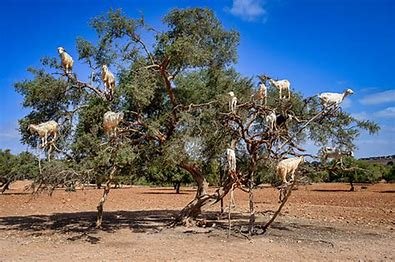
The argan tree is a unique and valuable plant that grows only in a small region of Morocco and Algeria. It produces a precious oil that has many benefits for health, beauty, and cuisine. It also plays a vital role in preserving the biodiversity and the livelihoods of the local people. However, the argan tree is facing many threats, such as climate change, deforestation, overexploitation, and tourism. In this article, we will explore how tourism is related to the argan tree being endangered and what can be done to protect this natural treasure.
Contents
The Benefits of the Argan Tree
The argan tree, scientifically known as Argania spinosa, is a thorny evergreen tree that can grow up to 10 meters high and live for up to 200 years. It has small oval leaves, yellow-green flowers, and fleshy fruits that contain hard nuts with oil-rich seeds. The argan tree is adapted to the arid and semi-arid conditions of the Sous valley in southwestern Morocco and the Tindouf region in southwestern Algeria, where it forms a natural forest that covers about 8,280 square kilometers. According to World Economic Forum, the argan tree has multiple benefits for the environment, the economy, and the society.
Environmental Benefits
The argan tree helps to prevent desertification by stabilizing the soil, reducing erosion, and creating a microclimate that supports other plants and animals. It also acts as a carbon sink by absorbing carbon dioxide and releasing oxygen. The argan forest is home to more than 100 species of birds, 20 species of mammals, 16 species of reptiles, and many insects and plants that depend on it for food and shelter. Some of these species are endangered or endemic, such as the Barbary macaque, the honey badger, the caracal, the sand cat, and the argan woodpecker.
Economic Benefits
The argan tree provides economic opportunities for more than three million people in Morocco, especially women who belong to the Amazigh indigenous nomadic minority. The main source of income is the production and sale of argan oil, which is extracted from the seeds of the argan fruit by a traditional method that involves cracking the nuts by hand, roasting and grinding the kernels, and pressing them to obtain the oil. The oil is used for various purposes, such as cooking, cosmetics, medicine, and handicrafts. According to Frontiers in Plant Science, argan oil has a high market value due to its high quality, nutritional value, antioxidant activity, anti-inflammatory properties, and cosmetic effects. It is also recognized by UNESCO as an intangible cultural heritage of humanity.
Social Benefits
The argan tree also has social benefits for the local communities. It contributes to their food security by providing them with edible fruits and leaves that can be consumed by humans and animals. It also supports their cultural identity by being part of their history, traditions, folklore, and rituals. The production of argan oil is mainly done by women who organize themselves into cooperatives that empower them economically and socially. These cooperatives also promote education, health care, environmental awareness, and women’s rights among their members.
The Threats to the Argan Tree
Despite its importance and value, the argan tree is endangered by various factors that threaten its survival and sustainability. According to Okabo Organics, some of these factors are:
Climate Change
Climate change is affecting the argan forest by increasing the frequency and intensity of droughts, heat waves, fires, pests, and diseases. These factors reduce the growth rate, fruit production, seed germination, and survival rate of the argan tree. They also affect the quality and quantity of argan oil by altering its chemical composition and reducing its yield.
Deforestation
Deforestation is another major threat to the argan forest. It is caused by human activities such as agriculture expansion, urbanization development, overgrazing livestock , firewood collection , charcoal production , mining , road construction , and tourism infrastructure . These activities reduce the area , density , diversity , and health of the argan forest . They also increase soil erosion , water loss , biodiversity loss , carbon emissions , and desertification .
Overexploitation
Overexploitation is also a serious threat to the argan forest . It is caused by the high demand for argan oil in national and international markets , which leads to overharvesting , illegal harvesting , adulteration , fraud , and unfair trade practices . These practices affect the quality , quantity , and price of argan oil . They also affect the income , livelihood , and well-being of the local producers .
Tourism
Tourism is another factor that affects the argan forest . Tourism can have positive impacts on the conservation and development of the argan forest by raising awareness , generating income , creating jobs , and supporting local culture . However , tourism can also have negative impacts on the argan forest by increasing pressure , pollution , disturbance , and damage . According to IJOSMT, some of these impacts are :
- Pressure : Tourism increases the pressure on the argan forest by attracting more visitors , vehicles , and activities that consume more resources , produce more waste , and occupy more space .
- Pollution : Tourism causes pollution in the argan forest by generating noise , air , water , and soil pollution that affect the quality of the environment , the health of the plants and animals , and the comfort of the visitors and residents .
- Disturbance : Tourism causes disturbance in the argan forest by interfering with the natural cycles , behaviors , and interactions of the plants and animals . It also disrupts the traditional lifestyles , customs , and values of the local people .
- Damage : Tourism causes damage in the argan forest by harming , destroying , or removing the plants and animals . It also damages the cultural heritage , such as historical sites , monuments , and artifacts .
The Solutions for the Argan Tree
In order to protect and preserve the argan tree and its benefits, it is necessary to implement some solutions that address the root causes of its endangerment. According to Wikipedia, some of these solutions are :
Conservation
Conservation is a key solution for the argan tree . It involves protecting , restoring , and managing the argan forest in a sustainable way . Some of the conservation measures that have been taken are :
- Designating the argan forest as a UNESCO biosphere reserve and a World Heritage Site .
- Establishing laws and regulations that prohibit or limit the activities that harm the argan forest .
- Creating protected areas and buffer zones that conserve the biodiversity and ecosystem services of the argan forest .
- Implementing reforestation and afforestation programs that increase the area and density of the argan forest .
- Promoting agroforestry systems that integrate the argan tree with other crops and livestock .
Domestication
Domestication is another solution for the argan tree . It involves cultivating , improving , and marketing the argan tree in a controlled way . Some of the domestication measures that have been taken are :
- Developing nurseries and plantations that produce high-quality argan seedlings and trees .
- Applying scientific research and biotechnology that enhance the genetic diversity, productivity, and resilience of the argan tree .
- Adopting good agricultural practices that optimize the growth, yield, and quality of the argan tree .
- Improving the processing techniques and equipment that extract, refine, store, and distribute argan oil .
- Diversifying the products and services that derive from the argan tree, such as cosmetics, medicine, handicrafts, tourism, etc.
Education
Education is also a solution for the argan tree . It involves informing , educating , and empowering the stakeholders involved in the argan forest . Some of the education measures that have been taken are :
- Raising awareness among the public, especially tourists, about the importance, value, and threats of the argan tree .
- Educating the local people, especially women, about their rights, roles, and responsibilities in the argan forest .
- Empowering the local people, especially women, by providing them with training, skills, and opportunities in the argan forest .
- Encouraging cooperation and collaboration among the different actors, such as government, NGOs, researchers, producers, traders, and consumers, in the argan forest .
Conclusion
The argan tree is a remarkable plant that has many benefits for the environment, the economy, and the society. However, it is endangered by various factors, such as climate change, deforestation, overexploitation, and tourism. Therefore, it is essential to implement some solutions, such as conservation, domestication, and education, to protect and preserve this natural treasure. By doing so, we can ensure the sustainability of the argan forest and its benefits for ourselves and future generations.
