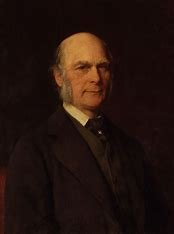
Intelligence is one of the most fascinating and controversial topics in psychology. How do we measure it, what factors influence it, and how does it vary across individuals and groups? These are some of the questions that have intrigued and challenged researchers for centuries. Among the pioneers of intelligence research were two British scientists: Francis Galton and Arthur Jensen. In this article, we will explore how their theories and findings are related, and what implications they have for our understanding of human intelligence.
Contents
- 1 Francis Galton: The Father of Eugenics and Differential Psychology
- 2 Arthur Jensen: The Advocate of Hereditarianism and IQ Testing
- 3 How are Jensen’s Theory and Galton’s Early Work Related?
- 4 What are the Implications of Jensen’s Theory and Galton’s Early Work for our Understanding of Human Intelligence?
Francis Galton: The Father of Eugenics and Differential Psychology
Francis Galton was born in 1822 in Birmingham, England. He was a cousin of Charles Darwin, and was influenced by his theory of evolution by natural selection. Galton was a polymath who studied many fields, including anthropology, statistics, meteorology, and psychology. He was especially interested in the study of human variation and inheritance of traits, such as intelligence, personality, and physical characteristics.
Galton believed that intelligence was largely determined by genetic factors, and that it could be measured by objective tests. He devised various methods to assess mental abilities, such as reaction time, sensory discrimination, and memory. He also collected data on the biographies and genealogies of eminent people, such as scientists, artists, and politicians. He concluded that genius and greatness were hereditary, and that they tended to run in families. He published his findings in his book Hereditary Genius (1869), which was the first social scientific attempt to study intelligence.
Galton also coined the term eugenics, which means “well-born” or “good in stock”. He advocated for the improvement of human quality by selective breeding of the best individuals. He proposed various measures to encourage the reproduction of the “fit” and discourage the reproduction of the “unfit”. He also suggested that immigration and intermarriage should be restricted to preserve the purity of the British race. He founded the Eugenics Society in 1907, which promoted his ideas and influenced public policies in Britain and other countries.
Galton’s work was controversial and criticized by many scientists and social reformers. They argued that his methods were flawed, his data were biased, and his conclusions were based on assumptions and prejudices. They also pointed out that intelligence was influenced by environmental factors, such as education, nutrition, and culture. They also challenged his ethical and moral views on human diversity and dignity.
Arthur Jensen: The Advocate of Hereditarianism and IQ Testing
Arthur Jensen was born in 1923 in San Diego, California. He was a psychologist who specialized in the study of human intelligence and educational achievement. He worked as a professor at the University of California, Berkeley from 1958 to 1992.
Jensen was inspired by Galton’s work on intelligence and inheritance. He conducted numerous experiments to test whether intelligence was influenced by genetic or environmental factors. He also analyzed data from IQ tests administered to different groups of people, such as racial minorities, social classes, and countries. He concluded that intelligence was largely determined by genetic factors, and that it varied significantly across groups. He estimated that about 80% of the variance in IQ scores was due to genetic factors, while only 20% was due to environmental factors.
Jensen published his findings in a controversial article titled “How Much Can We Boost I.Q. and Scholastic Achievement?” in the Harvard Educational Review in 1969. In this article, he claimed that he had identified racial differences in IQ scores, with whites scoring higher than blacks on average. He also claimed that these differences pointed to a genetic component that determined intelligence. He argued that environmental interventions, such as compensatory education programs for disadvantaged children, had little or no effect on improving their IQ scores or academic performance.
Jensen’s article sparked a firestorm of controversy and criticism from many scientists and educators. They accused him of being racist, biased, and pseudoscientific. They argued that his methods were flawed, his data were selective, and his interpretations were erroneous. They also pointed out that IQ tests were culturally biased, unreliable, and invalid measures of intelligence. They also emphasized that intelligence was influenced by many factors besides genetics, such as motivation, creativity, social skills, and emotional intelligence.
How are Jensen’s Theory and Galton’s Early Work Related?
Jensen’s theory of intelligence can be seen as a continuation and extension of Galton’s early work on intelligence. Both Galton and Jensen shared a common interest in the study of human variation and inheritance of traits. Both Galton and Jensen believed that intelligence was largely determined by genetic factors, and that it could be measured by objective tests. Both Galton and Jensen collected data on the biographies and genealogies of eminent people, as well as on the IQ scores of different groups of people. Both Galton and Jensen concluded that intelligence varied significantly across individuals and groups, and that these variations had genetic causes.
However, Jensen’s theory also differed from Galton’s early work in some aspects. Jensen used more sophisticated and rigorous methods and techniques to test his hypotheses, such as factor analysis, correlation, and regression. Jensen also used more standardized and modern IQ tests, such as the Stanford-Binet and the Wechsler scales, to measure intelligence. Jensen also provided more precise and quantitative estimates of the heritability of intelligence, such as the 80/20 ratio. Jensen also focused more on the educational and social implications of his findings, such as the effectiveness of compensatory education programs and the causes of racial inequality.
What are the Implications of Jensen’s Theory and Galton’s Early Work for our Understanding of Human Intelligence?
Jensen’s theory and Galton’s early work have both contributed to our understanding of human intelligence in some ways. They have stimulated research and debate on the nature, measurement, and causes of intelligence. They have also challenged us to think critically and creatively about the concept and definition of intelligence. They have also raised important ethical and moral questions about the value and diversity of human life.
However, Jensen’s theory and Galton’s early work have also been criticized and rejected by many scientists and educators for their limitations and flaws. They have been accused of being based on faulty assumptions, methods, data, and interpretations. They have also been accused of being influenced by personal biases, prejudices, and ideologies. They have also been accused of having negative and harmful consequences for individuals and society, such as discrimination, oppression, and injustice.
Therefore, Jensen’s theory and Galton’s early work should be treated with caution and skepticism. They should not be accepted uncritically or unquestioningly. They should be evaluated carefully and objectively based on the evidence and logic. They should also be balanced with alternative perspectives and approaches that recognize the complexity and diversity of human intelligence.
