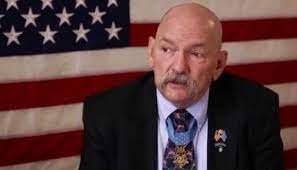
Frank D Miller was a legendary soldier who served in the Vietnam War and received the highest military honor for his bravery and heroism. He was also a prolific writer who shared his experiences and reflections as a Green Beret in his memoir. He died in 2000 at the age of 55 from cancer and was cremated, with his ashes scattered in New Mexico. This article will explore his life, his military career, his achievements, and his cause of death.
Contents
Early Life and Military Service
Franklin Douglas Miller was born on January 27, 1945 in Elizabeth City, North Carolina. He joined the U.S. Army from Albuquerque, New Mexico on February 17, 1965. After basic training and advanced infantry training, he took the U.S. Army Special Forces course at Ft. Bragg, North Carolina. In March 1966, he deployed with the 1st Cavalry Division to An Khe which is located in the Central Highlands of South Vietnam. He undertook two years of airborne infantry reconnaissance work in Vietnam before he was first assigned to an Army Special Forces unit, the 5th Special Forces Group in Vietnam. Miller also became a member of the elite and highly-secretive Military Assistance Command, Vietnam – Studies and Observations Group (MAC-V SOG), which conducted covert operations across the borders of Cambodia and Laos.
Medal of Honor Action
On January 5, 1970, Staff Sergeant Miller, who was administratively a member of the 5th Special Forces Group, was leading a joint American-South Vietnam Montagnard tribesmen (nicknamed “Yards”) long-range reconnaissance patrol operating deep within enemy-controlled territory in and from Kontum Province, Vietnam when his seven-man team was attacked by a platoon size North Vietnamese reconnaissance force in Laos after one of his Montagnard team members tripped an enemy booby trap wounding five team members. Miller was wounded in the chest, and single-handedly held off an enemy assault, and arranged for a helicopter extraction of his surviving comrades, and again fought off the enemy alone until relief arrived; four team members were killed and all were wounded.
For his actions during the battle, in which he was seriously wounded, he was presented the Medal of Honor by President Richard M. Nixon at a White House ceremony on June 15, 1971. The citation reads:
For conspicuous gallantry and intrepidity in action at the risk of his life above and beyond the call of duty. S/Sgt. Miller, 5th Special Forces Group, distinguished himself while serving as team leader of an American-Vietnamese long-range reconnaissance patrol operating deep within enemy controlled territory. Leaving the helicopter insertion point, the patrol moved forward on its mission. Suddenly, one of the team members tripped a hostile booby trap which wounded four soldiers. S/Sgt. Miller, knowing that the explosion would alert the enemy, quickly administered first aid to the wounded and directed the team into positions across a small stream bed at the base of a steep hill. Within a few minutes, S/Sgt. Miller saw the lead element of what he estimated to be a platoon-size enemy force moving toward his location. Concerned for the safety of his men, he directed the small team to move up the hill to a more secure position. He remained alone, separated from the patrol, to meet the attack. S/Sgt. Miller single-handedly repulsed two determined attacks by the numerically superior enemy force and caused them to withdraw in disorder. He rejoined his team, established contact with a forward air controller and arranged for immediate air strikes on the enemy positions. In order to insure that proper targeting information would be available to him should he again require it for air strikes against enemy positions S/Sgt. Miller again moved across open terrain for approximately 100 meters to observe possible enemy activity near an abandoned bunker complex where he had successfully broken up earlier attacks by hostile forces. His position exposed him to intense hostile fire which wounded him painfully in both arms and legs but he continued to relay vital information concerning enemy movement until he lost consciousness due to loss of blood from multiple wounds sustained during this final encounter with North Vietnamese regulars who were attempting to overrun his position.
Later Life and Death
After receiving the medal, Miller asked to be returned to his unit in Vietnam. He left the Republic Vietnam in November 1972. He retired from the U.S. Army on December 1, 1992 as a command sergeant major, and joined the Veterans Administration where he worked as a benefits counselor.
He also wrote a memoir titled Reflections of a Warrior: Six Years as a Green Beret in Vietnam, which was published in 1991. In this book, he recounted his experiences and thoughts as a soldier who fought in one of the most controversial wars in American history.
He died on June 30, 2000 at age 55 from cancer and was cremated, with his ashes scattered in New Mexico. He was survived by his wife, two sons, and a daughter. He was also honored by having a building named after him at Fort Bragg, North Carolina.
Legacy and Impact
Frank D Miller was a remarkable soldier who displayed extraordinary courage, skill, and leadership in the face of overwhelming odds. He was one of the most decorated veterans of the Vietnam War, having received the Medal of Honor, the Silver Star, two Bronze Stars, and six Purple Hearts. He was also a respected author who shared his insights and perspectives on war and life. He inspired many people with his dedication, determination, and humility. He was a true hero who sacrificed his life for his country and his comrades.
According to Wikipedia, he is one of only three Medal of Honor recipients who were also members of the MAC-V SOG, along with Robert L. Howard and Fred W. Zabitosky. He is also one of only 19 men to receive both the Medal of Honor and the Distinguished Service Cross, the second-highest military award for valor.
Frank D Miller cause of death was cancer, but his legacy lives on in the hearts and minds of those who knew him and those who learned from him. He was a warrior, a writer, and a patriot who exemplified the best of America.
