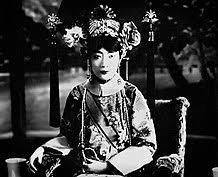
Empress Wanrong was the wife and empress consort of Puyi, the last emperor of China. She was born into a wealthy and influential Manchu family in 1906, and married Puyi when she was only 16 years old. She lived a lavish and privileged life in the Forbidden City, until the imperial family was exiled in 1924. She followed Puyi to the Japanese puppet state of Manchukuo, where she became the empress consort in 1934. However, her life was far from happy. She suffered from loneliness, depression, addiction, and abuse. She died in a prison camp in 1946, at the age of 39, from malnutrition and opium withdrawal. Her body was never recovered, and her story was largely forgotten. This article will explore the tragic fate of Empress Wanrong, the last empress of China.
A Royal Marriage
Empress Wanrong was born as Gobulo Wanrong, of the Manchu Plain White Banner Gobulo clan. Her father was Rongyuan, a high-ranking minister in the Qing dynasty, and her mother was Aisin-Gioro Hengxin, a princess of the imperial clan. Her mother died shortly after giving birth to her, and she was raised by a stepmother. She received a modern education at an American school in Tianjin, where she learned English, piano, and Western culture. She also adopted a Western name, Elizabeth, inspired by Queen Elizabeth I of England.
In 1922, Puyi, the last emperor of China, was looking for a bride. He had been overthrown in 1911, but was allowed to retain his title and live in the Forbidden City as a nominal ruler. He was under the influence of the Dowager Empresses, who selected potential candidates for him based on their photographs. Wanrong was one of the finalists, and she impressed Puyi with her beauty, intelligence, and grace. She also had a large dowry from her wealthy father. Puyi chose her as his primary consort, and married her on December 1, 1922. She was given the title of Empress Xiaokemin, and moved into the Forbidden City with Puyi.
A Lonely Life
Empress Wanrong soon realized that her marriage was not a happy one. Puyi was cold, distant, and indifferent to her. He had no interest in consummating their marriage, and preferred the company of his eunuchs and concubines. He also had a close relationship with his wet nurse, Wenxiu, whom he treated as his mother. Empress Wanrong felt neglected, isolated, and bored in the palace. She had no friends, no hobbies, and no freedom. She was expected to follow the strict rules and rituals of the court, and to obey the Dowager Empresses, who controlled everything in the palace. She had no say in any matters, and was often scolded and humiliated by the Dowager Empresses.
Empress Wanrong tried to find some solace in her education and culture. She read books, played piano, and wrote poetry. She also developed a fondness for Western fashion, and wore modern clothes and accessories. She even cut her hair short, which was considered a scandalous act for a Chinese woman at the time. She also tried to be a good wife to Puyi, and hoped that he would love her someday. She gave birth to a daughter in 1923, but the baby died soon after. She suffered a miscarriage in 1924, and never had any more children.
An Exiled Empress
Empress Wanrong’s life changed dramatically in 1924, when the warlord Feng Yuxiang staged a coup and expelled Puyi and his family from the Forbidden City. They were forced to leave behind their luxurious lifestyle and flee to the Japanese concession in Tianjin. There, they lived in a modest house, under the protection and surveillance of the Japanese. Empress Wanrong was shocked and saddened by the loss of her home and status, but she also felt a sense of relief and freedom. She was able to go out, shop, socialize, and enjoy life. She also became closer to Puyi, who was depressed and traumatized by his downfall. She comforted him, and encouraged him to adapt to the new situation. She also helped him learn English, and introduced him to Western culture.
However, their peaceful life in Tianjin did not last long. In 1931, Japan invaded and occupied Manchuria, a region in northeastern China. They established a puppet state called Manchukuo, and invited Puyi to be its emperor. Puyi accepted the offer, hoping to restore his glory and power. He moved to Changchun, the capital of Manchukuo, in 1932, and was crowned as the emperor in 1934. Empress Wanrong followed him, and became the empress consort of Manchukuo. She was given a new palace, a new title, and a new role. She was expected to be the symbol of the harmony and cooperation between China and Japan, and to promote the Japanese propaganda and policies. She was also under the constant supervision and manipulation of the Japanese, who controlled every aspect of her life.
A Tragic End
Empress Wanrong soon realized that she was not an empress, but a puppet. She had no power, no influence, and no respect. She was treated as a tool and a trophy by the Japanese, who used her for their own interests and agendas. She was also betrayed and abused by Puyi, who became a puppet and a tyrant. He was addicted to opium, and indulged in his vices and whims. He was cruel, violent, and paranoid, and often beat and tortured Empress Wanrong. He also had multiple affairs, and married two more concubines, Tan Yuling and Li Yuqin, whom he favored over Empress Wanrong.
Empress Wanrong was miserable, hopeless, and desperate. She also became addicted to opium, and used it to escape from her reality. She also suffered from various illnesses, such as tuberculosis, anemia, and depression. She lost her beauty, her health, and her sanity. She became a shadow of her former self, and a prisoner of her own palace.
Empress Wanrong’s fate was sealed in 1945, when Japan surrendered at the end of World War II. The Soviet army invaded and occupied Manchuria, and captured Puyi and his family. They were taken to a prison camp in Changchun, where they were interrogated and humiliated. Empress Wanrong was separated from Puyi, and transferred to another prison camp in Yanji, Jilin. There, she was subjected to harsh conditions, and deprived of food, medicine, and opium. She died in the Yanji prison on June 20, 1946, from the effects of malnutrition and opium withdrawal, at the age of 39. Her body was never recovered, and her story was largely forgotten.
Empress Wanrong was the last empress of China, but she never enjoyed the glory and happiness of her position. She was a victim of the turbulent times, and the cruel fate. She was a beautiful, intelligent, and cultured woman, who deserved a better life. She was Empress Wanrong, the tragic empress.
