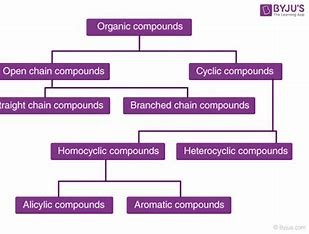
Organic compounds are molecules that contain carbon and hydrogen, and often other elements such as oxygen, nitrogen, sulfur, and phosphorus. They are essential for life, as they form the basis of biomolecules such as proteins, carbohydrates, lipids, and nucleic acids. But how did these compounds get their name? And what does the word “organic” mean in chemistry?
Contents
The Historical Definition of Organic Compounds
The term “organic” comes from the Greek word “organikos”, which means “of or pertaining to an organ”. In the 18th and 19th centuries, chemists used this word to describe substances that were derived from living organisms, such as plants and animals. They believed that these substances had a special “vital force” that could not be reproduced in the laboratory. They also thought that organic compounds had different properties and behaviors than inorganic compounds, which were obtained from non-living sources, such as minerals and metals.
One of the first chemists to use the term “organic” was Torbern Bergman, a Swedish scientist who classified chemical substances into two groups: organic and inorganic. He defined organic substances as those that “are produced by the so-called vital force of living organisms” and inorganic substances as those that “are either elementary or can be obtained from elementary substances by chemical processes”
Another influential chemist who used the term “organic” was Jöns Jacob Berzelius, a Swedish scientist who is considered one of the founders of modern chemistry. He coined the term “organic chemistry” to refer to the study of compounds derived from living organisms. He also introduced the concept of “radicals”, which are groups of atoms that behave as a unit in chemical reactions. He identified many organic radicals, such as methyl (CH3), ethyl (C2H5), and acetyl (C2H3O)
The Modern Definition of Organic Compounds
The historical definition of organic compounds was challenged by a series of experiments that showed that some organic compounds could be synthesized from inorganic materials in the laboratory. The most famous example was the synthesis of urea, a compound found in urine, by Friedrich Wöhler in 1828. He heated ammonium cyanate (an inorganic salt) and obtained urea crystals. This was the first time that an organic compound was made from an inorganic compound without involving any living organism. Wöhler’s experiment is considered the birth of organic chemistry as a separate branch of chemistry
Wöhler’s synthesis of urea was followed by many other discoveries that demonstrated that organic compounds could be made from simple elements such as carbon, hydrogen, oxygen, and nitrogen. For example, Hermann Kolbe synthesized acetic acid (a compound found in vinegar) from carbon dioxide and hydrogen in 1845. Charles Gerhardt synthesized benzoic acid (a compound found in some plants) from carbon dioxide and benzene in 1852. Auguste Laurent synthesized naphthalene (a compound found in coal tar) from carbon and hydrogen in 1856
These discoveries led to a new definition of organic compounds based on their chemical structure rather than their origin. The modern definition of organic compounds is any compound that contains one or more carbon atoms covalently bonded to other atoms, usually hydrogen, oxygen, or nitrogen. The carbon atoms can form chains or rings of various lengths and shapes, creating a huge diversity of organic compounds with different properties and functions. Some examples of organic compounds are methane (CH4), ethanol (C2H5OH), glucose (C6H12O6), aspirin (C9H8O4), and DNA.
The Meaning of Organic Compounds Today
The term “organic” has acquired different meanings in different contexts today. In chemistry, it refers to any compound that contains carbon, except for a few exceptions such as carbonates (CO3), cyanides (CN), and carbon monoxide (CO). In biology, it refers to any compound that is produced or used by living organisms, such as biomolecules, hormones, and vitamins. In agriculture, it refers to any product that is grown or processed without the use of synthetic chemicals, such as pesticides, fertilizers, and antibiotics. In philosophy, it refers to any system that is characterized by complexity, diversity, and adaptation, such as living organisms, societies, and cultures.
The term “organic” also has some connotations that are not strictly scientific but rather cultural or emotional. For example, some people associate organic products with healthiness, naturalness, sustainability, and ethicality. Some people also prefer organic products over synthetic ones because they believe they are more authentic, pure, or original.
The term “organic” is therefore a versatile and powerful word that can have different meanings depending on the context and the perspective. It is also a word that reflects the history and the evolution of chemistry, biology, and human culture. It is a word that connects us to the natural world and to ourselves.
