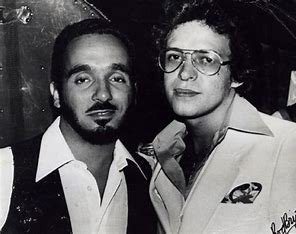
Héctor Pérez Jr. was the son of Héctor Lavoe, a Puerto Rican salsa singer who is widely regarded as one of the best and most influential artists and interpreters in the history of the genre. He helped to popularize this musical genre in the decades of 1960s, 1970s, and 1980s. However, his life was also marked by personal struggles, drug addiction, and tragedy. One of the most devastating events in his life was the death of his son, Héctor Pérez Jr., in 1987.
How did Héctor Pérez Jr. die?
According to Chop News, Héctor Pérez Jr. died after he was accidentally shot by a friend of his father in 1987. This was a huge loss for father Lavoe and his apartment in Rego Park, Queens, which was damaged in a fire around the same time. Héctor Pérez Jr. was only 17 years old when he died.
According to Wikipedia, Héctor Lavoe became deeply depressed after the death of his son and sought the help of a high priest of the Santería faith to treat his drug addiction. However, he relapsed after the deaths of his father, son, and mother-in-law, as well as being diagnosed with HIV from intravenous drug use. He attempted suicide by jumping off a hotel room balcony in San Juan, Puerto Rico, but survived. He died in 1993 from complications of AIDS.
Who was Héctor Lavoe?
Héctor Lavoe was born as Héctor Juan Pérez Martínez in Ponce, Puerto Rico, on September 30, 1946. His parents, Francisca and Luis Pérez, were both known for their singing voices. Héctor pursued a career in music, following in the footsteps of his parents. He attended the Juan Morel Campos Public School of Music and moved to New York City in 1963, when he was 16 years old.
He started his career as the vocalist of a sextet led by Roberto García and performed with several other groups, including Orquesta New York, Kako All-Stars, and Johnny Pacheco’s band. In 1967, he joined Willie Colón’s band as its vocalist and recorded several hit songs, such as “El Malo” and “Canto a Borinquen”. He then became a soloist and formed his own band, performing as the lead vocalist. He recorded many more hits, such as “El Cantante” composed by Rubén Blades, “Bandolera” composed by Colón, and “Periódico de Ayer” composed by Tite Curet Alonso. He was also a frequent guest singer with the Fania All Stars, recording numerous tracks with the band.
He was known for his distinctive voice, his improvisational skills, and his charismatic personality. He was nicknamed “El Cantante de los Cantantes” (The Singer of the Singers) and was considered one of the most popular and influential salsa singers of all time. He was also admired for his social and political commentary in his lyrics, which reflected the realities and struggles of the Latin American people.
What is the legacy of Héctor Lavoe and his son?
Héctor Lavoe and his son Héctor Pérez Jr. left behind a legacy of music, culture, and history that is still celebrated and remembered by many fans and admirers. Their lives and careers have been the subject of several books, documentaries, films, and musicals. Some of the most notable ones are:
El Cantante, a 2006 biographical film starring Marc Anthony as Héctor Lavoe and Jennifer Lopez as his wife Nilda “Puchi” Lavoe.
Yo Soy Héctor Lavoe, a 2008 musical play based on the life and music of Héctor Lavoe, starring Domingo Quiñones as Lavoe and featuring a live orchestra.
Héctor Lavoe: La Voz, a 2011 documentary film that features interviews, footage, and testimonies from Lavoe’s family, friends, and colleagues.
Héctor Lavoe: El Inmortal, a 2014 graphic novel that depicts the life and career of Héctor Lavoe in comic book format, written by Edgardo Miranda-Rodríguez and illustrated by Wilfredo Torres.
Héctor Lavoe and his son Héctor Pérez Jr. are also honored and commemorated in various ways, such as:
The Héctor Lavoe Museum in Ponce, Puerto Rico, which displays memorabilia, photos, and artifacts related to Lavoe’s life and career.
The Héctor Lavoe Park in the Bronx, New York, which features a mural of Lavoe and a plaque with his lyrics.
The Héctor Lavoe School of Music in Cali, Colombia, which offers courses and workshops on salsa music and culture.
The Héctor Lavoe Award, which is given annually by the Latin Academy of Recording Arts and Sciences to recognize excellence in salsa music.
Héctor Lavoe and his son Héctor Pérez Jr. were two talented and influential figures in the history of salsa music and Latin American culture. Their lives were full of joy and sorrow, success and tragedy, but their music and legacy live on in the hearts and minds of millions of people around the world.
