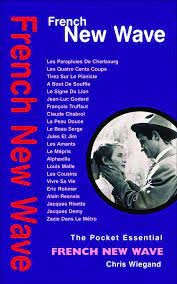
Gérard Blain was a French actor and film director who played a key role in the emergence of the French New Wave cinema in the late 1950s and early 1960s. He starred in films by Claude Chabrol, François Truffaut, and Wim Wenders, among others, and directed nine films of his own, often compared to the style of Robert Bresson. He died of cancer on December 17, 2000, at the age of 70, leaving behind a legacy of artistic excellence and rebellious spirit.
Contents
A Star is Born
Blain was born in Paris on October 23, 1930, and began his acting career as an extra in Marcel Carné’s classic film Children of Paradise (1945). He was discovered by actor Jean Gabin and director Julien Duvivier, who cast him in their film Here Is the Time of the Assassins (1956). He then married actress Bernadette Lafont, and appeared in François Truffaut’s first short film, The Mischief Makers (1957), which was a precursor to the French New Wave movement.
Blain’s breakthrough role came in 1958, when he starred as Serge, a troubled and alcoholic young man who returns to his hometown, in Claude Chabrol’s debut feature film, The Handsome Serge. The film was hailed as the first example of the French New Wave, a cinematic style that rejected the conventions of mainstream cinema and embraced realism, improvisation, and social criticism. Blain reprised his collaboration with Chabrol in the same year, playing Charles, a naive and innocent student who is corrupted by his cousin, in The Cousins. Both films showcased Blain’s intense and charismatic screen presence, and earned him the nickname of “the French James Dean”.
International Success and Hollywood Adventure
Blain’s fame and talent soon attracted the attention of filmmakers from other countries, especially Italy, where he worked with directors such as Mauro Bolognini, Carlo Lizzani, and Mario Camerini. He also acted in films by Jean-Luc Godard, Howard Hawks, and Costa-Gavras, demonstrating his versatility and range. He was particularly praised for his performance as Raoul Minot, a shady and mysterious character who is involved in a murder plot, in Wim Wenders’ The American Friend (1977), based on a novel by Patricia Highsmith.
Blain also had a brief stint in Hollywood, where he appeared in Hawks’ adventure film Hatari! (1962), alongside John Wayne and Elsa Martinelli. However, he soon became disillusioned with the American film industry, and returned to France, where he focused on his own directorial projects.
A Director in His Own Right
Blain made his directorial debut in 1971, with The Friends, a film about a young man who leaves his bourgeois family and joins a group of vagabonds. The film won the Golden Leopard at the Locarno International Film Festival, and established Blain as a filmmaker of note. He went on to direct eight more films, all of which reflected his personal vision and style, influenced by his friend and mentor Robert Bresson. Blain’s films were often austere and formal, relying on non-professional actors, minimal dialogue, and long takes. He also wrote or co-wrote all his screenplays, and dealt with themes such as alienation, violence, and spirituality.
Some of his most acclaimed films as a director include A Second Breath (1978), starring Robert Stack, Pierre and Djemila (1987), which won the Jury Prize at the Cannes Film Festival, and All the Boys Are Called Patrick (1992), which was his last film. Blain received an honorary Golden Leopard at Locarno in 1999, for his body of work as a director.
A Legacy of Art and Rebellion
Blain died of cancer on December 17, 2000, in Paris, exactly one year after the death of Bresson, whom he considered his spiritual father. He was survived by his third wife, Monique Sobieski, and four sons. He was buried at the Montparnasse Cemetery, where his tombstone bears the inscription “Ainsi soit-il” (So be it), the title of his penultimate film.
Blain’s life and career were marked by his passion for cinema, his artistic integrity, and his rebellious spirit. He was a key figure of the French New Wave, a movement that revolutionized film history and influenced generations of filmmakers. He was also a respected and original director, who created films that expressed his personal vision and style. He was a star, an icon, and an artist, who left behind a legacy of excellence and inspiration.
