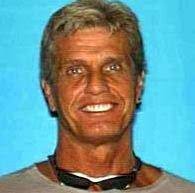
Gavin Smith was a former UCLA basketball player, actor, stuntman, and film studio executive who worked for 20th Century Fox. He mysteriously disappeared on May 1, 2012, and his remains were found more than two years later in a shallow grave in the desert. His death was ruled a homicide, and a convicted drug dealer named John Creech was found guilty of voluntary manslaughter in his killing. But what exactly happened to Gavin Smith, and what was the motive behind his brutal death? Here is what we know so far, based on the information available from various sources.
Contents
The Disappearance
According to People, Gavin Smith was last seen leaving a friend’s house in Oak Park, California, around 9:35 p.m. on May 1, 2012. He was driving his black Mercedes-Benz 420E, which had a storage rack on the roof. He was wearing purple pants and black and gray shoes. He did not have his wallet, cellphone, or any other belongings with him. He was supposed to stay overnight at the friend’s house, but he never returned.
Smith’s family reported him missing the next day, and launched a massive search campaign, using social media, flyers, billboards, and TV appearances to spread the word. Smith’s wife, Lisa, and their three sons, Evan, Austin, and Dylan, pleaded for any information that could help locate him. Smith’s colleagues at Fox also joined the search efforts, and offered a $20,000 reward for any leads.
The Los Angeles County Sheriff’s Department’s Homicide Bureau took over the case, and investigated various theories about Smith’s disappearance. They considered the possibility that he may have committed suicide, overdosed on drugs, or ran away with another woman. They also looked into his personal and professional life, and found out that he had a history of substance abuse, financial troubles, and marital problems. He was reportedly having an affair with Chandrika Creech, the estranged wife of John Creech, the drug dealer who would later be convicted of his killing.
The Car and the Body
On February 21, 2013, nearly 10 months after Smith’s disappearance, his car was found in a storage facility in Simi Valley, California. The car was registered to John Creech, who was already in custody for an unrelated drug charge. The car had blood stains and signs of a violent struggle inside. The detectives concluded that Smith was killed in the car, and labeled his death a homicide.
On October 26, 2014, more than two years after Smith’s disappearance, his remains were found by hikers in a shallow grave in the desert near Palmdale, California. The coroner’s office confirmed his identity through dental records, and determined that he died of blunt force trauma to the head. The detectives traced the location of the grave to John Creech, who had rented a car and drove to the area shortly after Smith’s disappearance.
The Trial and the Verdict
On January 4, 2016, John Creech was charged with first-degree murder in Smith’s death. He pleaded not guilty, and claimed that he acted in self-defense. He testified that he found Smith and his estranged wife together in Smith’s car, and confronted them. He said that Smith attacked him first, and that he fought back to protect himself and his wife. He said that he did not intend to kill Smith, and that he panicked and buried his body in the desert.
The prosecution argued that Creech acted with premeditation and malice, and that he brutally beat Smith while his wife begged him to stop. They presented evidence that Creech had a history of violence, drug dealing, and jealousy. They also showed that Creech had searched online for information on how to dispose of a body, and that he had lied to the police about his involvement in the case.
On July 3, 2017, after a six-week trial, the jury found Creech guilty of voluntary manslaughter, but not guilty of first-degree or second-degree murder. The verdict meant that the jury believed that Creech killed Smith in the heat of passion, without planning or deliberation. The verdict was met with mixed reactions from Smith’s family and friends, who felt that Creech deserved a harsher punishment. Creech was sentenced to 11 years in prison, the maximum term for voluntary manslaughter.
The Aftermath and the Legacy
Gavin Smith’s death was a tragic loss for his family, friends, and colleagues, who remembered him as a loving father, a loyal friend, and a passionate professional. His sons, who followed his footsteps in basketball and acting, paid tribute to him on social media, and vowed to honor his memory and legacy. His wife, Lisa, who had reconciled with him before his death, expressed her grief and anger at his killer, and said that she hoped that he would rot in hell.
Smith’s case also raised awareness about the dangers of domestic violence, substance abuse, and infidelity, and the need for more support and resources for the victims and their families. Smith’s case also inspired a documentary film, titled “Missing Gavin”, which chronicled his life and death, and the impact of his disappearance on his loved ones. The film was released in 2019, and received positive reviews from critics and audiences.
Gavin Smith’s cause of death was a senseless and brutal act of violence, that robbed him of his life and his future. His case remains a mystery, as many questions are still unanswered, such as why he left his friend’s house that night, what he was doing with Chandrika Creech, and what exactly happened in the car. His case also serves as a reminder, that life is precious and unpredictable, and that we should cherish every moment we have with our loved ones.
