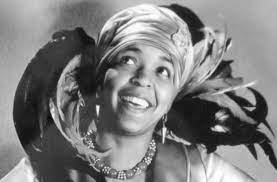
Ethel Waters was one of the most influential and versatile performers of the 20th century. She was a blues and jazz singer, a Broadway and Hollywood star, and a trailblazer for African American artists. She was also a woman who faced many challenges and hardships in her life, from poverty and abuse to racism and health problems. How did Ethel Waters die, and what legacy did she leave behind?
Contents
Early Life and Career
Ethel Waters was born on October 31, 1896, in Chester, Pennsylvania, as a result of the rape of her teenage mother by a family acquaintance. She was raised by her grandmother and other relatives in a poor and unstable environment. She never received much love or affection from her family, and she had to work as a maid and a factory worker from a young age.
Waters discovered her talent for singing when she was a teenager, and she began performing in local nightclubs and vaudeville shows. She soon became a popular blues singer, recording songs like “Down Home Blues” and “Oh Daddy”. She also developed her own style of singing, based on the blues tradition, but with a full-bodied voice, wide range, and slow vibrato.
In the 1920s, Waters moved to New York City and became one of the first black singers to cross over to mainstream audiences. She recorded jazz and pop songs like “Dinah”, “Stormy Weather”, “Heat Wave”, and “Am I Blue?”. She also starred in Broadway shows like Africana, Blackbirds of 1928, and As Thousands Cheer. She was praised for her expressive and versatile performances, as well as her elegant and sophisticated appearance.
Film and Television Roles
In the 1930s and 1940s, Waters expanded her career to film and television. She appeared in movies like Cabin in the Sky, Pinky, The Member of the Wedding, and The Sound and the Fury. She was the second African American to be nominated for an Academy Award, for her role as Pinky’s grandmother in Pinky (1949). She was also the first African American to star in her own television show, Beulah (1950-1952), and the first African-American woman to be nominated for a Primetime Emmy Award, for her role in Route 66 (1961).
Waters was not satisfied with the limited and stereotypical roles that Hollywood offered to black actors at the time. She often had to fight for better scripts, salaries, and treatment. She also faced discrimination and segregation in hotels, restaurants, and theaters. She once said: “I’ve been colored me all my life, but I don’t think about it. I think about being me.” Wikipedia
Personal Life and Religion
Waters had a turbulent personal life that affected her mental and physical health. She married three times, but all of her marriages ended in divorce. She had no children of her own, but she adopted a daughter named Carol in 1939. She also had several affairs with both men and women, including some famous celebrities like Bessie Smith, Lena Horne, Spencer Tracy, and Orson Welles.
Waters struggled with alcoholism, depression, and weight problems throughout her life. She also suffered from diabetes, high blood pressure, heart disease, and kidney failure. In the 1950s, she found solace in religion. She became a devout Christian and joined the evangelical Billy Graham Crusade. She sang gospel songs like “His Eye Is on the Sparrow” at Graham’s rallies around the world. She also wrote two autobiographies: His Eye Is on the Sparrow (1951) and To Me It’s Wonderful (1972).
Death and Legacy
Waters died on September 1, 1977, at the age of 80, in Chatsworth, California. The cause of death was heart failure due to uremia (a condition caused by kidney failure). Britannica She was buried at Forest Lawn Memorial Park in Glendale, California.
Waters left behind a legacy of musical excellence and artistic innovation. She influenced many singers who came after her, such as Billie Holiday, Ella Fitzgerald, Sarah Vaughan, Dinah Washington, Aretha Franklin, Whitney Houston, and Beyoncé. She also paved the way for black actors to achieve recognition and respect in Hollywood. She was honored with many awards and honors during her lifetime and posthumously. Some of them include:
- A Grammy Lifetime Achievement Award (1973)
- A star on the Hollywood Walk of Fame (1979)
- An induction into the Blues Hall of Fame (1983)
- An induction into the Gospel Music Hall of Fame (1984)
- An induction into the Rock and Roll Hall of Fame (1993)
- A postage stamp by the U.S. Postal Service (1994)
- A bronze plaque on the Philadelphia Music Walk of Fame (2003)
Ethel Waters was a remarkable woman who overcame many obstacles and achieved many successes. She was a singer and an actress, a blues and a gospel artist, a star and a crusader. She was, in her own words, “a human being who tried to make sense out of life.” Wikipedia
