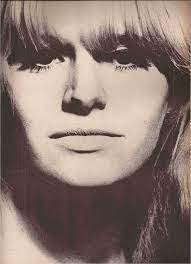
Carol White was a British actress who rose to fame in the 1960s with her roles in the television play Cathy Come Home and the films Poor Cow and I’ll Never Forget What’s’isname. She was hailed as “The Next Julie Christie” and had a promising career ahead of her. However, her life was cut short by a mysterious and disputed death in 1991. What was the cause of her death? And what led to her downfall?
Early Life and Career
Carol White was born on April 1, 1943 in Hammersmith, London, as Carole Joan White. She was the daughter of a scrap merchant and attended the Corona Stage Academy. She started acting in films from 1949, when she was only six years old, and appeared in minor roles until the late 1950s. She then began to play more substantial supporting roles in films such as Carry on Teacher and Never Let Go, in which she played the girlfriend of Peter Sellers.
She married Mike King, a hairdresser, in 1959 and had two sons with him. However, she became bored with her marriage and decided to resume her acting career. She auditioned for director Ken Loach and was cast in the television version of Nell Dunn’s Up the Junction in 1965. She followed this up with two other Wednesday Plays for Loach, The Coming Out Party and Cathy Come Home, which made her a TV star in the UK. Cathy Come Home was a groundbreaking drama that dealt with the issue of homelessness and social injustice, and White’s performance as the titular character was widely praised.
Breakthrough and Success
White’s success on TV led to her breakthrough in cinema. She starred in Ken Loach’s film adaptation of another Nell Dunn book, Poor Cow, in 1967. The film was a realistic and gritty portrayal of a young woman’s struggle to survive in London’s East End, and White’s performance was acclaimed by critics and audiences alike. She also appeared in I’ll Never Forget What’s’isname, a satire on the advertising industry, with Oliver Reed in 1967. By this time, her career was at its peak and she was considered one of the most promising actresses in British cinema.
She also attracted international attention and was offered roles in Hollywood. She co-starred with Alan Bates, Dirk Bogarde and Ian Holm in John Frankenheimer’s film adaptation of Bernard Malamud’s The Fixer in 1968, which was a critical success and brought Bates an Oscar nomination. She then moved to Hollywood in 1968 to make Daddy’s Gone A-Hunting, a thriller directed by Mark Robson. She also appeared in Something Big, a western comedy with Dean Martin, in 1971.
Decline and Problems
However, White’s career started to decline in the early 1970s, as she faced several personal and professional problems. She divorced her first husband, Mike King, in 1968 and married Stuart Lerner, a doctor, in 1969. However, their marriage was short-lived and they separated in 1970. She then married Mike Arnold, a businessman, in 1972, but they also divorced in 1974.
White also developed a serious addiction to alcohol and drugs, which affected her health and performance. She was involved in several unhappy and abusive relationships with male stars, such as Richard Burton, Frank Sinatra, Oliver Reed and Paul Burke. She also had legal troubles, as she was sued by her former agent for breach of contract and by her former landlord for unpaid rent. She also lost a $1.2 million lawsuit against the NYPD, who had assaulted her in 2006, claiming that she had pulled a gun on them.
White’s last film roles were in Dulcima, a drama with John Mills, in 1971, and Made, a musical with Roy Harper, in 1972. She also appeared in a few TV shows, such as The Sweeney and The Professionals, but her roles were minor and unmemorable. She tried to revive her career in the 1980s, but failed to get any significant offers. She moved to Florida in 1989, hoping to start a new life, but her problems followed her there.
Death and Legacy
White died on September 16, 1991, in Miami, Florida, at the age of 48. The cause of her death is disputed, with some sources claiming she took a drug overdose, and others suggesting she succumbed to liver disease from chronic alcoholism. According to The Guardian, she died alone in a cheap motel room, with no friends or family by her side. She was buried in Mortlake Cemetery in London.
White’s death was largely ignored by the media and the public, as she had faded into obscurity by then. However, her legacy was revived in 1994, when a television film of her life, The Battersea Bardot, was shown, with White portrayed by Wendy Morgan. The film was based on a biography of White written by Cliff Goodwin, who had interviewed her shortly before her death. The film and the book brought attention to White’s tragic story and her talent as an actress.
White is remembered as one of the most talented and influential actresses of the 1960s, who brought realism and authenticity to her roles. She was a pioneer of the British New Wave cinema, which challenged the conventions and stereotypes of the mainstream film industry. She was also a symbol of the social and cultural changes that took place in Britain in the 1960s, as she represented the aspirations and struggles of the working-class women. She was admired by her peers and fans, and influenced many other actresses, such as Helen Mirren, Julie Walters and Kathy Burke.
Carol White was a star who shone brightly, but burned out quickly. She was a victim of her own success, as well as of the pressures and pitfalls of fame. She was a beautiful, glamorous, and dead.
