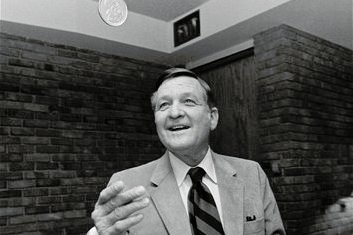
Bobby Layne was one of the greatest quarterbacks in the history of the National Football League (NFL). He led the Detroit Lions to three championships in the 1950s and was inducted into the Pro Football Hall of Fame in 1967. He was also known for his charismatic personality and his passion for the game. But how did Bobby Layne die? What was the cause of his death?
Bobby Layne’s Illness and Hospitalization
Bobby Layne suffered from chronic liver disease, which affected his health and his lifestyle. According to the Washington Post, he had been hospitalized several times in the past for intestinal bleeding and other complications. He also had a history of heart problems and had undergone a bypass surgery in 1980.
In November 1986, Layne was in Pontiac, Michigan for a Hall of Fame ceremony for his long-time friend and former teammate, Doak Walker. He was scheduled to attend a banquet and a football game, but he felt ill and was taken to the hospital. He was diagnosed with internal bleeding and was transferred to a hospital in Lubbock, Texas, his hometown.
Bobby Layne’s Death and Legacy
Bobby Layne died of cardiac arrest on December 1, 1986, at the age of 59. He was surrounded by his family and friends, who paid tribute to his achievements and his spirit. His funeral was attended by hundreds of people, including many former players and coaches. He was buried at Resthaven Memorial Park in Lubbock.
Bobby Layne’s death marked the end of an era for the NFL and the Detroit Lions. He was widely regarded as one of the best quarterbacks of all time, and his records and awards speak for themselves. He was also a leader and a mentor for many young players, who admired his skills and his attitude. He inspired generations of fans, who loved his style and his charisma.
Bobby Layne’s cause of death was a sad and tragic event, but his legacy lives on. He is remembered as a legend, a hero, and a friend. He is immortalized in the Pro Football Hall of Fame, the College Football Hall of Fame, and the Detroit Lions Ring of Honor. He is also honored by the University of Texas, where his number 22 is retired. He is a part of the history and the culture of football, and he will never be forgotten.
