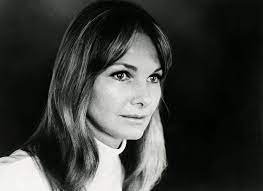
Barbara Loden was an American actress and director who made a lasting impression with her groundbreaking film Wanda, which she wrote, directed, and starred in. She was also a Tony Award winner for her performance in Arthur Miller’s play After the Fall, and the wife of legendary filmmaker Elia Kazan. But her life and career were cut short by breast cancer, which she was diagnosed with in 1978 and succumbed to in 1980. In this article, we will explore Barbara Loden’s cause of death and how she faced her illness with courage and dignity.
Early Life and Career
Barbara Loden was born on July 8, 1932, in Asheville, North Carolina. She grew up in a poor and religious family, and moved to New York City at the age of 16 to pursue a career in show business. She started as a model and a dancer, and later joined the Actors Studio, where she studied under Lee Strasberg. She made her Broadway debut in 1957 in Compulsion, and later appeared in The Highest Tree and Night Circus.
She also worked on television, most notably as a sidekick to comedian Ernie Kovacs, who gave her a chance to showcase her comedic talents. She met Elia Kazan, one of the most influential directors of the time, on the set of his film Wild River, and they began an affair. Kazan cast her in a small role in his 1961 film Splendor in the Grass, which starred Natalie Wood and Warren Beatty. Loden and Kazan married in 1967, after he divorced his first wife.
Wanda and Critical Acclaim
In 1970, Barbara Loden made her directorial debut with Wanda, a low-budget independent film that she also wrote and starred in. The film tells the story of a woman who drifts aimlessly through life, leaving her husband and children, and joining a petty criminal on a crime spree. The film was inspired by a newspaper article that Loden read about a woman who thanked a judge for sentencing her to prison.
Wanda was a radical departure from the mainstream Hollywood films of the time, and one of the first American films to be directed by a woman. It was shot in a documentary style, using natural light and locations, and improvised dialogue. Loden said that she wanted to portray a realistic and complex female character, who was not a victim or a heroine, but a human being. She also said that she identified with Wanda’s sense of alienation and dissatisfaction.
Wanda received critical acclaim and won the International Critics Award at the Venice Film Festival. However, it was not widely distributed or seen by the public, and Loden struggled to find funding for her next project. She said that she faced a lot of sexism and resistance from the male-dominated film industry, and that her husband Kazan was not very supportive of her work.
Illness and Death
In 1978, Barbara Loden was diagnosed with breast cancer, which had spread to her liver. She underwent chemotherapy and radiation, but the treatment was unsuccessful. She continued to work as an actress and a director, teaching at the Actors Studio and directing two short films, The Frontier Experience and The Boy Who Liked Deer. She also planned to make a film adaptation of Kate Chopin’s novel The Awakening, but she never realized it.
She died on September 5, 1980, at the age of 48, in New York City. She was survived by her husband Kazan and their two children, Leo and Marco. Her death was not widely reported by the media, and her film Wanda remained obscure for many years. However, in the 1990s, Wanda was rediscovered and praised by a new generation of critics and filmmakers, who recognized its artistic and historical significance. Wanda is now considered a masterpiece of American cinema, and Barbara Loden is regarded as a pioneer and a role model for women in film.
Conclusion
Barbara Loden was a talented and visionary artist, who made a lasting contribution to the history of cinema with her film Wanda. She was also a brave and resilient woman, who faced her illness with grace and dignity. She died too young, but her legacy lives on in her work and in the admiration of her fans. Barbara Loden’s cause of death was cancer, but her spirit remains alive and inspiring.
