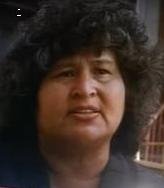
Ana Lizarraga was a gang counselor who dedicated her life to helping young people escape the cycle of violence and crime in East Los Angeles. She was also a technical adviser and a minor actor in the film “American Me”, which depicted the brutal reality of Latino prison gangs. However, her life was cut short by a senseless act of violence that shocked the community and left many questions unanswered. This article will explore the ana lizarraga cause of death and the legacy she left behind.
Contents
Who Was Ana Lizarraga?
Ana Lizarraga was born on June 23, 1942, in Boyle Heights, a predominantly Latino neighborhood in Los Angeles. She grew up in the Ramona Gardens housing project, where she witnessed the harsh realities of poverty, drugs, and gangs. She became involved in gang activities herself, earning the nickname “The Gang Lady”. She was arrested several times for various offenses, including robbery and assault.
However, Lizarraga decided to turn her life around after she became a mother of four children. She enrolled in college and earned a degree in social work. She then joined the Community Youth Gang Services, a nonprofit organization that provides counseling, education, and job training to at-risk youths. She worked as one of the top counselors for 10 years, earning the respect and trust of many gang members and their families. She also helped organize community events, such as sports tournaments, dances, and picnics, to promote peace and harmony among rival gangs.
Lizarraga was also passionate about the arts and culture of her community. She was a member of the Teatro Campesino, a theater group that performed plays about social issues affecting Latinos. She also advised and acted in the film “American Me”, which was directed by and starred Edward James Olmos. The film was based on the true story of the Mexican Mafia, a powerful prison gang that originated in the 1950s. Lizarraga played the role of a mother whose son was killed by the gang. She also helped recruit and train former gang members to act as extras in the film.
Lizarraga was widely regarded as a role model and a leader in her community. She was praised for her courage, compassion, and dedication to helping others. She was also a devout Catholic who attended church regularly and prayed for peace.
How Did Ana Lizarraga Die?
On May 13, 1992, Ana Lizarraga was preparing to leave for Utah to attend her mother’s funeral. She was packing her van in her driveway when two masked men approached her and shot her multiple times at close range. She died instantly. A police officer who was passing by witnessed the shooting and called for backup. Within minutes, the police arrested one of the suspects, Jose Gilbert Gonzalez, who had just been released from prison a month earlier. The other suspect, who has not been identified, escaped.
The motive for the killing remains unclear. The police said that it was not gang-related, but rather an execution. They did not reveal any details about the possible connection between Lizarraga and Gonzalez, who was a member of the Hazard Street gang, one of the gangs that Lizarraga had counseled. They also did not comment on whether the killing had anything to do with Lizarraga’s involvement in the film “American Me”, which had angered some members of the Mexican Mafia, who felt that the film portrayed them in a negative and inaccurate light. Some sources claimed that Lizarraga had received death threats from the gang, but she had not reported them to the police.
The killing of Lizarraga sparked outrage and grief in the community. Hundreds of people attended her funeral at the Santa Teresita Church in Boyle Heights. Many of them wore white T-shirts with her picture and the words “Ana Lizarraga, A Woman of Respect”. They also held signs that read “Stop the Violence” and “We Love You, Ana”. Edward James Olmos, who had become a close friend of Lizarraga, delivered a eulogy in which he praised her as a hero and a martyr. He also urged the people to continue her work and to fight for justice and peace.
What Was the Outcome of the Trial?
Jose Gilbert Gonzalez was charged with first-degree murder and special circumstances of lying in wait and using a firearm. He pleaded not guilty and claimed that he was innocent. He said that he was at a friend’s house at the time of the shooting and that he was framed by the police. He also denied being a member of the Hazard Street gang, despite having gang tattoos all over his body.
The trial began in June 1993 and lasted for three weeks. The prosecution presented evidence that linked Gonzalez to the crime, such as eyewitness testimony, ballistics, and fingerprints. They also argued that Gonzalez had a motive to kill Lizarraga, because she had counseled his girlfriend to leave him and because he was jealous of her success and fame. The defense tried to cast doubt on the evidence and the witnesses, and suggested that Lizarraga was killed by someone else, possibly by the Mexican Mafia.
The jury deliberated for two days and returned a verdict of guilty on all counts. Gonzalez was sentenced to life in prison without the possibility of parole. He appealed his conviction, but it was upheld by the California Supreme Court in 1997. He is currently incarcerated at the California State Prison, Corcoran.
What Is the Legacy of Ana Lizarraga?
Ana Lizarraga’s death was a tragic loss for her family, friends, and community. She left behind four children, who were devastated by her murder. Her eldest son, Eric Montoya, who was 25 at the time, said that he felt like he had lost his mother twice, first when she went to Utah for the funeral and then when she was killed. He said that he admired his mother for her strength and her love, and that he wanted to follow her footsteps and become a social worker. He also said that he hoped that her death would not be in vain, and that it would inspire people to work for peace and justice.
Lizarraga’s death also had a lasting impact on the gang prevention and intervention programs in Los Angeles. Her colleagues and successors at the Community Youth Gang Services continued her work and expanded their services to more areas and more populations. They also established the Ana Lizarraga Memorial Scholarship Fund, which awards scholarships to former gang members who want to pursue higher education. They also named a street after her in Ramona Gardens, where she had worked and lived.
Lizarraga’s death also raised awareness and debate about the issue of gang violence and its root causes and solutions. Many people, including Edward James Olmos, called for more support and funding for programs that address the social and economic problems that lead to gang involvement, such as poverty, racism, education, and employment. They also advocated for more dialogue and cooperation among different groups and sectors, such as the police, the media, the schools, the churches, and the community. They also urged for more respect and understanding for the culture and history of the Latino community, and for more positive and realistic portrayals of Latinos in the media and the arts.
Ana Lizarraga was a remarkable woman who overcame many challenges and obstacles in her life. She was a gang member, a mother, a student, a counselor, an actor, and an activist. She was a woman of respect, who earned the respect of many people. She was a woman of peace, who worked for peace in her community. She was a woman of courage, who died for her cause. She was a woman of legacy, who left a legacy of hope and inspiration for many people. She was Ana Lizarraga, the Gang Lady.
