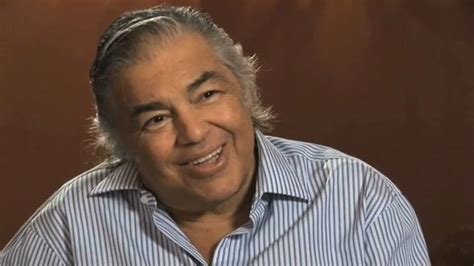
Aaron Russo was a man of many talents and passions. He was a successful music manager, film producer, and political activist. He was also a fierce defender of liberty and individualism, who challenged the status quo and exposed the corruption of the system. He died of bladder cancer on August 24, 2007, at the age of 64. This article will explore his remarkable career, his controversial views, and his tragic demise.
Contents
From Rock ‘n’ Roll to the Big Screen
Russo was born in Brooklyn, New York, in 1943, to a Jewish family. He developed a love for music and entertainment at an early age, and started promoting rock ‘n’ roll shows at a local theater while still in high school. He later moved to Chicago, where he opened his own nightclub and booked some of the most popular acts of the 1960s, such as Janis Joplin, The Grateful Dead, and Led Zeppelin.
In the 1970s, Russo switched to managing musical artists, most notably Bette Midler and The Manhattan Transfer. He also produced the Tony Award-winning “Clams on the Half-Shell Revue” starring Midler. He then ventured into producing and directing movies, earning several Academy Award and Golden Globe nominations for films such as “The Rose” (1979), starring Midler, and “Trading Places” (1983), starring Eddie Murphy and Dan Aykroyd.
From Hollywood to Politics
Russo was not only interested in entertainment, but also in politics and social issues. He was a libertarian, who believed in limited government, free markets, and individual rights. He was also a critic of the Federal Reserve, the Internal Revenue Service, and the New World Order. He became involved in various political campaigns and movements, such as the Libertarian Party, the Constitution Party, and the Tax Honesty Movement.
He ran for governor of Nevada as a Republican in 1998, but lost the primary to Kenny Guinn. He then announced a second run in 2002 as a Libertarian, but withdrew after being diagnosed with cancer. In 2004, he sought the Libertarian Party’s presidential nomination, but lost to Michael Badnarik. He also supported Ron Paul’s presidential campaign in 2008.
In 2006, he released his final and most controversial film, “America: Freedom to Fascism”, a documentary that exposed the illegality and tyranny of the IRS and the Federal Reserve, and warned about the dangers of the Patriot Act, the Real ID Act, and the RFID chips. The film was praised by some as a courageous and eye-opening exposé, and denounced by others as a conspiracy theory and a propaganda piece.
The Battle with Cancer
Russo was diagnosed with bladder cancer in 2002, and underwent several treatments, including surgery, chemotherapy, and alternative medicine. He also used cannabis oil, which he claimed helped him reduce his pain and improve his appetite. He documented his struggle with the disease and his views on the medical system in a video series called “Fighting Cancer”.
Despite his efforts, Russo’s condition worsened, and he died on August 24, 2007, at Cedars-Sinai Medical Center in Los Angeles. He was surrounded by his family and his girlfriend of 27 years, Heidi Gregg. He is survived by their two children, Sam and Max.
The Legacy of Aaron Russo
Aaron Russo was a man who lived his life on his own terms, and who fought for what he believed in. He was a visionary, a rebel, and a patriot. He left behind a legacy of artistic and political achievements, as well as a loyal fan base and a devoted family. He also inspired many people to question the authority and seek the truth. He was a Hollywood maverick, who died as he lived: free.
