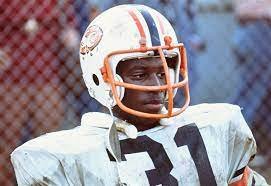
Robert Alexander was one of the most talented and celebrated football players in West Virginia history. He had a remarkable career in high school, college, and professional leagues, earning the nickname “Alexander the Great”. He was also a beloved figure in his hometown of St. Albans, where he played for the South Charleston Black Eagles. However, his life came to a tragic end on June 8, 2022, when he was found dead in his home at the age of 64. What was Robert Alexander’s cause of death? How did he die? And what legacy did he leave behind? These are some of the questions that this article will try to answer.
The Rise of a Star
Robert Alexander was born on July 28, 1957, in Charleston, West Virginia. He grew up in a family of athletes, as his father was a boxer and his mother was a track star. He started playing football at an early age and soon showed his exceptional skills and speed. He attended South Charleston High School, where he became one of the most dominant running backs in the state. He scored 93 touchdowns and rushed for 5,872 yards in his three-year varsity career, breaking several state records. He also won the Kennedy Award twice as the state’s best high school player, and was named the national player of the year by Parade Magazine and Joe Namath’s National Prep Sports in 1976.
Alexander’s outstanding performance attracted the attention of over 200 college programs across the country, but he decided to stay loyal to his home state and chose to play for West Virginia University (WVU). He joined the Mountaineers in 1977 and played under head coach Frank Cignetti for three seasons. He had a slow start in his freshman and sophomore years, but he broke out in his junior year, when he rushed for 1,064 yards and nine touchdowns. He also teamed up with Walter Easley, another star running back from West Virginia, to form a formidable backfield duo.
In his senior year, Alexander played under a new head coach, Don Nehlen, who implemented a more balanced offense that utilized both the running and passing game. Alexander thrived in this system, as he rushed for 1,308 yards and 13 touchdowns, leading the Mountaineers to a 9-3 record and a Peach Bowl appearance. He finished his college career with 2,952 rushing yards and 27 touchdowns, ranking fourth in WVU history at the time.
The Professional Journey
After graduating from WVU in 1981, Alexander was drafted by the Los Angeles Rams in the eighth round of the NFL Draft. He played for the Rams for two seasons as a backup running back and a special teams player. He appeared in 25 games and rushed for 286 yards and two touchdowns. He also returned 25 kickoffs for 589 yards.
In 1984, Alexander joined the United States Football League (USFL), a new professional league that competed with the NFL. He played for the Michigan Panthers in his first season, where he reunited with his former WVU teammate Walter Easley. He rushed for 495 yards and four touchdowns in 14 games, helping the Panthers reach the playoffs. In his second season, he played for the Oakland Invaders, where he rushed for 382 yards and three touchdowns in 18 games. He also caught 29 passes for 259 yards and two touchdowns.
The USFL folded after its third season in 1985 due to financial problems and legal battles with the NFL. Alexander then returned to the NFL and signed with the Philadelphia Eagles as a free agent. However, he did not make the final roster and was cut before the start of the season. He then retired from professional football at the age of 28.
The Mysterious Death
After retiring from football, Alexander settled down in his hometown of St. Albans, where he worked as a car salesman and a youth football coach. He also remained involved with his alma mater WVU, attending games and events as an alumni supporter. He was married twice and had four children.
On June 8, 2022, Alexander was found unresponsive in his home by his wife. She called 911 and paramedics arrived at the scene, but they could not revive him. He was pronounced dead at the age of 64.
The cause of Alexander’s death has not been officially announced yet, as his body was sent to the medical examiner’s office for an autopsy. According to St. Albans Mayor Scott James, who confirmed the news of his death, there were no signs of foul play or violence at his home. James also said that he did not know if Alexander had any pre-existing medical conditions or health issues that could have contributed to his death.
Alexander’s death shocked and saddened his family, friends, fans, and former teammates, who paid tribute to him on social media and in the media. They remembered him as a great player, a kind person, and a loyal friend. They also praised him for his achievements and his impact on West Virginia football.
The Lasting Legacy
Robert Alexander was one of the greatest football players to ever come out of West Virginia. He set records and won awards in high school, college, and professional leagues. He also inspired generations of young athletes with his talent, work ethic, and passion for the game. He was inducted into several halls of fame, including the West Virginia Sports Writers Association Hall of Fame, the West Virginia Sports Hall of Fame, the North-South Football Classic Hall of Fame, and the WVU Sports Hall of Fame.
Alexander was more than just a football player, though. He was also a role model, a mentor, a leader, and a community member. He gave back to his hometown and his state by coaching youth football, supporting WVU, and participating in charitable causes. He was loved and respected by many people who knew him personally or admired him from afar.
Robert Alexander’s cause of death may remain a mystery for now, but his legacy will live on forever. He will always be remembered as “Alexander the Great”, a legend of West Virginia football.
