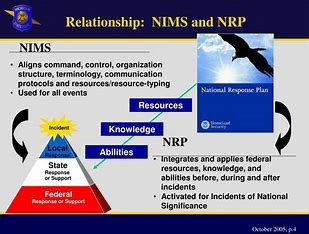
NIMS, or the National Incident Management System, is a standardized approach to incident management developed by the United States Department of Homeland Security. It provides a common framework for coordinating and integrating the activities of various agencies and organizations involved in responding to emergencies and disasters. NIMS is applicable to all stakeholders with incident related responsibilities, regardless of their size, function, or jurisdiction.
Contents
What are the Benefits of NIMS?
NIMS has many benefits for the stakeholders involved in incident management. Some of these benefits are:
- NIMS enhances the effectiveness and efficiency of incident response by ensuring that all stakeholders share a common understanding of the situation, objectives, roles, and responsibilities.
- NIMS promotes interoperability and compatibility among the different resources and systems used by the stakeholders, such as communication, information, technology, equipment, and personnel.
- NIMS facilitates the coordination and collaboration among the stakeholders by establishing a clear chain of command, a unified command structure, and a common incident action plan.
- NIMS improves the accountability and transparency of incident management by providing standardized processes, procedures, and terminology for reporting, documentation, evaluation, and improvement.
Who are the Stakeholders of NIMS?
NIMS is applicable to all stakeholders with incident related responsibilities. These include:
- Federal, state, tribal, territorial, and local governments that have the authority and responsibility to manage incidents within their jurisdictions.
- Private sector entities that own or operate critical infrastructure and key resources, provide essential services, or have contractual obligations to support incident management activities.
- Non-governmental organizations that provide humanitarian assistance, advocacy, or other support to incident management efforts.
- Individuals and households that are affected by or involved in incidents, or that have the capacity and willingness to contribute to incident management activities.
How can Stakeholders Implement NIMS?
NIMS provides a set of guidelines and best practices for stakeholders to implement in their incident management activities. These include:
- Adopting the NIMS principles and concepts as the basis for their incident management policies, plans, procedures, and protocols.
- Developing and maintaining the capabilities and resources required to perform their incident management functions effectively and efficiently.
- Participating in regular training and exercises to enhance their knowledge and skills in applying NIMS.
- Collaborating with other stakeholders to establish mutual aid agreements, information sharing mechanisms, joint operations centers, and other forms of coordination and integration.
- Evaluating and improving their incident management performance by conducting after-action reviews, corrective action plans, lessons learned reports, and best practices sharing.
Conclusion
NIMS is a standardized approach to incident management that provides a common framework for coordinating and integrating the activities of various agencies and organizations involved in responding to emergencies and disasters. NIMS is applicable to all stakeholders with incident related responsibilities, regardless of their size, function, or jurisdiction. By implementing NIMS, stakeholders can enhance their effectiveness and efficiency in managing incidents, promote interoperability and compatibility among their resources and systems, facilitate coordination and collaboration among themselves, and improve their accountability and transparency in incident management.
