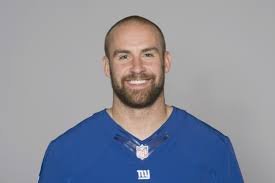
Tyler Sash was a former NFL safety who played for the New York Giants from 2011 to 2012. He was part of the team that won the Super Bowl XLVI in 2011, and had a promising career ahead of him. However, his life took a tragic turn when he died of an accidental overdose of pain medications at the age of 27 in 2015. His death raised questions about the impact of head injuries and chronic pain on football players, and the risks of prescription drug abuse.
Contents
A Promising Career Cut Short
Tyler Sash was born on May 27, 1988, in Oskaloosa, Iowa. He attended Oskaloosa High School, where he excelled in football, basketball, and track. He then enrolled at the University of Iowa, where he played safety for the Iowa Hawkeyes football team. He had 13 career interceptions for the Hawkeyes, which was five shy of the school record. He also holds the Iowa record for career interception return yards with 392. He was named to the first-team All-Big Ten twice, and was a finalist for the Jim Thorpe Award, given to the best defensive back in college football.
Sash decided to forgo his senior season at Iowa and enter the 2011 NFL Draft. He was selected by the New York Giants in the sixth round, with the 198th overall pick. He played mostly on special teams and as a backup safety for the Giants, and was part of the team that defeated the New England Patriots in Super Bowl XLVI. He had a career-high six tackles in that game.
However, his NFL career was short-lived, as he faced several challenges on and off the field. In July 2012, he was suspended for four games by the NFL after testing positive for Adderall, a stimulant that is banned by the league. Sash said that he took the drug legally and under a doctor’s care for an anxiety condition, to help him with public speaking. He also suffered multiple concussions during his playing days, which affected his memory and mood. He was cut by the Giants before the start of the 2013 season, and never played in the NFL again.
A Struggle with Pain and Addiction
After his football career ended, Sash moved back to his hometown of Oskaloosa, where he lived with his girlfriend Jessica Versteeg, who was crowned Miss Iowa in 2014. However, his life was not easy, as he struggled with chronic pain from his injuries, depression, insomnia, and anxiety. He also developed an addiction to painkillers, which he obtained legally from doctors or illegally from dealers.
Sash’s family and friends tried to help him overcome his addiction, but he refused to go to rehab or seek professional help. He became isolated and erratic, sleeping for long hours, forgetting things, and doing strange things. He also had run-ins with the law, such as when he was arrested for public intoxication and interference with official acts in 2014.
On September 8, 2015, Sash was found dead in his home by his family members. He was 27 years old. The autopsy report revealed that he died from an accidental overdose of methadone and hydrocodone, two powerful painkillers that can cause respiratory failure when taken together. The medical examiner also noted that his recent shoulder dislocation and history of chronic shoulder pain were significant factors in his death.
A Posthumous Diagnosis of CTE
Five months after his death, Sash’s family released the results of testing performed on his brain by researchers at Boston University. The tests confirmed that Sash had stage 2 chronic traumatic encephalopathy (CTE), a degenerative brain disease caused by repeated head trauma. CTE can cause symptoms such as memory loss, mood swings, depression, aggression, impulse control problems, and dementia.
Sash is one of at least 345 NFL players who have been diagnosed with CTE after their deaths, according to a study by Boston University. CTE can only be diagnosed posthumously by examining brain tissue under a microscope. The disease has been linked to several cases of suicide and violent behavior among former NFL players.
Sash’s family said that they hoped that his diagnosis would raise awareness about CTE and its effects on football players. They also said that they hoped that his death would help others who are struggling with addiction and mental health issues.
A Legacy of Love and Compassion
Despite his tragic death, Tyler Sash is remembered by his family, friends, fans, and teammates as a loving and compassionate person who had a passion for football and life. His funeral was attended by hundreds of people who paid tribute to his achievements and character.
Sash’s family established a foundation in his name called The Tyler Sash Foundation (TSF), which aims to provide financial assistance to families and individuals who are in need of addiction treatment or mental health services. The foundation also supports youth sports programs and scholarships in Oskaloosa and Iowa.
Sash’s former coach at Iowa, Kirk Ferentz, said that Sash was a great player and a great person who had a positive impact on everyone he met. He said that Sash’s death was a very sad thing, but that his legacy would live on through his foundation and his memories.
According to ESPN, Ferentz said:
“He was just a tremendous young guy. He had a great spirit, a great enthusiasm for life, for people, for football. He was one of those guys that made everybody around him better. He was just a really special person.”
