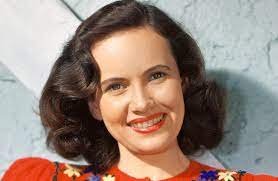
Teresa Wright was a celebrated actress known for her captivating performances on stage and screen. She was born in 1918 in New York City and began her career in acting in the 1940s. Wright was known for her natural acting style, and her ability to bring depth and emotion to her roles.
She starred in some of the most acclaimed films of her era, such as The Little Foxes, Mrs. Miniver, The Pride of the Yankees, Shadow of a Doubt, and The Best Years of Our Lives. She was nominated for three Academy Awards, winning one for Best Supporting Actress for Mrs. Miniver in 1942. She was also nominated for three Emmy Awards, and received a star on the Hollywood Walk of Fame.
Contents
Teresa Wright’s Personal Life and Career Challenges
Wright was married twice, first to writer Niven Busch, with whom she had two children, Niven Jr. and Mary-Kelly. They divorced in 1952, after a decade of marriage. Wright then married playwright Robert Anderson in 1959, but they also divorced in 1978.
Wright faced some difficulties in her career, as she clashed with the Hollywood studio system that tried to control her image and choices. She refused to pose for glamour photos or accept roles that she felt were unworthy of her talent. She also demanded to return to the theater at least once a year, as she loved performing on stage.
She had a public feud with producer Samuel Goldwyn, who fired her in 1948 for being “uncooperative”. Wright sued him for breach of contract, and won the case. She later said that she had no regrets about losing her $5,000-a-week contract, as she valued her artistic integrity more than money.
Teresa Wright’s Later Years and Death
Wright continued to act in films, television, and theater until the late 1990s. She appeared in such films as The Rainmaker, The Good Mother, Somewhere in Time, and The Happy Ending. She also starred in several TV shows and movies, such as Dolphin Cove, The Miracle Worker, The Margaret Bourke-White Story, and The Twilight Zone.
She also returned to Broadway several times, appearing in plays such as Mary Mary, I Never Sang for My Father, Morning’s at Seven, and On Golden Pond. She received a Tony Award nomination for her performance in The Dark at the Top of the Stairs in 1958.
Wright died on March 6, 2005, of a heart attack at Yale-New Haven Hospital in Connecticut at the age of 86. She is buried in Evergreen Cemetery in New Haven. She was survived by her two children, four grandchildren, and two great-grandchildren.
She left behind a legacy of excellence and grace in her acting career, and a reputation of courage and dignity in her personal life. She was praised by many critics and colleagues as one of the finest actresses of her generation.
According to IMDb, director William Wyler called her “the most promising actress he had ever directed”, while director Alfred Hitchcock admired her “thorough preparation and quiet professionalism”. Actress Bette Davis said that Wright was “one of the most unappreciated actresses in Hollywood”.
Teresa Wright was a true star who shone brightly on screen and stage, and touched many hearts with her talent and charm. She will always be remembered as one of the greats of American cinema and theater.
