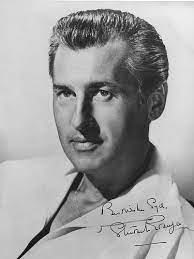
Stewart Granger was a British film actor who rose to fame in the 1940s and 1950s with his heroic and romantic roles in movies such as King Solomon’s Mines, Scaramouche, and The Prisoner of Zenda. He was known for his charm, charisma, and athleticism, as well as his tumultuous personal life. He died of cancer at the age of 80 in 1993. But what was the exact cause of his death and how did he cope with his illness? Here is a brief overview of Stewart Granger’s cause of death and his final years.
Contents
Prostate and Bone Cancer
According to Deseret News, Stewart Granger died of cancer on August 16, 1993, at Saint John’s Hospital and Health Center in Santa Monica, California. He had been suffering from prostate cancer for several years, which had spread to his bones. He had undergone surgery and radiation therapy, but his condition worsened in the months before his death. He was admitted to the hospital on August 10, 1993, after collapsing at his home in Pacific Palisades.
Granger had been diagnosed with prostate cancer in 1980, when he was living in Spain. He decided to keep his illness a secret from the public and his friends, and only told his family and a few close associates. He continued to work as an actor, appearing in several TV shows and movies, such as The Wild Geese (1978), North Sea Hijack (1980), The Royal Romance of Charles and Diana (1982), and A Hazard of Hearts (1987). He also wrote his autobiography, Sparks Fly Upward, which was published in 1981.
A Life of Adventure and Controversy
Stewart Granger was born James Lablache Stewart on May 6, 1913, in Kensington, London. He was the great-great-grandson of the opera singer Luigi Lablache and the grandson of the actor Luigi Lablache. He changed his name to Stewart Granger to avoid confusion with the American actor James Stewart. He began his acting career in the 1930s, performing on stage and in minor film roles. He served in the British Army during World War II, reaching the rank of captain.
Granger’s breakthrough came in 1945, when he starred in The Man in Grey, a melodrama produced by Gainsborough Pictures. He became one of the most popular stars of the studio, appearing in several costume dramas and adventure films, such as Madonna of the Seven Moons (1945), Caravan (1946), Blanche Fury (1948), Saraband for Dead Lovers (1948), Adam and Evelyne (1949), King Solomon’s Mines (1950), The Elusive Pimpernel (1950), Soldiers Three (1951), Scaramouche (1952), The Prisoner of Zenda (1952), Beau Brummell (1954), Moonfleet (1955), Bhowani Junction (1956), The Little Hut (1957), Gun Glory (1957), Harry Black and the Tiger (1958), North to Alaska (1960), Sodom and Gomorrah (1962), The Secret Invasion (1964), The Last Safari (1967), and The Hound of the Baskervilles (1972).
Granger was also known for his turbulent personal life. He was married three times: to actress Elspeth March from 1938 to 1948, to actress Jean Simmons from 1950 to 1960, and to actress Caroline LeCerf from 1964 to 1969. He had four children: Jamie, Lindsay, Tracy, and Samantha. He had affairs with several women, including Deborah Kerr, Ava Gardner, Grace Kelly, Joan Collins, Anita Ekberg, Merle Oberon, Lana Turner, Hedy Lamarr, Shelley Winters, and Audrey Hepburn. He was also friends with many celebrities, such as David Niven, Errol Flynn, Cary Grant, Humphrey Bogart, Lauren Bacall, Frank Sinatra, Peter Ustinov, Richard Burton, Elizabeth Taylor, Roger Moore, Sean Connery, Michael Caine, Clint Eastwood, and Charles Bronson.
Granger was outspoken and rebellious throughout his career. He often clashed with studio executives and directors over artistic differences and contractual disputes. He refused to sign long-term contracts or join any political or religious groups. He criticized Hollywood for its superficiality and hypocrisy. He also expressed controversial opinions on various topics, such as sexuality, race relations, war crimes, drugs, communism, feminism, environmentalism, animal rights, and euthanasia.
A Legacy of Glamour and Courage
Stewart Granger left behind a legacy of glamour and courage. He was one of the last stars of the golden age of Hollywood, who embodied the ideals of adventure, romance, and heroism. He was also a man who lived his life on his own terms, who faced his challenges with dignity and humor. He was admired by his fans, respected by his peers, and loved by his family. He once said, “I’ve had a bloody good life. I’ve done everything I wanted to do. I’ve had fun.”
