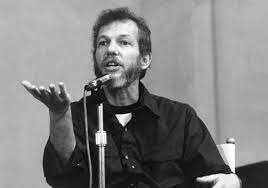
Stephen Levine was a renowned American poet, author, and teacher who was best known for his work on death and dying. He was one of the pioneers of the mindfulness movement in the West, along with his colleagues and friends Jack Kornfield, Joseph Goldstein, Sharon Salzberg, and Ram Dass. He also had a close connection with the Hindu guru Neem Karoli Baba, whose teachings influenced his approach to spirituality. Stephen Levine passed away at his home in New Mexico on January 17, 2016, after a long illness. He was 78 years old. In this article, we will explore his life, his teachings, and his legacy.
Early Life and Career
Stephen Levine was born in Albany, New York, on July 17, 1937. He attended the University of Miami, where he studied poetry and literature. He published his first work, A Resonance of Hope, in 1959. After working as an editor and writer in New York City, he moved to San Francisco in 1966, where he became one of the founders of the San Francisco Oracle, a psychedelic newspaper that covered the counterculture movement of the 1960s. He also had a history of addiction to heroin and other drugs, which he later overcame and wrote about in his book Turning Towards the Mystery.
He became interested in Buddhism and meditation after reading books by Alan Watts and D.T. Suzuki. He started practicing Vipassana meditation, a technique of insight and awareness, and attended retreats with teachers such as S.N. Goenka and Anagarika Munindra. He also met Ram Dass, the former Harvard professor who had traveled to India and became a disciple of Neem Karoli Baba, a Hindu saint who taught love and compassion. Ram Dass introduced Stephen to the teachings and practices of Bhakti Yoga, the path of devotion, which became a major influence on his work.
Work on Death and Dying
In the 1970s, Stephen Levine began to work with the sick and dying, using meditation as a method of treatment and healing. He collaborated with psychologist Richard Alpert (Ram Dass) and psychiatrist Elisabeth Kubler-Ross, who were pioneers in the field of death and dying. He also developed his own approach, which he called “softening into pain”, which involved accepting and embracing the physical and emotional pain of dying, rather than resisting or denying it. He taught that by opening to the pain, one could also open to the love and grace that were present in the dying process. He wrote several books on this topic, such as Who Dies?, Healing into Life and Death, and Meetings at the Edge.
He also experimented with living as if it were his last year, a practice that he described in his book A Year to Live. He and his wife Ondrea, who was also his partner in teaching and counseling, spent one year living in a cabin in the woods, meditating, praying, and preparing for death. They also faced their own illnesses and challenges, such as cancer, heart disease, and chronic pain. They shared their insights and experiences with their students and readers, offering guidance and inspiration on how to live fully and die peacefully.
Legacy and Influence
Stephen Levine was a prolific writer and teacher, who published more than 20 books and led workshops and retreats around the world. He touched the lives of thousands of people, who benefited from his wisdom and compassion. He was also a mentor and friend to many other teachers and authors, such as Noah Levine, his son who became a Buddhist teacher and author of Dharma Punx, and Tara Brach, a psychologist and meditation teacher who wrote Radical Acceptance. He also appeared in documentaries, such as Meditate and Destroy, which focused on the life of his son Noah, and Ram Dass, Going Home, which featured his reunion with his old friend Ram Dass.
Stephen Levine was a pioneer and a visionary, who brought the teachings of Buddhism and Hinduism to the West, and applied them to the challenges and opportunities of modern life. He taught us how to live with awareness, compassion, and gratitude, and how to face death with courage, grace, and love. He left behind a rich legacy of books, teachings, and practices, that continue to inspire and guide us today. He also left behind a loving family, including his wife Ondrea, who still lives in New Mexico, his son Noah, his daughter-in-law Trudy, and his grandchildren. He died peacefully at his home, surrounded by his loved ones, on January 17, 2016. He was 78 years old.
