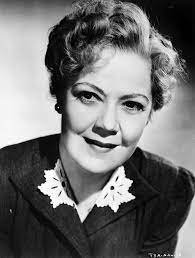
Spring Byington was a popular American actress who had a long and successful career in stage, film, radio and television. She was best known for her roles as the kind and gentle Mrs. March in Little Women (1933), the eccentric Penelope Sycamore in You Can’t Take It with You (1938), and the cheerful widow Lily Ruskin in December Bride (1954-1959). She was nominated for an Academy Award for Best Supporting Actress for her performance in You Can’t Take It with You, and won a Primetime Emmy Award for Outstanding Lead Actress in a Comedy Series for December Bride. She was also honored with a star on the Hollywood Walk of Fame for her contributions to the entertainment industry.
Contents
Early Life and Career
Spring Byington was born on October 17, 1886, in Colorado Springs, Colorado, to Edwin Lee Byington, an educator and superintendent of schools, and Helene Maud (Cleghorn) Byington, a doctor. She had a younger sister, Helene Kimball Byington. Her father died when she was five years old, and her mother sent her to live with relatives in Denver, while her sister went to live with their grandparents in Port Hope, Ontario. Her mother later moved to Boston and graduated from the Boston University School of Medicine in 1896. She then returned to Denver and opened a practice with her classmate, Dr. Mary Ford.
Byington developed an interest in acting as a teenager and joined the Elitch Garden Stock Company, a local theater group. She also performed in amateur shows and graduated from North High School in 1904. In 1903, she joined a repertory company that toured Buenos Aires, Argentina, where she met and married Roy Carey Chandler, the company’s manager. They had two daughters, Phyllis and Lois. The couple divorced in 1917, and Byington returned to New York with her children.
Byington made her Broadway debut in 1924 in A Beggar on Horseback, a comedy satire by George S. Kaufman and Marc Connelly. She then appeared in several other plays, such as Once in a Lifetime (1930) and When Ladies Meet (1932), where she showcased her comedic talents. She also played Nerissa in The Merchant of Venice (1928) opposite George Arliss and Peggy Wood.
Hollywood Stardom
Byington’s film career began in 1933 when she was cast as Mrs. March in Little Women, directed by George Cukor and starring Katharine Hepburn as Jo March. The film was a huge success and launched Byington’s Hollywood career as a character actress who often played maternal or eccentric roles. She signed a contract with Metro-Goldwyn-Mayer (MGM) and appeared in many of their films, such as The Good Fairy (1935), Mutiny on the Bounty (1935), Dodsworth (1936), Theodora Goes Wild (1936), The Devil and Miss Jones (1941), Meet John Doe (1941), Heaven Can Wait (1943), Dragonwyck (1946), The Green Years (1946), Little Women (1949), Louisa (1950) and Please Don’t Eat the Daisies (1960).
One of her most memorable roles was as Penelope Sycamore, the free-spirited matriarch of an eccentric family, in You Can’t Take It with You (1938), directed by Frank Capra and based on the Pulitzer Prize-winning play by Kaufman and Hart. The film starred Jean Arthur as Alice Sycamore, James Stewart as Tony Kirby, Lionel Barrymore as Grandpa Vanderhof, Edward Arnold as Anthony P. Kirby and Ann Miller as Essie Carmichael. The film was a critical and commercial hit and won two Academy Awards: Best Picture and Best Director. Byington received her only Oscar nomination for Best Supporting Actress for her role.
Radio and Television Success
Byington also had a prolific career in radio and television. She starred in several radio shows, such as The Halls of Ivy (1950-1952) with Ronald Colman and Benita Hume, Granby’s Green Acres (1950) with Gale Gordon, The Story of Mary Marlin (1951-1952) with Virginia Payne, The Spring Byington Show (1952-1953) with Harry von Zell, The Family Skeleton (1953) with Olan Soule and The Great Gildersleeve (1954-1957) with Willard Waterman.
Her most famous radio role was as Lily Ruskin, a widow who lived with her daughter Ruth Henshaw (Frances Rafferty) and son-in-law Matt Henshaw (Dean Miller) in December Bride (1952-1953), a comedy created by Parke Levy. The show was a hit and was adapted into a television series in 1954, with the same cast. The show ran for five seasons on CBS and was nominated for six Emmy Awards, including three for Byington as Outstanding Lead Actress in a Comedy Series. She won the award in 1957.
Byington also appeared as a guest star on many other television shows, such as The Ford Television Theatre (1953-1957), The Twilight Zone (1960), Alfred Hitchcock Presents (1961), The Andy Griffith Show (1962), The Beverly Hillbillies (1963), My Three Sons (1964) and Batman (1966).
Personal Life and Death
Byington was a devout Christian Scientist and a vegetarian. She was also a supporter of the Democratic Party and a friend of Eleanor Roosevelt. She never remarried after her divorce from Chandler and devoted her life to her career and her children. She was also close to her co-stars, especially Lionel Barrymore, Jean Arthur, James Stewart and Ronald Colman.
Byington was diagnosed with cancer in 1964, but refused to undergo surgery or radiation therapy. She continued to work until 1968, when she retired from acting. She spent her last years at her home in the Hollywood Hills, surrounded by her family and friends. She died on September 7, 1971, at the age of 84. She was cremated and her ashes were scattered in the Pacific Ocean.
Spring Byington was one of the most beloved actresses of her generation, who brought joy and warmth to millions of fans with her charming and delightful performances. She left behind a legacy of over 80 films, dozens of radio and television shows, and countless stage appearances. She was a true star who brightened up the screen and the airwaves with her radiant smile and gentle voice.
