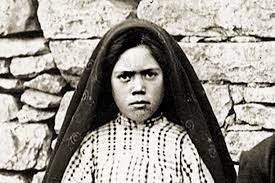
Sister Lucia of Jesus, also known as Lucia dos Santos, was one of the three children who witnessed the apparitions of the Virgin Mary in Fatima, Portugal, in 1917. She was the oldest and the longest-lived of the seers, passing away at the age of 97 in 2005. What was the cause of her death and how did she spend her life after the Fatima events? Here is a brief overview of her biography and legacy.
Early Life and Visions
Lucia was born on March 22, 1907, in Aljustrel, a small village near Fatima. She was the youngest of seven children of Antonio dos Santos and Maria Rosa Ferreira, who were devout Catholics and humble peasants. Lucia was baptized on March 30, 1907, at the parish church of Fatima
Lucia had a natural inclination for religion and prayer since her childhood. She learned to read and write from her mother, who also taught her catechism and the rosary. Lucia was fond of storytelling and singing, and had a good memory and a lively imagination
Lucia first saw the Virgin Mary on May 13, 1917, while she was tending sheep with her two cousins, Francisco and Jacinta Marto, at a place called Cova da Iria. The Lady appeared to them as a beautiful woman dressed in white, holding a rosary in her hand. She asked them to pray the rosary every day for peace and the conversion of sinners, and to return to the same spot on the 13th of each month until October. She also promised to reveal a secret to them in three parts, and to perform a miracle for all to see
The children obeyed the Lady’s requests and kept seeing her every month, except for August, when they were detained by the local authorities who tried to force them to deny their visions. The Lady appeared to them on August 19 at Valinhos, another pasture near Aljustrel. She repeated her message of prayer and penance, and told them that she would come again in October to fulfill her promise
The news of the apparitions spread quickly and attracted thousands of pilgrims and curious people to Cova da Iria. Some believed the children, while others mocked and persecuted them. The local clergy were also skeptical and cautious about the authenticity of the visions. Lucia suffered the most from the doubts and hostility of her family, friends, and neighbors, who accused her of lying or being deceived by the devil
The last apparition took place on October 13, 1917, in front of about 70,000 people who gathered at Cova da Iria despite the rain and mud. The Lady identified herself as “the Lady of the Rosary” and asked for a chapel to be built in her honor. She also revealed the third part of the secret, which Lucia kept in her heart until 1944, when she wrote it down under obedience from her bishop. The secret consisted of a vision of hell, a prophecy of World War II and the spread of communism, and a request for the consecration of Russia to the Immaculate Heart of Mary
After revealing the secret, the Lady lifted her hands and made the sun shine through the clouds. Then, according to many eyewitnesses, the sun began to spin and change colors, before plunging toward the earth in a zigzag motion. The people screamed in fear and prayed for mercy, thinking it was the end of the world. But then the sun returned to its normal position and dried up all the rain that had fallen. This phenomenon is known as “the miracle of the sun” and is considered as a sign from God to confirm the truth of the apparitions
Post-Fatima Life
After the Fatima events, Lucia’s life changed dramatically. She lost her two cousins, Francisco and Jacinta, who died in 1919 and 1920 respectively from influenza. They were beatified by Pope John Paul II in 2000 and canonized by Pope Francis in 2017. Lucia was left alone as the only surviving visionary and bearer of the secret
Lucia felt called to religious life since she was young, but she had to wait until she was 14 to enter a boarding school run by the Sisters of St. Dorothy in Vilar, near Porto, in northern Portugal. She left Aljustrel on June 17, 1921, with a new name: Maria das Dores (Mary of Sorrows). She received further apparitions from Jesus and Mary at Vilar, who asked her to make known their requests for devotion to their Immaculate Hearts
Lucia made her first vows as a Sister of St. Dorothy on October 3, 1928, and her perpetual vows on October 3, 1934. She took the religious name of Maria Lucia of Jesus and the Immaculate Heart. She was assigned to various convents in Spain and Portugal, where she worked as a teacher, a nurse, and a catechist. She also wrote several memoirs about her experiences at Fatima, under the guidance of her spiritual directors and the approval of the Church authorities
In 1946, Lucia returned to Portugal for the first time since she left Aljustrel. She visited Fatima and Cova da Iria, where a large basilica was being built in honor of Our Lady of the Rosary. She also met with Pope Pius XII, who granted her a special blessing and encouraged her to continue her mission
In 1948, Lucia felt a new call from God to join the Carmelite order, which was known for its contemplative and penitential lifestyle. She entered the Carmelite convent of St. Teresa in Coimbra, central Portugal, on March 25, 1948, and made her profession on May 31, 1949. She adopted the name of Sister Maria Lucia of Jesus and of the Immaculate Heart. She spent the rest of her life in prayer and silence, offering herself for the conversion of sinners and the fulfillment of the Fatima message
Lucia received several visits from popes, bishops, priests, and lay people who wanted to hear her testimony and ask for her prayers. She also corresponded with many people who sought her advice and guidance. She maintained a close friendship with Pope John Paul II, who credited her prayers and the intercession of Our Lady of Fatima for saving his life from an assassination attempt in 1981. He consecrated the world to the Immaculate Heart of Mary in 1984, fulfilling one of the requests of the Fatima secret. He also gave Lucia a bullet that was extracted from his body and asked her to place it in the crown of the statue of Our Lady of Fatima at Cova da Iria
Lucia celebrated the 50th anniversary of the apparitions in 1967, when she accompanied Pope Paul VI to Fatima with about one million pilgrims. She also witnessed the beatification of her cousins Francisco and Jacinta in 2000, when Pope John Paul II revealed the third part of the secret to the world. She received her last visit from Pope John Paul II in 2000, when he thanked her for her fidelity and service to the Church
Cause of Death and Beatification Process
Lucia died on February 13, 2005, at the age of 97, at her Carmelite convent in Coimbra. The cause of her death was old age and respiratory failure. She had been ill for several months and received the sacraments of the Church before passing away peacefully. Her body was transferred to Fatima on February 19, 2005, where it was buried next to her cousins Francisco and Jacinta at the basilica of Our Lady of the Rosary
Lucia’s death was mourned by millions of Catholics around the world who admired her holiness and courage. Pope John Paul II sent a telegram expressing his condolences and gratitude for Lucia’s witness to the Gospel. He said: “I feel deeply saddened upon receiving news of the death of Sister Lucia…I recall with emotion my meetings with her…and I thank God for having given me this grace.”
Lucia’s cause for beatification was opened by Pope Benedict XVI on February 13, 2008, three years after her death. The process involves collecting testimonies and documents about Lucia’s life and virtues, as well as investigating any possible miracles attributed to her intercession. The cause is currently under study by the Congregation for the Causes of Saints at the Vatican. If Lucia is declared venerable, blessed, and finally saint by the Church, she will join her cousins Francisco and Jacinta as an example of faithfulness to God and devotion to Mary
