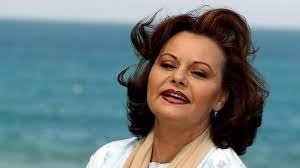
Rocío Dúrcal was a Spanish singer and actress who became one of the most popular and beloved performers of Mexican folk music, also known as ranchera. She sold over 40 million records worldwide and received numerous awards and honors, including a Latin Grammy for musical excellence in 2005. However, her life and career were cut short by a devastating disease that claimed her life in 2006. What was Rocío Dúrcal’s cause of death and how did she cope with it? Here is a brief overview of her life, achievements, and struggle with cancer.
Early Life and Career
Rocío Dúrcal was born María de los Ángeles de las Heras Ortiz on October 4, 1944, in Madrid, Spain. She showed an interest in music and singing from an early age, encouraged by her paternal grandfather. She participated in various radio contests and TV shows, where she impressed the audience and the critics with her talent and personality. She adopted the stage name Rocío Dúrcal after winning a contest sponsored by a magazine that offered a trip to the town of Dúrcal in Granada as a prize.
She made her film debut in 1962 with Canción de Juventud, directed by Luis Lucia. The movie was a huge success and launched her as a child star. She starred in several other films in the 1960s and early 1970s, such as Rocío de La Mancha, Tengo 17 años, Más bonita que ninguna, Acompáñame, and Me siento extraña. She also recorded songs for her movies, which became popular hits. She signed a contract with Phonogram (now Universal Music) and released her first album, Las películas de Rocío Dúrcal, in 1962.
Transition to Mexican Music
In 1970, Rocío Dúrcal married Antonio Morales Barreto, also known as Junior, a singer and member of the pop group Los Brincos. They had three children: Carmen María (1971), Antonio (1974), and Shaila (1979). Shaila followed her mother’s footsteps and became a singer as well.
In 1977, Rocío Dúrcal met the Mexican singer-songwriter Juan Gabriel, who offered her to record some of his songs in the ranchera genre. She accepted the proposal and traveled to Mexico to work with him. The result was the album Rocío Dúrcal canta a Juan Gabriel, which was a huge success in Mexico and other Latin American countries. She continued to collaborate with Juan Gabriel for several more albums, such as Rocío Dúrcal canta lo romántico de Juan Gabriel (1981), Entre tú y yo (1984), Siempre (1986), Como tu mujer (1988), Amor eterno (1990), Desaires (1993), Hay amores y amores (1995), Juntos otra vez (1997), and Caricias (2000).
Rocío Dúrcal became known as “the most Mexican Spaniard” and “the Queen of Rancheras” for her interpretation of Mexican music. She also performed duets with other famous singers, such as Julio Iglesias, Camilo Sesto, José Luis Perales, Raphael, Roberto Carlos, José José, Marco Antonio Solís, Ana Gabriel, Ricky Martin, Alejandro Fernández, Vicente Fernández, and David Bisbal.
Diagnosis and Death
In 2001, Rocío Dúrcal was diagnosed with uterine cancer. She underwent surgery and chemotherapy to treat the disease. She continued to work and perform despite her illness. She released her last album in 2004, titled Alma ranchera. She also participated in several concerts and events to celebrate her 40 years of artistic career.
However, her health deteriorated gradually and she had to cancel some of her shows due to complications. She died on March 25, 2006, at her home in Madrid. She was 61 years old. Her body was cremated and her ashes were taken to Mexico City, where they were placed in the Basilica of Our Lady of Guadalupe.
Rocío Dúrcal left behind a legacy of music and love that touched millions of fans around the world. She was honored with several tributes and homages after her death. In 2007, she received a posthumous Latin Grammy nomination for her album Alma ranchera. In 2016, she was awarded a star on the Hollywood Walk of Fame.
Conclusion
Rocío Dúrcal was one of the most successful and influential singers of Spanish and Mexican music. She had a long and fruitful career that spanned over four decades. She faced her cancer diagnosis with courage and optimism, never giving up on her passion and her fans. She died in 2006, but her voice and her songs live on in the hearts of many people who admire and love her.
