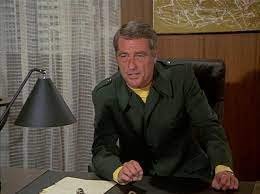
Robert Webber was a versatile and prolific actor who appeared in dozens of films and television shows, ranging from drama to comedy. He is best remembered for his roles as Juror No. 12 in 12 Angry Men, a general in The Dirty Dozen, and a composer’s partner in 10. But what was the cause of his death and how did he cope with his terminal illness?
Early Life and Career
Robert Webber was born on October 14, 1924, in Santa Ana, California, to Robert Clark Webber, a merchant seaman, and Alice Sarah Peters, a homemaker. He graduated from Oakland Technical High School and enlisted in the United States Marine Corps in 1943 during World War II. He served in the 1st Marine Amphibious Corps and later in the 6th Marine Division as a radio operator in Guam and Okinawa. He was discharged in 1945 as a private first class and was awarded several medals for his service.
Webber started his acting career in small stage shows and a few Broadway plays before landing his breakthrough role as Juror No. 12 in the 1957 film 12 Angry Men, directed by Sidney Lumet. He played a cynical and indifferent advertising executive who is swayed by the arguments of Juror No. 8, played by Henry Fonda. The film was a critical and commercial success and is considered one of the greatest courtroom dramas of all time.
Webber went on to appear in many other films and television shows, often playing supporting or antagonistic characters. He worked with some of the most renowned directors and actors of his time, such as Lee Marvin, Paul Newman, Elizabeth Taylor, Blake Edwards, Sam Peckinpah, and Barbra Streisand. Some of his notable films include The Sandpiper, The Nun and the Sergeant, The Great White Hope, Midway, Revenge of the Pink Panther, Private Benjamin, S.O.B., Wild Geese II, and Nuts. He also appeared in many popular TV series, such as Alfred Hitchcock Presents, The Outer Limits, The Fugitive, The Rockford Files, and Moonlighting.
Diagnosis and Death
In 1986, Webber was diagnosed with amyotrophic lateral sclerosis (ALS), also known as Lou Gehrig’s disease, a progressive neurodegenerative disorder that affects the nerve cells in the brain and spinal cord. The disease causes muscle weakness, paralysis, and eventually death. There is no cure for ALS and the average life expectancy after diagnosis is three to five years.
Webber continued to work despite his condition, appearing in his last film, Nuts, in 1987, and his last TV show, Something Is Out There, in 1988. He died on May 19, 1989, at his home in Malibu, California, at the age of 64. He was survived by his second wife, Gundel Mertens, whom he married in 1972. He was previously married to actress Miranda Jones from 1953 to 1958.
Webber was a respected and admired actor who left behind a legacy of diverse and memorable performances. He was also a brave and dignified man who fought his disease with courage and grace. He once said, “I’ve built a hell of a good life without being in the driver’s seat.” He will always be remembered as one of Hollywood’s veteran character actors.
