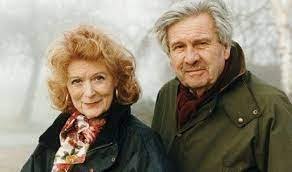
Moira Shearer was one of the most celebrated ballet dancers and actresses of the 20th century. She rose to fame with her iconic performance as the doomed ballerina in The Red Shoes, a film that inspired generations of dancers and artists. She also starred in other acclaimed films, such as The Tales of Hoffman and Peeping Tom, and created memorable roles in ballets by Frederick Ashton, Léonide Massine, and Robert Helpmann. She was admired for her grace, beauty, and talent, as well as her intelligence, wit, and courage. But how did she die, and what legacy did she leave behind?
Contents
Early Life and Career
Moira Shearer was born on January 17, 1926, in Dunfermline, Fife, Scotland. Her father was a civil engineer who worked in Zambia, where she spent part of her childhood. She received her first ballet training there from a former pupil of Enrico Cecchetti, a famous Italian ballet master. When she returned to Britain in 1936, she continued her studies with Nicholas Legat, another renowned Russian teacher. She also attended the Sadler’s Wells Ballet School, the precursor of the Royal Ballet School.
She made her professional debut in 1941 with the International Ballet, a touring company founded by Mona Inglesby. She joined the Sadler’s Wells Theatre Ballet in 1942, and became a principal dancer in 1944. She danced leading roles in classical ballets such as The Sleeping Beauty, Swan Lake, Coppelia, and Giselle. She also created important roles in new ballets by British choreographers, such as Symphonic Variations by Frederick Ashton, Promenade by Ninette de Valois, Miracle in the Gorbals by Robert Helpmann, and Clock Symphony by Léonide Massine.
The Red Shoes and Film Stardom
In 1948, Moira Shearer was chosen by the film directors Michael Powell and Emeric Pressburger to play the lead role in The Red Shoes, a film based on the fairy tale by Hans Christian Andersen. The film tells the story of Victoria Page, a young ballerina who is torn between her love for a composer and her passion for dancing. She wears a pair of red shoes that make her dance irresistibly, but also lead her to tragedy.
The film was a huge success, both critically and commercially. It won two Academy Awards and was nominated for three more. It also won the Golden Globe for Best Foreign Film and the Grand Prix at the Cannes Film Festival. It is widely regarded as one of the greatest films ever made about ballet and art. It influenced many dancers and artists, such as Martin Scorsese, Brian De Palma, Darren Aronofsky, Matthew Bourne, and Jennifer Homans.
Moira Shearer’s performance was praised for its realism, emotion, and beauty. She danced several ballets in the film, including the title ballet choreographed by Robert Helpmann. She also acted with skill and charisma, showing her versatility as an artist. She became an international star overnight, eclipsing even Margot Fonteyn, the prima ballerina of the Sadler’s Wells Ballet.
Later Films and Stage Roles
Moira Shearer continued to work with Powell and Pressburger in their next film, The Tales of Hoffman (1951), based on the opera by Jacques Offenbach. She played three different roles: Stella, a singer who breaks Hoffmann’s heart; Olympia, a mechanical doll who deceives him; and Giulietta, a courtesan who betrays him. She danced and sang in the film, showcasing her talents in different genres.
She also appeared in other films, such as The Story of Three Loves (1953), an anthology film with three segments; The Man Who Loved Redheads (1955), a romantic comedy; Black Tights (1961), a film version of four ballets by Roland Petit; and Peeping Tom (1960), a controversial psychological thriller directed by Michael Powell.
In addition to her film career, Moira Shearer also pursued her stage career. She played Titania in A Midsummer Night’s Dream at the Edinburgh International Festival in 1954. She also joined the Bristol Old Vic Theatre Company in 1955, where she played roles such as Major Barbara by George Bernard Shaw and Lady Macbeth by William Shakespeare. She also performed at other theatres in London and Edinburgh.
Retirement and Later Years
Moira Shearer retired from dancing in 1953, after suffering from several injuries. She continued to act until 1966, when she decided to focus on her family life. She married Sir Ludovic Kennedy, a journalist and broadcaster, in 1950. They had four children: Alastair, Alisa, Rachel, and Fiona.
She also wrote book reviews and articles for various publications, such as The Daily Telegraph, The Times, and The Spectator. She also wrote a biography of George Balanchine, the founder of the New York City Ballet, titled Balletmaster: A Dancer’s View of George Balanchine (1986).
She was diagnosed with viral encephalitis in 2000, which caused her memory to deteriorate. She died on January 31, 2006, not long after turning 80. Moira Shearer’s cause of death was attributed to blood and urinary tract infections, according to The Independent.
Legacy and Influence
Moira Shearer is remembered as one of the most influential and beloved ballet dancers and actresses of all time. She inspired generations of dancers and artists with her grace, beauty, and talent. She also contributed to the development of British ballet and film with her roles in groundbreaking works by Powell and Pressburger, Ashton, Massine, and Helpmann.
She received many honors and awards for her achievements, such as the Order of the British Empire (OBE) in 1953, the Silver Medal of the Royal Society of Arts in 1958, and the Honorary Doctorate of Letters from the University of St Andrews in 1994. She also has a star on the Hollywood Walk of Fame.
She has been portrayed on screen by Shannon Davidson in the award-winning short film Òran na h-Eala (2022), which explores her life-changing decision to appear in The Red Shoes. She has also been the subject of several books and documentaries, such as Moira Shearer: A Portrait by Richard Austin (1987), Moira Shearer: Ballet Star Turned Actress by David Bret (2006), and Moira Shearer: Dancing into the Unknown by Judith Mackrell (2019).
Moira Shearer’s legacy lives on in her films, ballets, and stage roles, as well as in the hearts and minds of her fans and admirers. She was a true legend of ballet and cinema, who left behind a lasting impression on the world of art and culture.
