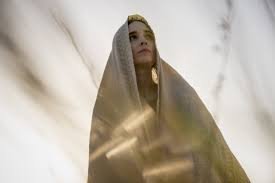
Mary Magdalene was one of the most prominent and influential women in the early Christian movement. She was a faithful follower of Jesus, a witness to his crucifixion and resurrection, and a leader of the apostolic community. She was also known as the “apostle of the apostles”, a title given to her by Pope Francis in 2016
But how did Mary Magdalene die? What was the cause of her death? And where was she buried? These are some of the questions that have puzzled historians, theologians, and believers for centuries. In this article, we will explore some of the theories and evidence that have been proposed to answer these questions.
Contents
Natural Causes or Demonic Possession?
One theory suggests that Mary Magdalene died of natural causes, possibly due to an illness or condition like malaria or tuberculosis. This theory is grounded in historical evidence that suggests she may have suffered from an illness or condition that led to her death. Some scholars have suggested that she may have succumbed to a disease like malaria or tuberculosis
Another theory suggests that she suffered from severe emotional or psychological trauma due to demon possession, which led to her death. This theory is based on the biblical account that states that seven demons had been driven out of her by Jesus According to this theory, Mary Magdalene may have experienced a relapse of demonic influence after Jesus’ death, which caused her to lose her sanity and eventually her life.
Martyrdom or Exile?
Another theory proposes that Mary Magdalene died as a martyr for her faith, either by execution or by persecution. This theory is supported by some traditions and legends that claim that Mary Magdalene faced hostility and violence from the Jewish or Roman authorities for her role as a witness and preacher of the resurrection. Some sources say that she was beheaded, stoned, or crucified for her testimony
Alternatively, some sources suggest that Mary Magdalene died in exile, either by choice or by force. This theory is based on the idea that Mary Magdalene left Jerusalem after Jesus’ ascension and traveled to different places to spread the gospel. Some traditions say that she went to Ephesus with John the apostle, where she lived until her death and was buried Other traditions say that she went to France with Lazarus and Martha, where she spent the rest of her days in solitude and penance in a cave
The Tomb of Mary Magdalene
The location of Mary Magdalene’s tomb is another mystery that has sparked debate and controversy among scholars and believers. There are several places that claim to be the final resting place of Mary Magdalene, but none of them have conclusive evidence to back up their claims.
One of the most famous sites is the Basilica of Saint-Maximin-la-Sainte-Baume in Provence, France, which claims to house the relics of Mary Magdalene. According to this tradition, Mary Magdalene’s body was brought from Jerusalem to Marseille by boat, and then transferred to Saint-Maximin by Maximin, one of the first bishops of Provence. The relics were hidden in a crypt until they were rediscovered in 1279 by Charles II of Anjou. The basilica was built over the crypt in honor of Mary Magdalene
Another site is the Church of St. Mary Magdalene in Migdal, Israel, which claims to be built on the site of Mary Magdalene’s hometown and burial place. According to this tradition, Mary Magdalene was born and raised in Migdal, a fishing town on the shore of the Sea of Galilee. She was buried there after her death, and her tomb was marked by a marble column with a cross on top. The church was built in 2014 by a Catholic order dedicated to Mary Magdalene
A third site is the House of the Virgin Mary in Ephesus, Turkey, which claims to be the place where Mary Magdalene lived and died with John the apostle and Mary the mother of Jesus. According to this tradition, Mary Magdalene accompanied John and Mary to Ephesus after Jesus’ ascension, where they stayed in a small stone house on a hill overlooking the city. Mary Magdalene died there and was buried nearby. The house was discovered in 1891 by a French priest who followed the visions of a German nun named Anne Catherine Emmerich. The house is now a pilgrimage site for Christians and Muslims alike
Conclusion
Mary Magdalene’s cause of death remains a mystery that may never be solved. There are many theories and traditions that attempt to explain how and where she died, but none of them have definitive proof or consensus. What is certain, however, is that Mary Magdalene was a remarkable woman who played a vital role in the history of Christianity. She was a faithful disciple, a courageous witness, and a powerful apostle. She deserves to be remembered and honored for her contribution to the faith and for her example of love and devotion to Jesus.
