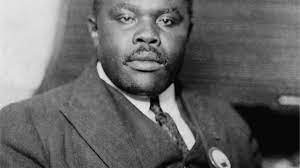
Marcus Garvey was a Jamaican-born black nationalist and leader of the Pan-Africanism movement, which sought to unify and connect people of African descent worldwide. He was also a noted civil rights activist who founded the Universal Negro Improvement Association, or UNIA, a fraternal organization of black nationalists. He died on June 10, 1940, in London, England, after suffering two strokes. But what were the circumstances that led to his demise? And how did his death impact his legacy and followers?
Contents
Early Life and Activism
Marcus Mosiah Garvey was born on August 17, 1887, in St. Ann’s Bay, Jamaica, to Marcus Garvey Sr. and Sarah Jane Richards. His father was a stonemason and his mother was a household servant. He attended school in Jamaica until he was 14, when he left for Kingston, the island nation’s capital, where he worked as an apprentice in a print shop. He later said he first experienced racism in grade school in Jamaica, primarily from white teachers.
While working in the print shop, Garvey became involved in the labor union for print tradesmen in Kingston. He also traveled to Central America and Europe, where he witnessed the plight of black people under colonialism and racism. He was influenced by the ideas of Pan-Africanism, which advocated for the political and cultural unity of Africans and their descendants around the world.
In 1914, he returned to Jamaica and founded the Universal Negro Improvement Association, or UNIA, with the aim of promoting racial pride, economic self-reliance, and political independence for black people. He also started publishing a newspaper called The Negro World, which spread his message to a global audience.
The Black Star Line and the U.S. Trial
In 1916, Garvey moved to the United States, where he established a branch of the UNIA in New York City’s Harlem district. He attracted thousands of supporters with his charismatic speeches and rallies. He also launched various businesses under the umbrella of the Negro Factories Corporation, which aimed to create jobs and wealth for black people.
One of his most ambitious projects was the Black Star Line, a shipping company that intended to facilitate trade and transportation between Africa and the Americas, as well as to enable black people to return to their ancestral homeland. Garvey sold shares of the company to his followers, raising millions of dollars.
However, the Black Star Line faced many challenges, such as mismanagement, fraud, sabotage, and legal troubles. In 1923, Garvey was arrested and charged with mail fraud for allegedly using false claims to sell the company’s stock. Many historians believe that the trial was politically motivated by Garvey’s enemies, such as J. Edgar Hoover , who saw him as a threat to national security and racial harmony.
Garvey was convicted and sentenced to five years in prison. He appealed his case unsuccessfully and spent nearly two years in jail before his sentence was commuted by President Calvin Coolidge in 1927. He was then deported back to Jamaica.
Later Years and Death
After returning to Jamaica, Garvey continued his political activism and founded the People’s Political Party in 1929. He also ran for a seat in the Legislative Council of Jamaica but lost. He faced opposition from both the colonial authorities and some sectors of the black community who disagreed with his separatist views.
In 1935, he moved to London, where he hoped to revive his Pan-Africanist agenda. He also wrote several books and articles on his philosophy and vision for Africa and its diaspora. However, he struggled to gain support and influence in Britain and Europe.
On June 10, 1940, Garvey suffered a stroke after reading a negative obituary of himself in a Chicago newspaper that falsely claimed he had died “broke, alone and unpopular”. He died later that day at the age of 52.
Legacy and Influence
Garvey’s death marked the end of an era for the UNIA and the Pan-Africanist movement. The organization declined in membership and influence after his departure. However, Garvey’s ideas and legacy lived on in various forms of black nationalism , such as Rastafarianism , Nation of Islam , Black Power , Afrocentrism , and African socialism .
Garvey is widely regarded as one of the most influential black leaders of the 20th century. He inspired generations of activists and thinkers who fought for racial justice and liberation across the world. He is also considered a national hero in Jamaica , where his birthday is celebrated as a public holiday.
Garvey’s cause of death may have been tragic and ironic , but it did not diminish his achievements and contributions to black history . As he once said: “If I die in Atlanta my work shall then only begin , but I shall live , in the physical or spiritual , to see the day of Africa’s glory .”
