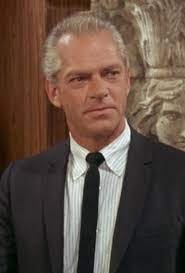
Keith Andes was a talented actor and singer who had a long and varied career in film, theater, radio, and television. He starred opposite some of the most famous leading ladies of Hollywood, such as Marilyn Monroe, Barbara Stanwyck, and Lucille Ball. He also performed on Broadway in musicals like The Chocolate Soldier and Kiss Me, Kate. However, his life ended in a sad and lonely way. He committed suicide by asphyxiation at his home in Santa Clarita, California, on November 11, 2005. He was 85 years old and had been suffering from bladder cancer and other illnesses. What led him to take his own life? Here is a brief overview of his life and career, and the possible reasons behind his tragic death.
Contents
Early Life and Education
Keith Andes was born John Charles Andes on July 12, 1920, in Ocean City, New Jersey. He was the son of William G. Andes, a schoolteacher, and Elsie Andes, a homemaker. He had a younger sister named Nancy. He showed an early interest in music and acting, and began his career in radio at the age of 12. He attended Upper Darby High School in Pennsylvania, where he worked as a disc jockey for several local radio stations. He also studied voice at the Philadelphia Conservatory of Music and graduated from Temple University with a bachelor’s degree in education in 1943.
Military Service and Broadway Debut
During World War II, Andes served in the United States Army Air Forces as a radio operator and gunner. He also sang and acted in USO shows for the troops. He made his film debut in Winged Victory (1944), a war drama based on a play by Moss Hart. He played one of the main characters, Francis William “Frankie” Davis, a young pilot who falls in love with a WAC officer. The film also featured several future stars, such as Henry Fonda, Judy Holliday, Lee J. Cobb, and Red Buttons.
After the war, Andes returned to New York and pursued a career in theater. He won a Theatre World Award for his performance in The Chocolate Soldier (1947), an operetta by Oscar Straus and Stanislaus Stange. He played Bumerli, a Swiss soldier who disguises himself as a chocolate salesman to escape from enemy territory. He also appeared in other musicals, such as Magdalena (1948), Arms and the Girl (1950), and Out of This World (1950).
In 1950, he took over the lead role of Fred Graham/Petruchio in Kiss Me, Kate, the hit musical by Cole Porter and Sam and Bella Spewack. He replaced Alfred Drake, who had originated the role on Broadway. Andes played the part for over a year, both in New York and on tour. He received rave reviews for his singing and acting skills, and became one of the most sought-after leading men on Broadway.
Hollywood Stardom
Andes’ success on stage attracted the attention of Hollywood producers, who offered him several film roles. He played one of Loretta Young’s protective brothers in The Farmer’s Daughter (1947), which won Young an Oscar for Best Actress. He also played Marilyn Monroe’s sweetheart and Barbara Stanwyck’s brother in Clash by Night (1952), directed by Fritz Lang and co-written by Clifford Odets. He portrayed Johann Strauss Jr., the famous composer of waltzes, in The Great Waltz (1955), opposite Luise Rainer and Fernando Lamas.
Andes also appeared in several adventure films, such as Blackbeard the Pirate (1952), with Robert Newton; The Iron Glove (1954), with Robert Stack; Away All Boats (1956), with Jeff Chandler; Interpol (1957), with Victor Mature; Damn Citizen (1958), with Keith Larsen; Surrender – Hell! (1959), with Susan Cabot; Back Street (1961), with Susan Hayward; Tora! Tora! Tora! (1970), with Martin Balsam; …And Justice for All (1979), with Al Pacino; and The Girl Who Knew Too Much (1980), with Nancy Kwan.
Television Career
Andes also had a prolific career on television, appearing in dozens of shows from the 1950s to the 1980s. He starred in two series: This Man Dawson (1959-1960), where he played Colonel Frank Dawson, the head of an anti-crime unit; and Glynis (1963), where he played Keith Granville, the husband of Glynis Johns’ character Glynis Granville, a mystery writer who gets involved in solving crimes.
He also guest-starred in many popular shows, such as Perry Mason, The Twilight Zone, The Untouchables, The Fugitive, The Man from U.N.C.L.E., Mission: Impossible, Mannix, Hawaii Five-O, The Rockford Files, Charlie’s Angels, Quincy M.E., and Murder, She Wrote. He often played villains, authority figures, or romantic interests.
Personal Life and Death
Andes was married twice and had two sons. His first wife was Jean Alice Cotton, whom he married in 1946 and divorced in 1961. They had two sons: Mark Andes, who became a rock musician and played in bands such as Canned Heat, Spirit, Firefall, and Heart; and Matt Andes, who also became a musician and songwriter. His second wife was Shelah Hackett, whom he married in 1961 and divorced sometime later.
Andes suffered from various health problems in his later years, including bladder cancer, heart disease, and depression. He lived alone in a mobile home park in Santa Clarita, California. He had few friends and rarely left his home. He was estranged from his sons and had no contact with them for several years. He felt lonely, hopeless, and bitter about his life.
On November 11, 2005, he committed suicide by asphyxiation. He placed a plastic bag over his head and secured it with a rubber band. He left a note that read: “I’m sorry. Please forgive me.” He was found dead by a friend who had come to check on him. The Los Angeles County coroner’s office ruled the death a suicide.
Legacy
Keith Andes was a talented and versatile performer who had a successful career in various media. He had a rich baritone voice that could handle both operetta and musical comedy. He had a handsome face and a strong physique that made him an ideal leading man. He had a flair for drama and comedy that allowed him to play diverse roles.
However, he also faced many challenges and disappointments in his life. He never achieved the same level of fame and recognition as some of his contemporaries. He struggled with personal issues and health problems that affected his mood and outlook. He ended his life in a tragic way that shocked and saddened his fans and colleagues.
He is remembered as one of the stars of the golden age of Hollywood and Broadway. His films and shows are still enjoyed by many people today. His songs and performances are still admired by music lovers and theatergoers. His life and death are still a source of interest and curiosity for biographers and historians.
