Contents
Who was John Philip Sousa?
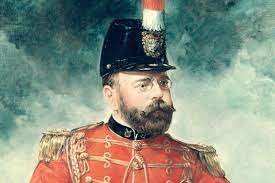
John Philip Sousa was an American bandmaster and composer who is widely known as “The March King” for his prolific and influential output of military marches. He was born on November 6, 1854 in Washington, D.C., to a Portuguese father and a German mother. He showed an early interest in music and learned to play various instruments, including the violin, piano, flute, cornet, and trombone. He joined the United States Marine Band as an apprentice at the age of 13 and became its leader in 1880. He led the band for 12 years, during which he composed some of his most famous marches, such as “Semper Fidelis”, “The Washington Post”, and “The Liberty Bell”. He also conducted the band at several presidential inaugurations and other official ceremonies.
How did he form his own band?
In 1892, Sousa left the Marine Band and formed his own civilian band, which he named the Sousa Band. He wanted to have more artistic freedom and financial independence, as well as to tour the world and perform his own music. He recruited some of the best musicians in the country and trained them to play with precision and expression. He also hired soloists, singers, and comedians to add variety and entertainment to his concerts. The Sousa Band became one of the most popular and successful musical groups in history, performing over 15,600 concerts in 23 countries over four decades. Sousa composed over 100 more marches for his band, including “The Stars and Stripes Forever”, “King Cotton”, and “El Capitan”. He also wrote operettas, suites, songs, and other works in different genres. He was a pioneer in the recording industry and made hundreds of recordings with his band. He also championed the rights of composers and advocated for the passage of the first U.S. copyright law.
What was John Philip Sousa cause of death?
Sousa died of heart failure on March 6, 1932, in Reading, Pennsylvania, at the age of 77. He was on his way to conduct a rehearsal with the Ringgold Band, a local community band that had invited him as a guest conductor. He had just finished a concert with his own band the night before in Wilkes-Barre, Pennsylvania, where he received a standing ovation and played “The Stars and Stripes Forever” as an encore. He was buried in the Congressional Cemetery in Washington, D.C., where a memorial bench was erected in his honor. His death was mourned by millions of fans and musicians around the world, who recognized him as one of the greatest American composers and bandmasters of all time.
How did he influence American music and culture?
Sousa’s music and personality had a profound impact on American music and culture. His marches were not only patriotic and inspiring, but also catchy and appealing to the masses. They reflected the spirit and values of the American people, especially during the times of war and expansion. They also influenced the development of other musical forms, such as ragtime, jazz, and pop. His band set the standard for excellence and professionalism in the band world, and inspired generations of band directors and musicians to follow his example. He also promoted music education and appreciation among the public, and supported various musical organizations and causes. He was honored with numerous awards and honors, including the Congressional Gold Medal, the National Medal of Arts, and induction into the Hall of Fame for Great Americans. He was also depicted in several films, books, and musicals, such as “Stars and Stripes Forever”, “The Music Man”, and “Sousatzka”. He remains one of the most celebrated and revered figures in American music history.
