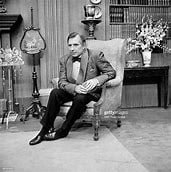
Robert Newton was a talented and charismatic actor who starred in many films and plays in the 1930s, 1940s and 1950s. He is best remembered for his portrayal of the pirate Long John Silver in Treasure Island and Blackbeard the Pirate, which popularized the stereotypical “pirate voice”. However, behind his success and fame, Newton struggled with a serious addiction to alcohol that eventually took a toll on his health and career. In this article, we will explore how Robert Newton’s chronic alcoholism led to his death at the age of 50.
Early Life and Career
Robert Newton was born on 1 June 1905 in Shaftesbury, Dorset, England. He was the son of a landscape painter, Algernon Newton, and grew up in Cornwall near Land’s End. He developed an interest in acting at an early age and joined the Birmingham Repertory Theatre in 1921 when he was 16. He later moved to London and appeared in many West End plays, including Bitter Sweet by Noël Coward, The Letter with Gladys Cooper, and Private Lives with Laurence Olivier. He also performed on Broadway and worked with Olivier again in Hamlet at the Old Vic theatre in 1939.
Newton’s film career began in the 1930s, when he signed a contract with Alexander Korda and appeared in small roles in films such as Fire Over England, Dark Journey, and The Squeaker. He also had a part in the unfinished version of I, Claudius and in 21 Days, which was released in 1940. His breakthrough came after he served in the Royal Navy during World War II, when he starred in This Happy Breed and Henry V, both directed by Olivier. These films made him one of the most popular British actors of the time and earned him critical acclaim.
Rise to Fame as a Pirate
Newton’s most iconic role was that of Long John Silver in the 1950 adaptation of Treasure Island, produced by Walt Disney. Newton’s performance as the cunning and charismatic pirate captivated audiences around the world and influenced many subsequent portrayals of pirates in film and television. Newton used his West Country accent to create a distinctive way of speaking that became associated with pirates. He also added some improvised lines and gestures that enhanced his character’s personality.
Newton reprised his role as Long John Silver in a sequel film called Long John Silver in 1954, which also spawned a television series called The Adventures of Long John Silver. He also played another famous pirate, Edward Teach or Blackbeard, in Blackbeard the Pirate in 1952. Newton’s popularity as a pirate actor made him a role model for many young boys and a cultural icon for pirate enthusiasts. He is considered the “patron saint” of the annual International Talk Like a Pirate Day.
Decline Due to Alcoholism
Despite his success and fame, Newton suffered from chronic alcoholism that affected his personal and professional life. He began drinking heavily in the 1930s and continued to do so throughout his career. He often drank before and during filming, which caused him to be unreliable and difficult to work with. He also had a tendency to overact and exaggerate his expressions when he was drunk, which sometimes ruined his performances.
Newton’s drinking also caused him health problems such as liver damage, weight gain, high blood pressure, and heart trouble. He tried to quit several times but always relapsed. His friends and family tried to help him but he resisted their efforts. He also had legal troubles due to his drunken behavior, such as driving under the influence, assaulting a policeman, and causing public disturbances.
Newton’s alcoholism eventually led to his death on 25 March 1956 at age 50. He suffered a heart attack while staying at a hotel in Beverly Hills, California. He was buried at Westwood Village Memorial Park Cemetery in Los Angeles.
Conclusion
Robert Newton was a brilliant actor who left a lasting legacy as the quintessential pirate on screen. His portrayal of Long John Silver and Blackbeard influenced generations of actors and fans who admired his charm and charisma. However, behind his success and fame, he battled with a serious addiction to alcohol that destroyed his health and career. His tragic death at the age of 50 was a result of his chronic alcoholism that he could not overcome.
