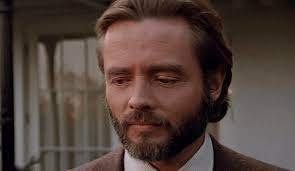
Richard Jordan was a versatile and acclaimed actor who appeared in many films, television shows, and stage plays. He was known for his roles in Logan’s Run, The Hunt for Red October, and Gettysburg. He was also a founder of the Gotham Arts Theater, an influential off-off-Broadway company. But his life and career were cut short by a brain tumor that claimed his life in 1993. Here is the story of Richard Jordan’s cause of death and how it affected his family, friends, and fans.
Contents
Early Life and Education
Richard Jordan was born on July 19, 1937 in New York City. His birth name was Robert Anson Jordan Jr., but he changed it to Richard to avoid confusion with another actor. His maternal grandfather was Learned Hand, a famous judge of the United States Court of Appeals for the Second Circuit. His mother remarried Newbold Morris, a prominent politician who served as the president of the New York City Council.
Jordan attended private schools in Manhattan and Connecticut, where he developed an interest in theater. He graduated from Harvard University in 1958, where he was a member of the Dramatic Club. He then studied at the Universite du Theatre des Nations in Paris.
Stage and Screen Career
Jordan made his Broadway debut in 1961 in the play Take Her, She’s Mine, starring Art Carney and Elizabeth Ashley. He also appeared in several off-Broadway and off-off-Broadway productions, including The Trial of the Catonsville Nine, which was based on a true story of anti-war activists. He was a long-time member of the New York Shakespeare Festival, where he performed in many plays by William Shakespeare.
Jordan also had a successful film and television career, starting with his debut in Lawman in 1971. He played a variety of characters, from villains to heroes, in genres ranging from sci-fi to drama. Some of his notable films include The Friends of Eddie Coyle, The Yakuza, Interiors, The Bunker, Dune, The Secret of My Success, Timebomb, Posse, and Gettysburg. He also appeared in TV shows such as The Defenders, Ben Casey, Empire, The Wide Country, Captains and the Kings, The Equalizer, and Tales from the Crypt.
Jordan was known for his dedication and professionalism as an actor. He often did extensive research for his roles and immersed himself in the characters he played. He was also a director and producer who worked on several projects for stage and screen.
Personal Life and Relationships
Jordan was married to actress Kathleen Widdoes from 1964 to 1972. They had one daughter, Nina Jordan, who also became an actress. Jordan later had relationships with actresses Blair Brown and Marcia Cross. He had another daughter, Roberta Jordan, with Cross.
Jordan was a private person who avoided publicity and fame. He preferred to focus on his work and his family. He was also an avid reader and collector of books.
Diagnosis and Death
In 1992, Jordan was diagnosed with a brain tumor after experiencing headaches and vision problems. He underwent surgery to remove the tumor, but it recurred a year later. He continued to work despite his illness, completing his last film Gettysburg shortly before his death.
Jordan died on August 30, 1993 at the age of 56 in Los Angeles. He was cremated and his ashes were scattered at sea. His death shocked and saddened his family, friends, colleagues, and fans. He was remembered as a talented and versatile actor who left behind a legacy of memorable performances.
According to Wikipedia, Jordan’s death also affected the production of several projects he was involved in or planned to be involved in. These include:
- The miniseries Scarlett , based on the sequel to Gone with the Wind , where he was cast as Rhett Butler but had to be replaced by Timothy Dalton .
- The film Clear and Present Danger , based on the novel by Tom Clancy , where he was supposed to reprise his role as National Security Advisor Jeffrey Pelt from The Hunt for Red October but had to be replaced by Harris Yulin .
- The film Tombstone , where he was offered the role of Doc Holliday but had to decline due to his health.
- The film Quiz Show , where he was considered for the role of Charles Van Doren but had to decline due to his health.
- The film Braveheart , where he was offered the role of King Edward I but had to decline due to his health.
- The film Apollo 13 , where he was offered the role of Gene Kranz but had to decline due to his health.
Legacy and Tribute
Richard Jordan’s cause of death robbed the world of a brilliant actor who could play any role with conviction and charisma. He left behind a rich body of work that showcases his range and talent. He also inspired and influenced many other actors who admired his craft and professionalism.
Jordan was honored with several awards and nominations for his work, including a Golden Globe, an Emmy, a Tony, and a CableACE. He also received a star on the Hollywood Walk of Fame in 1994.
In 1995, a theater in New York City was named after him. The Richard Jordan Theater is located at the Theater Row complex on West 42nd Street. It hosts various off-Broadway productions and events.
Jordan’s family and friends also paid tribute to him in various ways. His daughter Nina wrote a memoir about him titled The Company of Strangers: A Daughter’s Memoir of Her Father. His former partner Blair Brown dedicated her performance in the play Copenhagen to him. His friend and colleague Tom Hanks mentioned him in his acceptance speech for the Academy Award for Best Actor for Forrest Gump.
Richard Jordan was a remarkable actor who left a lasting impression on anyone who saw his work. He was also a loving father, partner, and friend who cherished his family and his privacy. His death was a tragic loss for the entertainment industry and the world. He will always be remembered as one of the finest actors of his generation.
