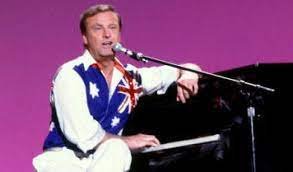
Peter Allen was a talented and charismatic singer-songwriter, musician, and entertainer who rose to fame in the 1970s and 1980s. He was known for his flamboyant stage persona, energetic performances, and lavish costumes. He wrote and performed many popular songs, such as “I Go To Rio”, “Don’t Cry Out Loud”, and “I Still Call Australia Home”. He also won an Academy Award for co-writing “Arthur’s Theme” for the film Arthur, starring Dudley Moore and his ex-wife Liza Minnelli. He was the first husband of Minnelli, whom he married in 1967 and divorced in 1974. He later had a long-term partner, model Gregory Connell, who died in 1984. Allen and Connell were both victims of AIDS, a disease that was poorly understood and stigmatized at the time. Allen’s death in 1992, at the age of 48, shocked and saddened his fans and the music industry. In this article, we will explore how Peter Allen’s cause of death affected his life, his legacy, and his musical influence.
Contents
Peter Allen’s Early Life and Career
Peter Allen was born Peter Richard Woolnough on 10 February 1944, in Tenterfield, New South Wales, Australia. He was the grandson of George Woolnough, a saddler who inspired his song “Tenterfield Saddler”. He had a younger sister named Lynne. His father, Richard Woolnough, was a soldier and a grocer who committed suicide when Peter was 14. His mother, Marion Woolnough, remarried and moved to Armidale, where Peter attended school. He showed an early interest in music and entertainment, and learned to play the piano and the accordion. He began performing on Australian television shows when he was 15, as part of a duo called the Allen Brothers, with Chris Bell. They toured Australia and Asia, and in 1964, they were discovered by Judy Garland, who invited them to be the opening act for her US tour. Garland also introduced Peter to her daughter, Liza Minnelli, whom he married in 1967. They separated in 1970, when Peter came out as gay, and divorced in 1974. Peter continued to perform as a solo artist, and formed a successful songwriting partnership with Carole Bayer Sager. He also collaborated with other artists, such as Jeff Barry, Burt Bacharach, and Christopher Cross. He recorded several albums, and enjoyed a cabaret and concert career, including appearances at the Radio City Music Hall, where he danced with the Rockettes. He became famous for his catchy and upbeat songs, his humorous and witty lyrics, and his extravagant and colorful outfits. He also expressed his love and pride for his homeland, Australia, through his patriotic song “I Still Call Australia Home”, which became an unofficial anthem for many Australians.
Peter Allen’s Struggle with AIDS
Peter Allen met his long-term partner, Gregory Connell, in 1973. Connell was a fashion model and a designer, who helped Peter with his costumes and stage sets. They lived together in New York and Los Angeles, and also had a beach house in Leucadia, California. They were a happy and devoted couple, who supported each other’s careers and dreams. However, their relationship was also affected by the AIDS epidemic, which was spreading rapidly among the gay community in the 1980s. AIDS, or acquired immunodeficiency syndrome, is a condition caused by the human immunodeficiency virus (HIV), which attacks the immune system and makes the body vulnerable to infections and cancers. At the time, there was no effective treatment or cure for AIDS, and many people who contracted the virus died within a few years. There was also a lot of fear, ignorance, and discrimination surrounding AIDS, and many people who had the disease faced social isolation and stigma. Connell was diagnosed with AIDS in 1983, and died in 1984, at the age of 35. Peter was devastated by his loss, and dedicated his album Not the Boy Next Door (1983) to him. He also became more involved in AIDS activism and fundraising, and performed at several benefit concerts for AIDS research and awareness. He also donated a portion of his royalties to the American Foundation for AIDS Research (amfAR). Peter himself was also infected with HIV, but he kept his diagnosis a secret from the public and most of his friends and family. He feared that revealing his condition would hurt his career and alienate his fans, especially his conservative and heterosexual ones. He also wanted to maintain his positive and upbeat image, and not be seen as a victim or a martyr. He continued to perform and write songs, despite his declining health and the side effects of the medication he was taking. He also tried to cope with his grief and loneliness, and sought comfort in his spirituality and his music.
Peter Allen’s Death and Legacy
Peter Allen’s last performance was on 26 January 1992, in Sydney, Australia. He was part of a concert celebrating Australia Day, and he sang “I Still Call Australia Home” with a choir of 200 children. He received a standing ovation from the audience, and a hug from the Prime Minister, Paul Keating. He then returned to his beach house in Leucadia, where he spent his final days. He died on 18 June 1992, at Mercy Hospital in San Diego, California, from an AIDS-related throat cancer. He was 48 years old. His death was announced by his sister, Lynne, who said that he had died peacefully and with dignity. His mother, Marion, who was also his manager, said that he had fought bravely and never gave up. His ex-wife, Liza Minnelli, said that he was a wonderful man and a great talent, and that she was proud to have been his friend. His fans and fellow musicians also paid tribute to him, and expressed their sorrow and admiration. His funeral was held on 22 June 1992, at the Glasshouse Mountains, Queensland, Australia. He was cremated, and his ashes were scattered over the Glasshouse Mountains and the Pacific Ocean. He left behind a rich and diverse musical legacy, which has been celebrated and honored by many people. His songs have been covered by numerous artists, such as Olivia Newton-John, Melissa Manchester, Elkie Brooks, Donna Summer, and Diana Ross. His life and career have been the subject of several books, documentaries, and musicals, such as The Boy from Oz, which starred Hugh Jackman and won a Tony Award for Best Actor in a Musical in 2004. His patriotic song “I Still Call Australia Home” has been used extensively in advertising campaigns, and was added to the National Film and Sound Archive’s Sounds of Australia registry in 2013. He has also been inducted into the ARIA Hall of Fame, the Australian Songwriters Hall of Fame, and the Hollywood Walk of Fame. He is widely regarded as one of the most successful and influential Australian musicians of all time, and as a pioneer and icon of the gay community. He is remembered for his passion, creativity, humor, and courage, and for his contribution to the world of music and entertainment.
