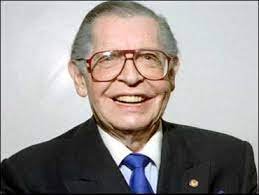
Milton Berle was one of the most influential and popular comedians of the 20th century. He was known as “Mr. Television” for his groundbreaking role in the early days of TV, as well as “Uncle Miltie” and “The Thief of Bad Gags” for his hilarious and often outrageous humor. He entertained millions of viewers with his sketches, jokes, and costumes, and inspired generations of comedians who followed him. But how did Milton Berle die? What was the cause of death of this comedy legend? In this article, we will explore the life and death of Milton Berle, and pay tribute to his legacy.
Contents
Early Life and Career
Milton Berle was born Mendel Berlinger on July 12, 1908, in New York City. He was the youngest of four sons of Moses and Sarah Berlinger, who were Jewish immigrants from Russia and Germany. He began his show business career at the age of five, when he won a Charlie Chaplin impersonation contest. He also worked as a child model and actor, appearing in silent films such as The Perils of Pauline, Rebecca of Sunnybrook Farm, and The Mark of Zorro. He claimed that he was scared to death when he had to play a boy who was thrown from a train in The Perils of Pauline, but later joked that “there are a lot of comedians around today who are sorry about that.”
Berle continued to perform on stage and screen throughout his childhood and adolescence, becoming a vaudeville star and a Broadway actor. He also made his debut in radio, where he honed his skills as a comedian and a writer. He was known for his quick wit, his improvisational talent, and his penchant for stealing jokes from other comedians. He once said to Groucho Marx, “You know, Groucho, I’ve stolen some of my best jokes from you.” To which Groucho replied, “Then you weren’t listening.”
The Rise of Mr. Television
Milton Berle’s career reached new heights when he became the host of NBC’s Texaco Star Theatre in 1948. This was one of the first and most popular variety shows on television, and Berle was the first major American TV star. He was known to millions of viewers as “Uncle Miltie” and “Mr. Television” during the first Golden Age of Television. He was so popular that he boosted the sales of TV sets and influenced the viewing habits of the nation. Many stores and businesses closed on Tuesday nights to watch his show, and some even put up signs that read “Closed tonight to watch Milton Berle.”
Berle’s show featured a mix of comedy sketches, musical numbers, guest stars, and audience participation. Berle was famous for his outrageous costumes, his slapstick humor, and his interaction with the live and TV audiences. He often broke the fourth wall, ad-libbed, and poked fun at himself and others. He was also known for dressing in drag, which he did in more than 70 episodes. He said that he did it because “the audience thinks I look funny in a dress.”
Berle’s show was a huge success, winning several Emmy Awards and attracting millions of viewers. He was the highest-paid entertainer on TV, earning $200,000 a year. He also became a cultural icon, appearing on the cover of Time magazine in 1949, and receiving two stars on the Hollywood Walk of Fame for his work in radio and TV. He was admired and respected by his peers, and influenced many comedians who came after him, such as Johnny Carson, Jerry Seinfeld, and Billy Crystal.
The Decline and Comeback of Uncle Miltie
Milton Berle’s popularity began to decline in the mid-1950s, as TV audiences grew more sophisticated and diverse, and as new competitors emerged, such as Lucille Ball, Jackie Gleason, and Sid Caesar. Berle’s show was canceled in 1956, and he struggled to find a new niche in the changing TV landscape. He tried to reinvent himself as a more serious and versatile actor, appearing in movies such as It’s a Mad, Mad, Mad, Mad World, The Loved One, and Lepke. He also starred in several TV specials and series, such as The Milton Berle Show, The Kraft Music Hall, and The Hollywood Palace. However, he never regained his former glory, and was often overshadowed by younger and fresher talents.
Berle also faced personal challenges and tragedies in his life. He was married four times, and had three children. His first two marriages, to Joyce Mathews, ended in divorce. His third marriage, to Ruth Cosgrove, lasted 36 years, until her death in 1989. His fourth and final marriage, to Lorna Adams, took place in 1991, when he was 83 and she was 46. He also suffered the loss of his son, Bill, who died of a drug overdose in 1967, at the age of 22. Berle blamed himself for his son’s death, saying that he was too busy with his career and neglected his family. He said that he “cried for a year” after his son’s death
Despite his setbacks, Berle never gave up on his passion for comedy. He continued to perform on stage, screen, and radio, and made guest appearances on shows such as The Muppet Show, Saturday Night Live, The Tonight Show, and The Simpsons. He also wrote books, such as Milton Berle: An Autobiography, and B.S. I Love You: Sixty Funny Years With the Famous and the Infamous. He also founded the Friars Club of Beverly Hills, a private show business club famous for its celebrity roasts, where he was often the target of jokes and insults from his friends and colleagues. He took the ribbing in good humor, saying that “a good roast is like a good funeral, except that you get to smell the flowers and enjoy the jokes.”
The Death of a Comedy Legend
Milton Berle died on March 27, 2002, at his home in Los Angeles, California. He was 93 years old. The cause of death was colon cancer, which he had been diagnosed with a year earlier. He had been under hospice care for the last few weeks of his life, and was surrounded by his wife, Lorna, and several family members when he passed away. His publicist, Warren Cowan, announced his death, saying that “he was one of the greatest comedians of our time, and a great humanitarian.”
Berle’s death was mourned by his fans, friends, and fellow comedians, who paid tribute to his legacy and influence. Bob Hope and his wife, Dolores, said in a statement, “What a remarkable man, what a remarkable career. Eighty-eight years in show business, a brilliant comedian, an accomplished actor, a lifelong friend. We are among the select few who could call him ‘kid.’” Don Rickles said, “He was always a great mentor. His style of comedy will never be replaced.” Hugh Hefner said, “It’s really the day the laughter died. It’s a loss from two generations of very, very funny people.”
Berle was cremated, and his ashes were interred at the Hillside Memorial Park Cemetery in Culver City, California. His epitaph reads, “I’ll be in the last seat in the last row in the balcony of the theater.” He left behind a legacy of laughter, innovation, and inspiration, and a place in the history of American comedy. He was inducted into the Television Hall of Fame in 1984, and into the California Hall of Fame in 2007. He was also ranked as the 20th greatest comedian of all time by Comedy Central in 2004. He will always be remembered as “Mr. Television”, “Uncle Miltie”, and “The Thief of Bad Gags”.
