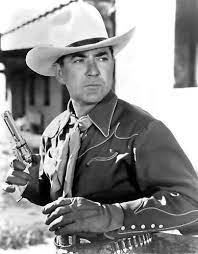
Johnny Mack Brown was a famous American football player and film actor who starred in many Western movies in the 1930s and 1940s. He was known for his athletic prowess, handsome looks, and charming personality. But how did he die and what was the cause of his death?
Early Life and Football Career
Johnny Mack Brown was born on September 1, 1904, in Dothan, Alabama. He was one of eight siblings and his parents were shopkeepers. He excelled in sports, especially football, and earned a scholarship to the University of Alabama. There, he played as a halfback for the Crimson Tide football team, coached by Wallace Wade. He was nicknamed “The Dothan Antelope” for his speed and agility on the field. He led his team to two Southern Conference championships and a national championship in 1925. He was also named the Most Valuable Player of the 1926 Rose Bowl, where he scored two touchdowns and helped his team defeat the Washington Huskies 20-19. He was inducted into the College Football Hall of Fame in 1957.
Film Career and Personal Life
After graduating from college, Brown pursued a career in Hollywood. He was discovered by a talent scout and signed a contract with Metro-Goldwyn-Mayer (MGM). He made his film debut in 1927, playing the lead role in Slide, Kelly, Slide, a comedy about a baseball player. He soon became a popular star, appearing in romantic dramas, musicals, and adventure films. He worked with some of the biggest names in the industry, such as Greta Garbo, Joan Crawford, and Clark Gable. He was billed as John Mack Brown at the height of his screen career.
However, his fame and fortune did not last long. By the early 1930s, his popularity declined and he was relegated to supporting roles and low-budget films. He decided to switch genres and focus on Westerns, where he found a new audience and a steady income. He changed his name to Johnny Mack Brown and starred in hundreds of Westerns, mostly for Universal Pictures and Monogram Pictures. He played heroic cowboys, sheriffs, and outlaws, often riding his faithful horse Rebel. He became one of the most prolific and successful Western actors of his time.
Brown was married to Cornelia “Connie” Foster, whom he met at the University of Alabama. They had four children together and remained married until his death. Brown was also a devout Christian and a generous philanthropist. He supported various charities and causes, such as the Salvation Army, the Red Cross, and the Boy Scouts of America. He was also a loyal friend and a respected colleague. He was known for his kindness, humility, and professionalism.
Death and Legacy
Brown died on November 14, 1974, in Woodland Hills, California, of heart failure. He was 70 years old. His cremated remains are interred in an outdoor columbarium in Glendale’s Forest Lawn Memorial Park Cemetery. He left behind a legacy of over 200 films and a loyal fan base. He is remembered as one of the greatest football players and Western actors of all time.
According to Wikipedia, Brown’s death was also linked to a cold case murder that was solved in 2022. Using new advances in DNA technology, investigators identified Brown as the culprit in the rape and murder of an 89-year-old woman named Lillian DeCloe, who was killed in her Pompano Beach home in 1994. Brown was a former neighbor of DeCloe and a Vietnam War veteran who suffered from drug addiction and PTSD. Brown died more than a decade before his crime was discovered and he was never brought to justice. According to Law & Crime, the case was “like an episode of CSI” and a “series of breakthroughs” led to Brown’s identification. The case is now considered solved and exceptionally cleared.
