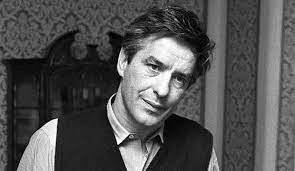
John Cassavetes was a legendary actor and filmmaker who is widely regarded as the father of American independent cinema. He was known for his innovative and improvisational style, his collaboration with his wife Gena Rowlands and his friends Peter Falk, Ben Gazzara and Seymour Cassel, and his influential films such as Shadows, Faces, A Woman Under the Influence, Opening Night and Love Streams. He was also a successful Hollywood actor who appeared in films such as The Dirty Dozen, Rosemary’s Baby and The Fury. However, behind his artistic brilliance and charisma, there was a dark side that haunted him throughout his life: his addiction to alcohol.
Contents
The Origins of His Drinking Problem
According to Wikipedia, Cassavetes was born in New York City in 1929 to Greek immigrant parents. He spent his early years in Greece with his family, and returned to the US at the age of seven, speaking no English. He developed a passion for acting and filmmaking at an early age, and attended the American Academy of Dramatic Arts. He started his career in television and theater, and made his first feature film, Shadows, in 1959 with a shoestring budget and a cast of non-professional actors. The film was a breakthrough for independent cinema, and won the Critics Award at the Venice Film Festival.
Cassavetes’ drinking problem may have started as a way of coping with the stress and frustration of working in the Hollywood system, which he often found stifling and compromising. He also faced financial difficulties and personal challenges, such as the death of his father in 1961 and the birth of his son Nick, who suffered from severe epilepsy. Cassavetes used alcohol as a means of escape, relaxation and inspiration, but also as a way of self-destruction.
The Effects of His Alcoholism on His Work and Relationships
Cassavetes’ alcoholism had a profound impact on his work and relationships. On one hand, it fueled his creativity and spontaneity, giving him the courage and energy to pursue his artistic vision and experiment with new forms and techniques. He often drank on set, and encouraged his actors to do the same, creating a sense of realism and intimacy in his films. He also used alcohol as a tool for eliciting emotional responses from his performers, sometimes provoking them or challenging them to go beyond their comfort zones.
On the other hand, his drinking also caused him physical and mental deterioration, affecting his health, memory and judgment. He became more erratic, irritable and unpredictable, alienating some of his collaborators and friends. He also neglected his family, especially his wife Gena Rowlands, who had to endure his mood swings, infidelities and absences. She later said that she loved him deeply, but that he was “a very difficult man to live with”. She also admitted that she drank along with him, partly out of solidarity and partly out of despair.
The Final Years of His Life
Cassavetes’ alcoholism eventually took its toll on his life. In 1987, he was diagnosed with cirrhosis of the liver, a condition that causes scarring and damage to the organ due to chronic alcohol abuse. He was advised to stop drinking immediately, but he refused to do so. He continued to work on his last film, Big Trouble, which he co-wrote and co-directed with Peter Falk. The film was a comedy based on an unpublished novel by Dave Barry , but it was poorly received by critics and audiences.
Cassavetes died on February 3rd 1989 at Cedars-Sinai Medical Center in Los Angeles. He was 59 years old. His death was attributed to complications resulting from cirrhosis of the liver according to The Washington Post . He was buried at Westwood Village Memorial Park Cemetery , where his tombstone reads “John Cassavetes: Actor – Director – Writer”. He left behind a legacy of groundbreaking films that influenced generations of filmmakers and actors.
Conclusion
John Cassavetes was a genius in spite of his alcoholism, not because of it. His addiction was a tragic flaw that undermined his potential and shortened his life span. However, he also managed to create some of the most original and powerful films in American cinema history, expressing his vision with honesty and passion. He was a rebel, a maverick and an iconoclast who challenged the conventions and expectations of Hollywood. He was also a human being who struggled with his demons and suffered from their consequences. He was John Cassavetes: an artist under the influence.
