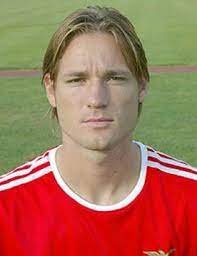
Miklos Feher was a Hungarian professional footballer who played as a striker for several clubs in Portugal and the Hungary national team. He was a promising talent who had scored 52 goals in his club career and seven goals for his country. However, his life was tragically cut short on 25 January 2004, when he collapsed and died during a match between Vitoria de Guimaraes and his team Benfica. His death shocked the football community and raised awareness about the risks of cardiac problems in athletes. In this article, we will explore the feher cause of death and how it affected the football world.
Contents
What Happened on That Fateful Day?
The match between Vitoria de Guimaraes and Benfica was a competitive one, with both teams fighting for points in the Primeira Liga, the top division of Portuguese football. Feher came on as a substitute in the 60th minute and assisted another substitute, Fernando Aguiar, for the only goal of the game in the 80th minute. As the match entered injury time, Feher was booked by the referee for time wasting, as he tried to block a throw-in by the opponents. He smiled at the referee and jogged back to his position, but then suddenly bent forward and fell backwards to the ground.
The players and staff from both teams rushed to his aid, as did the medical personnel. He was given cardiopulmonary resuscitation (CPR) on the pitch and then taken to an ambulance. The match was suspended and later abandoned. The fans in the stadium were stunned and silent, as were the millions of viewers who watched the incident live on television. Feher was taken to a nearby hospital, where he was pronounced dead at 23:10 local time, 90 minutes after his clinical death.
What Was Feher Cause of Death?
The autopsy performed on Feher’s body revealed that he died of cardiac arrhythmia brought on by hypertrophic cardiomyopathy (HCM), according to Wikipedia. HCM is a genetic condition that causes the heart muscle to become abnormally thick, making it harder for the heart to pump blood effectively. HCM can cause irregular heartbeats, chest pain, shortness of breath, fainting, and sudden cardiac death. HCM is one of the most common causes of sudden cardiac death in young athletes, especially those who participate in high-intensity sports.
Feher had no known history of heart problems or symptoms before his death. He had passed all the medical tests required by his club and had undergone regular check-ups. However, HCM can be difficult to detect and diagnose, as it may not show any signs or symptoms until it is too late. According to Sportskeeda, Feher’s father had also died of a heart attack at a young age, which suggests that Feher may have inherited the condition from him.
How Did Feher’s Death Affect the Football World?
Feher’s death was mourned by many people in the football world and beyond. His teammates, coaches, opponents, fans, and fellow countrymen were devastated by his loss. His body was flown back to his native Hungary, where he received a state funeral attended by thousands of people. His former clubs Gyori ETO FC, Porto, Salgueiros, Braga, and Benfica paid tribute to him by retiring his shirt number or holding memorial services. His national team also honored him by wearing black armbands or observing a minute of silence before their matches.
Feher’s death also raised awareness about the importance of cardiac screening and prevention for athletes. Several initiatives were launched to provide more comprehensive and frequent medical tests for footballers and other sportspeople. For example, UEFA introduced mandatory cardiac screening for all players participating in its competitions in 2006. The Portuguese Football Federation also created a program called “Projecto Coracao” (Project Heart), which aims to prevent sudden cardiac death in young players by providing free electrocardiograms (ECGs) and echocardiograms (ECHO) to all registered players under 18 years old.
Feher’s death also inspired some research studies on the prevalence and causes of sudden cardiac death in athletes. For instance, a study published in 2009 by researchers from Portugal found that HCM was responsible for 36% of sudden cardiac deaths among Portuguese footballers between 1979 and 2006. The study also recommended that all footballers should undergo ECGs and ECHO tests at least once a year.
Conclusion
Feher cause of death was a tragic event that shocked the football world and highlighted the need for better cardiac care for athletes. Feher was a talented footballer who had a bright future ahead of him, but his life was cut short by a genetic heart condition that he may not have been aware of. His death was mourned by many people who admired his skills and personality, and also motivated some actions to prevent similar cases from happening again. Feher will always be remembered as a football star who died too young, but also as a catalyst for change and awareness in the field of sports medicine.
