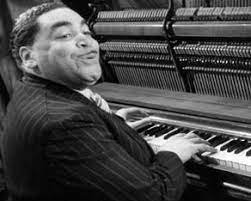
Fats Waller was one of the most influential and popular jazz musicians of the 20th century. His piano playing, singing, and composing skills earned him wide acclaim and fame, both in the United States and abroad. He was known for his humorous and witty personality, as well as his generosity and kindness. However, his life was tragically ended by pneumonia at the age of 39, leaving behind a legacy of musical brilliance and joy.
Early Life and Career
Fats Waller was born Thomas Wright Waller on May 21, 1904, in New York City. He was the seventh child of 11, five of whom survived childhood. His father was a trucker and a pastor, and his mother was a musician who taught him piano and organ. He started playing the piano when he was six and graduated to playing the organ at his father’s church four years later. He also attended music lessons at the Juilliard School with Carl Bohm and Leopold Godowsky
He left school at 15 to work as an organist at the Lincoln Theater in Harlem, where he earned $32 a week He soon became a master of the Harlem stride style, a form of jazz piano that emphasized rhythmic complexity and virtuosic technique. He was influenced by James P. Johnson, who became his friend and mentor. He also composed his first ragtime piece, “Got to Cool My Doggies Now”, in 1918
He made his first recordings in 1922 for Okeh Records, and his first published composition, “Squeeze Me”, in 1924 He collaborated with lyricist Andy Razaf, who became his long-time songwriting partner. Together, they wrote hundreds of songs, many of which became jazz standards, such as “Ain’t Misbehavin’”, “Honeysuckle Rose”, “Blue Turning Grey Over You”, and “Keepin’ Out of Mischief Now”
He also performed in several successful Broadway musicals, such as Keep Shufflin’ (1928), Hot Chocolates (1929), and Early To Bed (1943) He was praised for his musical talent, as well as his comedic flair and charisma. Oscar Levant called him “the black Horowitz”
International Fame and Success
Fats Waller became one of the few jazz musicians to achieve wide commercial fame in the 1930s and 1940s. He toured extensively in the United States and Europe, playing for audiences of all backgrounds and classes. He recorded for various labels, such as Victor, Bluebird, and RCA. He also appeared on radio shows and in movies, such as Stormy Weather (1943) and Hooray for Love (1935)
He was admired by many other musicians, such as Louis Armstrong, Duke Ellington, Count Basie, Art Tatum, Thelonious Monk, and Billie Holiday. He influenced the development of modern jazz piano, as well as other genres such as swing, bebop, rhythm and blues, rock and roll, and hip hop
He was also known for his generosity and kindness. He often gave money to strangers and friends in need. He also mentored young musicians and supported civil rights causes. He was described by Razaf as “the soul of melody… a man who made the piano sing… both big in body and in mind… known for his generosity… a bubbling bundle of joy”
Death from Pneumonia
Fats Waller’s life was cut short by pneumonia on December 15, 1943. He contracted the disease while traveling cross-country following performances on the West Coast. He died at the Union Station train depot in Kansas City, Missouri, at the age of 39.
His death was mourned by millions of fans and fellow musicians around the world. His funeral was attended by thousands of people in Harlem. His body was cremated and his ashes were scattered over Harlem by an airplane piloted by his son Maurice.
He left behind a legacy of musical excellence and joy that continues to inspire generations of listeners and performers. His recordings have been preserved by the Library of Congress and the Smithsonian Institution. His compositions have been covered by countless artists from various genres and eras. His personality and humor have been immortalized in books, films, documentaries, plays, musicals, cartoons, stamps, coins, statues, murals, festivals, awards, scholarships, schools, streets, parks, bridges, buildings, restaurants, bars, clubs, museums, libraries, theaters, halls of fame, websites, podcasts, blogs , and social media.
He is widely regarded as one of the greatest jazz musicians of all time, and one of the most influential and beloved figures in American culture. As he once said, “One never knows, do one?”
