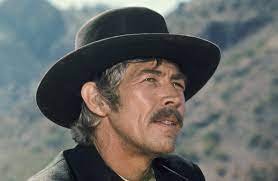
Robert Wilke was a prolific American character actor who appeared in hundreds of films and television shows, mostly as a villain in westerns. He was known for his roles in High Noon, The Magnificent Seven, 20,000 Leagues Under the Sea, and Days of Heaven. But how did he die and what were his final days like? Here is what we know.
Contents
Robert Wilke’s Early Life and Career
Robert Joseph Wilke was born on May 18, 1914, in Cincinnati, Ohio, to German parents. He worked as a lifeguard at a Miami hotel, where he made contacts in the film business. He also performed as a high-diver at the Chicago World’s Fair in 1933-34. He started as a stuntman in the 1930s and his first appearance on screen was in San Francisco (1936). He soon began to get regular character parts, mainly as a heavy, and made his mark when he played one of the “three men waiting at the station” in High Noon (1952). He continued to work steadily in films and television over the next 20 years, often portraying henchmen or outlaws.
Robert Wilke’s Personal Life and Hobbies
Robert Wilke was married twice and had one son. His first wife was Laura Elizabeth Conroy, whom he married in 1946 and divorced later. His second wife was Patricia Kesinger, whom he married in 1973 and stayed with until his death. He was an expert golfer and was said by his friend Claude Akins to have earned more money on the golf course than he ever did in movies. He also enjoyed fishing and hunting.
Robert Wilke’s Final Film Role and Illness
Robert Wilke’s final film role was somewhat against type as Gen. Barnicke in the 1981 comedy Stripes. He played a sympathetic character who helped Bill Murray and Harold Ramis escape from the army base. However, around this time, he was diagnosed with cancer and his health began to decline. He died on March 28, 1989, at the age of 74, in Los Angeles, California. According to Wikipedia, his cause of death was cancer.
Robert Wilke’s Legacy and Influence
Robert Wilke left behind a legacy of memorable performances in various genres, especially westerns. He was admired by many actors and directors for his professionalism and versatility. He influenced many other character actors who followed him, such as Lee Van Cleef, Jack Elam, and L.Q. Jones. He was also recognized by fans and critics for his distinctive features and voice. He is remembered as one of the most prolific and recognizable villains of Hollywood history.
